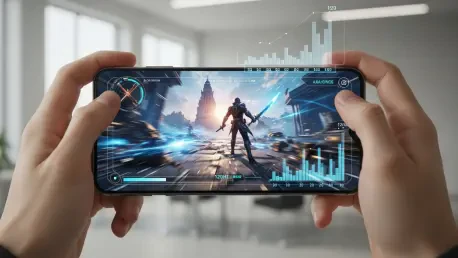

The long-standing boundary separating mobile handhelds from high-end desktop gaming is finally dissolving as sophisticated frame interpolation technologies migrate to the Android ecosystem. For years, the prospect of running demanding AAA titles on a smartphone was often dismissed as a novelty, hampered by thermal constraints and the sheer lack of raw computational power. However, the introduction of Lossless Scaling Frame Generation, or LSFG, via the GameNative application has fundamentally altered this landscape. By leveraging advanced Vulkan-based algorithms, this update allows mobile devices to punch significantly above their weight class, providing a level of visual fluidity that was previously impossible. This transition signifies more than just a software update; it represents a paradigm shift where the efficiency of AI-driven frame synthesis compensates for the inherent hardware limitations of portable ARM-based chipsets.
Implementation of Advanced Frame Interpolation
Integration Within the GameNative Environment
The technical execution of LSFG on Android is handled through a specialized implementation within the GameNative container rather than acting as a traditional system-wide overlay. This architectural choice is deliberate, as it allows the software to interact directly with the Vulkan rendering pipeline of the emulated environment, ensuring that the latency overhead remains manageable for the user. When a player logs into their Steam account through the interface, they are presented with a suite of granular controls designed to optimize the experience based on their specific hardware. Users can toggle the feature on a per-game basis, which is essential because different titles react uniquely to interpolation. The interface includes options for adjusting the flow scale and selecting specific frame multipliers, providing a high degree of flexibility that mirrors the customization found in professional PC optimization tools.
By isolating the frame generation process within the game container, the developers have managed to bypass many of the compatibility issues that often plague third-party performance boosters on mobile operating systems. This method ensures that the primary Android UI remains unaffected while the internal gaming environment benefits from the increased temporal resolution. Furthermore, the inclusion of a performance-optimized mode allows for a delicate balance between visual fidelity and battery consumption. This is particularly relevant for modern smartphones where thermal throttling can quickly degrade performance during extended sessions. The ability to fine-charge these settings ensures that the LSFG tool serves as a practical utility for daily gaming rather than just a theoretical benchmark. This level of control is what elevates the solution from a simple filter to a robust performance-enhancing suite for enthusiasts.
Leveraging Vulkan for Enhanced Stability
A critical component of this breakthrough is the transition to a Vulkan-compatible version of the LSFG algorithm, which is specifically optimized for mobile GPUs. Unlike older rendering APIs, Vulkan offers low-overhead access to the graphics hardware, allowing the frame generation tool to insert synthetic frames with minimal impact on the existing render cycle. This efficiency is what makes a 2x or even a 4x frame multiplier viable on a handheld device. The software analyzes the motion vectors of two consecutive frames and uses sophisticated math to predict the intermediate imagery, effectively doubling or quadrupling the perceived frame rate. Because this process is offloaded to the GPU’s compute shaders, it frees up the CPU to handle the complex logic and physics simulation required by modern PC ports, resulting in a more stable and responsive gaming experience overall.
The stability provided by this Vulkan implementation also addresses the common issue of visual artifacts that often haunt early iterations of frame generation technology. While no interpolation is perfect, the current iteration of LSFG on Android minimizes ghosting and shimmering, particularly when the base frame rate is already relatively stable. This technological maturity is vital for maintaining immersion in high-fidelity titles where visual clarity is paramount. As the software continues to evolve, the synchronization between the original rendered frames and the generated ones has become increasingly seamless. This progress ensures that the transition between scenes remains smooth, preventing the “soap opera effect” from becoming a distraction. The result is a cohesive visual output that makes the mobile screen feel like a high-end monitor, bridging the gap between portable convenience and desktop-grade performance.
Performance Benchmarks and Hardware Utilization
Transformative Results in Demanding Titles
The practical impact of LSFG is most evident when examining performance metrics in historically difficult-to-run titles such as The Last of Us Part 1. In a standard mobile emulation environment, these games often struggle to maintain a consistent 30 FPS, leading to a choppy and less-than-ideal experience. However, with the application of a 2x frame multiplier, that baseline is instantly elevated to a smooth 60 FPS, fundamentally changing the feel of the gameplay. For users with high-end Android devices equipped with 120Hz or 144Hz displays, pushing the multiplier to 4x can result in frame rates reaching triple digits. This capability is transformative because it allows the mobile hardware to finally saturate the high-refresh-rate panels that have become a standard feature in the premium smartphone market over the last few years.
Moreover, the perceived smoothness gained through LSFG does not just improve the aesthetics; it also enhances the playability of fast-paced action sequences where timing is critical. While frame generation does introduce a slight amount of input lag, the tradeoff is often deemed acceptable by players who prioritize visual fluidity. The 100 FPS peak observed in testing shows that the software can effectively utilize the headroom provided by modern mobile processors, such as the latest Snapdragon or Dimensity series. This demonstrates that the bottleneck for PC gaming on Android is increasingly becoming a software optimization challenge rather than a purely hardware-related one. As these tools become more refined, the necessity for massive, power-hungry desktop GPUs for a “good enough” experience is being called into question by the sheer efficiency of these mobile-first interpolation techniques.
Impact on the Mobile Emulation Ecosystem
The introduction of LSFG marks a major milestone for the broader mobile emulation community, which has long sought ways to bring the PC library to portable screens. Previously, players were forced to choose between low-resolution native performance or high-latency cloud streaming. The local execution of frame generation provides a third path that combines the privacy and responsiveness of local hardware with the visual quality of a much more powerful system. This development encourages more developers to optimize their containers and drivers, knowing that the software can now bridge the performance gap. It creates a virtuous cycle where better performance attracts more users, which in turn drives further innovation in the space. The accessibility of these high-level features through an intuitive app like GameNative lowers the barrier to entry for casual users.
Beyond the immediate performance gains, this technology also extends the lifespan of mid-range devices that might otherwise struggle with modern titles. By using LSFG to boost a 20 FPS output to a more palatable 40 or 60 FPS, older or less powerful hardware can remain relevant in the gaming space for a longer period. This democratization of high-performance gaming is a significant shift in the industry, as it reduces the reliance on constant hardware upgrades to keep pace with software demands. The ecosystem is moving toward a future where the distinction between a “gaming phone” and a regular smartphone becomes less relevant, as software-driven enhancements become the primary driver of the user experience. This progress suggests that the future of mobile gaming lies in the clever application of AI and interpolation to overcome the physical constraints of the device.
Strategic Outlook for Mobile PC Gaming
The arrival of Lossless Scaling Frame Generation on Android serves as a clear indicator that the mobile platform is ready to move beyond casual experiences and embrace full-scale PC titles. To maximize the benefits of this technology, users should prioritize devices with robust thermal management and high-refresh-rate displays, as these components are essential for making the most of generated frames. Furthermore, it is advisable for enthusiasts to actively experiment with different multiplier settings on a per-game basis, as the optimal balance between input latency and visual smoothness varies significantly between genres. For instance, slower-paced RPGs can tolerate higher multipliers, while competitive shooters might require a more conservative approach to maintain peak responsiveness.
Moving forward, the focus will likely shift toward further reducing the latency overhead and improving the quality of synthetic frames in complex scenes. As mobile chipsets continue to integrate more powerful dedicated AI accelerators, we can expect frame generation to become a native, system-level feature rather than an app-specific tool. This evolution will likely lead to a standardized framework for cross-platform performance enhancement, making it easier for developers to bring their libraries to the Android ecosystem. For now, the successful integration of LSFG into GameNative stands as a significant achievement, proving that with the right software tools, the smartphone in a user’s pocket can indeed rival the performance of a dedicated gaming PC. This development has effectively set a new standard for what is possible in the realm of portable entertainment.