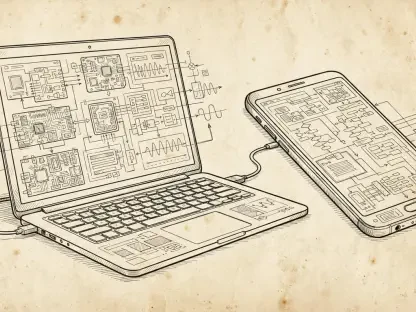

Communication protocols have remained remarkably stagnant for decades until the recent emergence of spatial computing began to challenge the traditional boundaries of the standard text-based interface used by billions. While legacy platforms relied on flat characters and static emojis to convey emotion, the introduction of Pixi represented a fundamental shift toward immersive data visualization within the messaging layer. This technology does not merely display a message; it interprets the linguistic intent and projects it as an interactive three-dimensional asset into the user’s immediate environment. For instance, a simple invitation to lunch can trigger a holographic map and a detailed menu overlay that floats above a physical table. The platform leverages advanced light-field technology and low-latency rendering to ensure that these digital objects maintain high fidelity and spatial persistence. As users transition from traditional smartphones to augmented reality optics, the demand for such seamless integration between digital text and physical space continues to accelerate at an unprecedented rate across global markets.
1. The Technological Framework of Spatial Messaging
The core of the Pixi engine relies on a sophisticated fusion of generative artificial intelligence and real-time spatial mapping to translate alphanumeric strings into complex geometric structures. When a user sends a text, the system parses the semantic context using specialized large language models that are optimized for rapid inference at the network edge. These models identify nouns and verbs that can be visualized, subsequently retrieving or generating 3D models from a vast cloud-based library of assets. This process happens in milliseconds, allowing the recipient to see a virtual representation of the sender’s words appearing alongside the text notification. For example, if a sender describes a new furniture arrangement, Pixi utilizes LiDAR data from the recipient’s glasses to project those items directly into their room in the correct proportions. This level of technical sophistication requires a tight coupling between hardware sensors and software algorithms, creating a feedback loop that constantly adjusts the virtual object’s position based on the user’s head movement.
Integration with existing telecommunications infrastructure is another critical component that determines the viability of interactive AR messaging on a massive scale. To prevent jitter and maintain a high refresh rate for holographic assets, Pixi utilizes 5G and 6G network slicing to prioritize spatial data packets over standard background traffic. This ensures that the interactive elements do not vanish or lag when the user moves through different network zones. Furthermore, the platform utilizes a hybrid compute model where heavy rendering tasks are offloaded to regional edge servers, while the local device handles light-weight tracking and sensor fusion. This strategy preserves the battery life of lightweight AR glasses, which has historically been a significant bottleneck for the adoption of persistent wearable technology. By standardizing the format for spatial messages, Pixi allows for cross-platform compatibility, meaning that a user wearing high-end spatial glasses can communicate seamlessly with someone using a standard handheld mobile device with an AR view-port.
2. Strategic Integration and Future Readiness
The social implications of turning text messages into interactive objects extend far beyond mere visual novelty, as they fundamentally alter how humans perceive digital presence and emotional nuance. Traditional texting often leads to misinterpretation because of the lack of non-verbal cues, but spatial messaging bridges this gap by providing contextual visual aids that clarify the sender’s intent. In a professional setting, a project manager can send technical specifications that manifest as a 3D blueprint on a colleague’s desk, facilitating a level of collaborative clarity that was previously impossible without physical proximity. On a personal level, these interactive messages allow for shared experiences that feel more visceral, such as sending a virtual gift that the recipient can actually open and interact with in their own living room. This evolution in digital communication has also opened new revenue streams for designers and brands, who now create bespoke AR assets that users can purchase and send as part of their daily conversations.
The initial rollout of Pixi proved that users were ready to move past the limitations of two-dimensional screens and embrace a more intuitive form of spatial interaction. Early adopters who integrated these AR capabilities into their daily workflows observed a significant increase in engagement and a reduction in communication-related errors. Businesses that prioritized the development of custom spatial assets found themselves at the forefront of a new digital economy, effectively capturing the attention of a demographic that values immersive experiences over static content. To capitalize on this shift, organizations had to audit their existing communication stacks and ensure compatibility with spatial rendering protocols. Developers focused on building lightweight, high-fidelity 3D assets that adhered to the new messaging standards to ensure a smooth user experience across varying hardware specifications. Looking ahead, the focus shifted toward refining the privacy controls of spatial messaging to protect user environments from unwanted digital intrusions.