
For years, the experience of using a high-end laptop was often characterized by the loud whirring of internal fans and a chassis that became uncomfortably hot during even moderate workloads. This persistent thermal challenge was more than a nuisance; it served as a physical manifestation of engineering trade-offs where performance was constantly at odds with the constraints of thin hardware design. Users frequently encountered performance drops as their systems struggled to dissipate the massive amounts of heat generated by power-hungry processors housed within sleek aluminum enclosures. The transition to proprietary Apple Silicon has fundamentally altered this dynamic by reimagining how energy is consumed and heat is managed at the silicon level. Instead of relying on brute force to achieve speed, these custom-designed chips prioritize efficiency-per-watt, effectively ending the era when a MacBook would double as a space heater. This shift marks a significant milestone in mobile computing, allowing for silent operation without thermal compromises.
Structural Limitations of the Previous Architecture
Between 2016 and 2020, the design philosophy at Apple pushed the limits of industrial aesthetics by prioritizing thinness and portability over internal thermal volume. This period saw the integration of Intel processors that required substantial power to maintain high clock speeds, creating a mismatch between the heat generated and the ability of the cooling system to remove it. Because the internal space was so restricted, the airflow was often insufficient to keep the CPU from hitting its critical temperature limits during intensive tasks like video encoding or compilation. To maintain a quiet user experience, the system firmware was often tuned to delay fan activation until the processor was already nearing dangerous heat levels. Consequently, the hardware was forced to enter a state of thermal throttling, where the clock speed was drastically reduced to prevent permanent damage to the logic board. This cycle resulted in a frustrating paradox where the most powerful machines often felt the slowest under load.
Moreover, the traditional architecture separated the central processor, graphics card, and memory into distinct components connected by long traces on the motherboard. This physical distance meant that moving data back and forth required significant electrical energy, a large portion of which was inevitably lost as heat energy. The inefficiency of this layout meant that the cooling fans were fighting a losing battle against the physics of power delivery. Even at idle, these machines consumed more power than modern equivalents do under heavy stress, leading to a constant baseline of warmth that degraded the battery health over time. The reliance on third-party silicon also meant that Apple had limited control over the power states of the processor, making it difficult to fine-tune the hardware for specific tasks. This lack of deep integration was a primary driver for the overheating issues that plagued professional users for nearly half a decade, necessitating a radical departure from the status-quo industry standards.
Integration and the Power of Unified Design
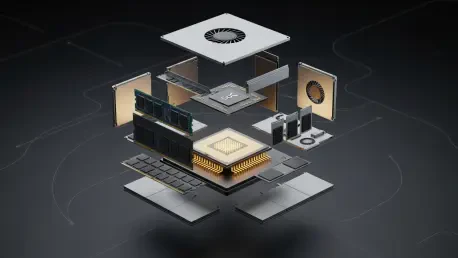
The introduction of the System-on-Chip (SoC) architecture revolutionized thermal management by consolidating the CPU, GPU, and Unified Memory into a single, highly efficient package. By bringing these components closer together, the distance that electrical signals must travel is minimized, which drastically reduces the energy lost through resistance and heat generation. This architectural efficiency allows the latest M-series chips to perform complex calculations using only a fraction of the power required by legacy designs. Because the system can complete tasks much faster and return to a low-power sleep state almost instantly, the total thermal footprint of the device remains remarkably low even during extended use. This transition has enabled a new generation of hardware where the passive cooling capabilities of the aluminum chassis are often sufficient to maintain optimal temperatures. The shift to a unified model has effectively removed the bottlenecks that previously turned excess electricity into wasted heat.
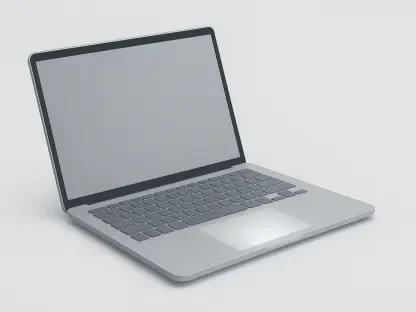
This leap in efficiency is most evident in the MacBook Air, which has successfully transitioned to a completely fanless design while still outperforming many active-cooled laptops from previous generations. Without a fan, the device relies entirely on heat spreaders and the thermal conductivity of its casing to stay cool, a feat made possible only by the low power draw of the silicon. For the more robust MacBook Pro models, fans are still utilized, but their operation is far less intrusive and frequent than in the past. These professional machines can now handle demanding workflows like 3D rendering or high-resolution video editing for long periods before the cooling system needs to engage significantly. Even when the fans do spin up, they move more air with less noise because the chips themselves do not reach the extreme temperatures that were common in the previous decade. This balance of silent operation and sustained power ensures that the hardware remains responsive and cool, regardless of the software load.
Operational Environment and Software Sustainability
While the underlying architecture provides a massive advantage, the physical environment and user behavior still play critical roles in maintaining the health of a laptop. Heat dissipation is a process of exchange, and the aluminum body of a MacBook must be able to transfer its internal warmth to the surrounding air to function correctly. Operating a device in environments exceeding 95 degrees Fahrenheit can overwhelm even the most efficient cooling systems, as the temperature gradient between the laptop and the air becomes too narrow for effective cooling. Furthermore, placing a laptop on soft surfaces like blankets or pillows can obstruct the airflow around the base and trap heat against the bottom plate. These habits create an insulating effect that forces the internal components to work harder to maintain performance, potentially negating the benefits of efficient silicon. Using the device on a hard, flat surface remains the most effective way to ensure that the passive and active cooling mechanisms can function as intended.
As the industry moved fully into the Apple Silicon era, the fundamental relationship between high performance and high temperature was redefined. The success of this transition proved that portable computers do not have to sacrifice comfort or silence to achieve professional-grade results. Moving forward, the continued refinement of 3-nanometer and 2-nanometer fabrication processes promised even greater energy efficiency, suggesting that thermal throttling would become an increasingly rare phenomenon. For those still operating legacy systems, upgrading to modern architecture became the most logical path to ensuring a secure and responsive computing experience. Users were encouraged to keep their operating systems updated to benefit from the latest power management algorithms released to optimize battery life. By adopting native software and maintaining clean hardware environments, professionals secured the longevity of their investments. Ultimately, the move toward specialized, efficient silicon solved the overheating crisis and set a new industry standard.