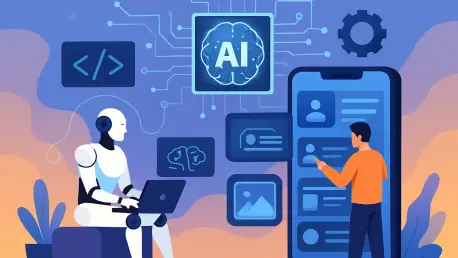

The seamless fusion of predictive algorithms and neural processing has officially terminated the era of static mobile software, replacing it with living digital ecosystems that anticipate human intent with unsettling precision and fluidity. In this current landscape, applications are no longer static repositories of functions; they have evolved into dynamic, self-optimizing entities that utilize sophisticated machine learning models to anticipate human needs before they are even consciously articulated. This transformation is not merely an incremental update to existing frameworks but represents a foundational restructuring of how code interacts with human behavior. Businesses across the globe have recognized that standard functional parity is no longer enough to maintain a competitive edge, leading to a massive surge in the integration of generative intelligence and deep learning directly into the mobile application core. As a result, the standard for a successful app has pivoted toward its ability to serve as a proactive digital concierge. This environmental shift reflects a broader socio-technical trend where the friction of digital interaction is being phased out in favor of fluid, context-aware experiences that adapt to the user’s physical environment, emotional state, and immediate objectives. Consequently, the development lifecycle has transformed into a continuous feedback loop of data-driven refinement that prioritizes user sentiment and real-time situational relevance above all else.
The Evolution of User Interfaces: Adaptive Design and Real-Time Customization
The disappearance of the traditional, rigid user interface has become one of the most defining characteristics of mobile software in the current year. Historically, developers spent countless hours crafting a singular “perfect” layout that every user was forced to navigate, regardless of their individual preferences or physical limitations. Today, AI-driven adaptive design has rendered this approach obsolete by allowing applications to restructure their own visual hierarchy based on real-time engagement data and biometric feedback. For instance, a mobile commerce app can now detect when a user is struggling to find a specific category and automatically enlarge relevant navigation buttons or simplify the checkout flow to reduce cognitive load. This level of granular customization is achieved through the deployment of lightweight on-device models that analyze gaze tracking, touch pressure, and scrolling patterns to determine the most effective layout for that specific moment. By moving away from fixed templates, companies are effectively providing every user with a unique, personalized version of the application that evolves alongside their habits. This shift has not only improved accessibility for individuals with varying needs but has also significantly increased conversion rates by eliminating the traditional barriers found in generic interface designs.
Furthermore, the integration of generative design tools has allowed for the creation of content and visual assets that are rendered on the fly to match the user’s aesthetic preferences or current environmental context. In 2026, a fitness application does not just display a generic workout video; it generates a visual environment and instructional style that aligns with the user’s past successes and current mood. If the system detects elevated stress levels through a connected wearable device, the interface might automatically transition to a calmer color palette and suggest lower-intensity activities without being prompted. This proactive adaptation creates a sense of psychological comfort, as the technology feels like it is working with the user rather than forcing them to adapt to its internal logic. The result is a profound increase in user retention, as the application becomes more deeply integrated into the user’s daily routine. Developers are now focusing their efforts on training these adaptive models rather than manually designing static screens, marking a significant shift in the creative process where the primary goal is to build a flexible framework that supports infinite variations. This evolution confirms that personalization is no longer a toggle in the settings menu but is instead the fundamental architecture upon which all modern mobile experiences are constructed.
Conversational Intelligence: Redefining Interaction across Industry Verticals
Natural language processing has advanced to a stage where the distinction between human interaction and machine response is virtually indistinguishable in most professional contexts. The current generation of virtual assistants integrated into mobile apps has moved beyond the simple command-and-control paradigm of previous years, now possessing the ability to handle multi-turn conversations with nuanced emotional intelligence. This capability is particularly evident in the banking and healthcare sectors, where mobile apps now act as sophisticated advisors rather than mere transaction portals. In financial services, users can engage in complex discussions about investment strategies or debt management, and the AI can provide tailored advice by instantly analyzing global market trends alongside the user’s personal financial history. Similarly, in telehealth, mobile platforms use sophisticated voice and facial analysis to detect symptoms or emotional distress during a consultation, providing doctors with a depth of data that was previously unattainable. These conversational interfaces have effectively removed the steep learning curves associated with complex software, making high-level professional services accessible to anyone with a smartphone through a simple, spoken dialogue.
The transformation extends deep into the e-commerce landscape, where “intelligent search” has completely replaced the keyword-based systems that once frustrated shoppers. Modern retail apps utilize multimodal AI to understand intent, allowing a user to upload a photo of a room and ask the app to “find furniture that complements this lighting and fits within a specific budget.” The system then cross-references thousands of items, considering material durability and shipping logistics, to provide a curated selection of recommendations. This level of utility has turned mobile apps into indispensable shopping companions that do not just sell products but solve complex aesthetic and logistical problems. In the travel and hospitality industry, apps now coordinate entire itineraries by cross-referencing weather patterns, local events, and personal preferences, managing everything from flight cancellations to restaurant reservations autonomously. By offloading these cognitive tasks to intelligent agents, users are able to focus on the experience itself rather than the mechanics of planning. This shift has elevated the role of the mobile developer from a builder of tools to an architect of comprehensive service ecosystems that prioritize the user’s time and peace of mind.
The Modern Development Pipeline: Automation and Security as Core Pillars
The methodology behind building mobile software has undergone a radical simplification thanks to the widespread adoption of AI-augmented coding environments and automated quality assurance systems. In 2026, developers utilize sophisticated co-pilots that can generate entire modules of code from high-level natural language descriptions, allowing them to bypass the most repetitive and error-prone aspects of the development cycle. These tools do more than just complete lines of code; they actively suggest optimizations for memory management and battery efficiency, ensuring that apps perform optimally across a diverse range of hardware. Furthermore, the testing phase has been revolutionized by AI agents that can simulate millions of distinct user paths in a matter of minutes, identifying edge-case bugs and security vulnerabilities that would be impossible for human testers to find manually. This has led to a dramatic reduction in time-to-market for new features, enabling businesses to iterate on their products with unprecedented speed. The role of the human developer has consequently shifted toward strategic system architecture and high-level problem solving, as the technical minutiae are increasingly handled by autonomous systems.
As the sophistication of mobile apps has grown, so too has the complexity of the security threats they face, necessitating a move toward AI-driven defensive architectures. In the current environment, static security protocols like passwords and two-factor authentication are being supplemented by continuous behavioral biometrics. Mobile apps now monitor subtle patterns in how a user holds their device, their typing rhythm, and even their gait to verify identity in the background without interrupting the user experience. If a sudden anomaly is detected—such as a change in typing speed or an unusual location—the system can instantly restrict access to sensitive data or require additional verification. This real-time threat detection is powered by machine learning models that are trained to recognize the “digital fingerprint” of a specific user, making it significantly harder for unauthorized parties to compromise an account. Additionally, AI systems are now capable of self-healing, where the software can identify and patch its own vulnerabilities in response to new attack vectors discovered in the wild. This proactive approach to security has become a cornerstone of user trust, as people are increasingly aware of the value of their personal data and demand the highest levels of protection from the applications they use every day.
Edge Computing: Local Intelligence and Strategic Business Adoption
The shift toward Edge AI has fundamentally changed the technical constraints of mobile app performance by moving data processing from centralized cloud servers directly onto the mobile device. This transition is supported by the latest generation of mobile processors, which feature dedicated neural engines capable of performing billions of operations per second with minimal power consumption. By processing data locally, apps can now offer features like real-time language translation and advanced augmented reality without the lag associated with sending data back and forth to a server. This is particularly crucial for industrial and logistics applications, where workers use computer vision to scan thousands of items in real-time or navigate complex warehouse environments with AR overlays. Beyond performance, Edge AI provides a massive boost to user privacy, as sensitive personal information, such as voice recordings or facial data, never has to leave the device. This “privacy-by-design” approach has become a key selling point for businesses looking to comply with stringent data protection regulations while still offering high-performance features. The reduction in server costs has also allowed smaller startups to compete with larger tech giants by significantly lowering the overhead required to run intelligent applications at scale.
Successfully navigating this new landscape requires a strategic overhaul of how businesses approach their mobile presence and their choice of technical partners. In 2026, the competitive advantage belongs to those who view AI integration not as an optional feature but as the core driver of their business model. Companies are now auditing their existing digital infrastructure to identify where AI can streamline operations, whether through automated customer support or predictive inventory management. The focus has shifted toward building a robust data strategy that ensures models are trained on high-quality, ethically sourced information. This requires a deep collaboration between data scientists, mobile developers, and business stakeholders to ensure that the AI’s goals are perfectly aligned with the user’s needs. For many organizations, this has meant moving away from legacy monolithic architectures in favor of modular, AI-ready frameworks that can be updated and scaled rapidly. The winners in the current market are those who have successfully moved past the experimentation phase and have fully integrated machine learning into every touchpoint of the customer journey. As mobile technology continues to evolve from 2026 to 2028, the ability to rapidly adapt to new algorithmic breakthroughs will remain the most critical factor for long-term commercial success.
Strategic Path toward Algorithmic Integration: Lessons and Next Steps
The transition into this AI-dominant era was defined by a shift from rigid programming to fluid, intent-based software development. Organizations that thrived were those that recognized early on that the value of an application was no longer in its features, but in its ability to process and act upon context. These leaders prioritized the creation of modular data pipelines that allowed for the seamless integration of new machine learning models as they became available. They also invested heavily in re-skilling their development teams, moving them away from manual syntax management and toward the oversight of autonomous coding systems. This internal evolution ensured that the workforce was prepared to manage the complexities of generative interfaces and edge-based processing. By focusing on the intersection of human psychology and machine intelligence, these companies established a new benchmark for what a mobile experience should feel like. The successful deployment of these technologies required a departure from traditional project management, favoring instead a model of continuous experimentation and real-time adjustment based on live user feedback.
To maintain momentum in this rapidly shifting environment, it was essential to establish clear ethical guidelines for the use of predictive modeling and biometric data. The most successful strategies involved the implementation of transparent AI policies that clearly explained to users how their data was being used to improve their experience. This transparency built a foundation of trust that became a significant competitive moat, especially as concerns over data privacy became more prominent in the public discourse. Moving forward, the focus was placed on the refinement of localized neural processing to further reduce dependency on external networks and enhance the resilience of mobile services. Businesses that audited their existing portfolios and identified the specific bottlenecks where human-to-machine interaction was still causing friction were able to target their AI investments more effectively. Ultimately, the path to sustained relevance was found in the ability to view the mobile app not as a static tool, but as an intelligent, evolving entity that grew in value with every interaction. These practical steps provided a roadmap for navigating the complexities of the digital landscape, ensuring that the technology remained a helpful and unobtrusive part of the user’s daily life.