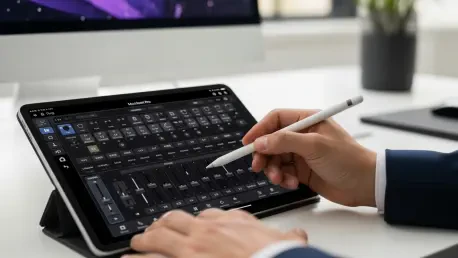

The transition from static studios to fluid, mobile environments has fundamentally altered the expectations of modern musicians who require high-fidelity sound generation on the move. Historically, mobile applications were viewed as mere sketches of their desktop counterparts, often lacking the depth and complexity required for professional-level production. However, as processing power on portable devices has caught up with traditional workstations, the boundary between these platforms has effectively dissolved, allowing for more ambitious software designs. Mochizuki arrived as a direct response to this evolution, merging several distinct synthesis paradigms into a single, unified Audio Unit. This instrument was crafted to provide an expansive sonic palette that ranges from raw, aggressive leads to delicate, evolving soundscapes. By prioritizing a cohesive user experience across both iPad and Mac, the developers at iceGear established a tool that caters to the hybrid workflow currently favored by leading artists.
Comprehensive Synthesis: A Trio of Distinct Sound Engines
The core of the Mochizuki experience lies in its sophisticated triple-engine structure, which provides a level of flexibility rarely seen in compact mobile applications. Users can leverage a traditional virtual analog engine for rich, harmonically dense waveforms that emulate the warmth of classic hardware circuitry. This is complemented by a powerful frequency modulation engine, which allows for the creation of crystalline, percussive tones and complex metallic textures that define modern digital music. To further expand the sonic range, a dedicated PCM engine enables the integration of sample-based sources, allowing producers to layer organic recordings with synthetic tones for unparalleled depth. This combination ensures that the instrument can replace multiple disparate plugins within a session, streamlining the creative process significantly. Each engine was designed to operate independently or in concert, providing a broad spectrum of possibilities for sound designers who need to move quickly.
Beyond the primary oscillators, the instrument features an intricate modulation system that empowers users to breathe life and movement into their sounds. A comprehensive matrix allows for the routing of various sources, including multi-wave LFOs and highly customizable envelope generators, to almost any parameter within the synthesis chain. This depth of control is critical for creating the evolving pads and rhythmic sequences that are staple elements in contemporary electronic production. The filter section is equally robust, offering several models that can add aggressive grit or smooth, resonant sweeps to the output. By integrating these components into a logical, signal-flow-oriented layout, the software encourages experimentation and discovery. Producers are able to map external MIDI controllers with ease, making the synth as viable for live performance as it is for meticulous studio arrangement. The synergy between these modulation options ensures every patch feels responsive to the touch.
Technical Synergy: Optimizing Performance Across Modern Platforms
The technical implementation of Mochizuki utilizes the AUv3 format to ensure maximum compatibility across various hosts, ranging from sophisticated DAWs on macOS to versatile sequencers on iOS. This cross-platform approach is vital for the current era of music production, where a project might start on a tablet during a commute and finish on a high-end desktop workstation. The resource management of the synth was optimized to take full advantage of the latest silicon architecture, providing high polyphony counts without stressing the system or causing latency issues during playback. This efficiency is particularly important when running multiple instances of the plugin within a single project, a common scenario for complex arrangements. Furthermore, the user interface was meticulously adapted for both touch interaction and traditional mouse navigation. This dual-mode design ensures that the workflow remains intuitive regardless of the device, allowing for precise editing of parameters or expressive manipulation.
The release of Mochizuki provided a clear roadmap for the future of cross-platform music technology by demonstrating that mobile instruments could achieve the same sonic standards as desktop hardware. Producers who integrated this tool into their setups found that it resolved many of the traditional friction points associated with shifting between devices. To maximize the potential of this multi-engine system, creators were encouraged to explore the layering capabilities of the VA and FM sections to develop signature sounds that stood out in a crowded market. It was also recommended to utilize the AUv3 flexibility to build custom effect chains that complemented the internal processing of the synth. Moving forward, the focus shifted toward maintaining a lean, efficient library of high-quality tools rather than an overwhelming collection of specialized apps. By adopting this unified approach, musicians successfully simplified their technical requirements while simultaneously expanding their creative boundaries.