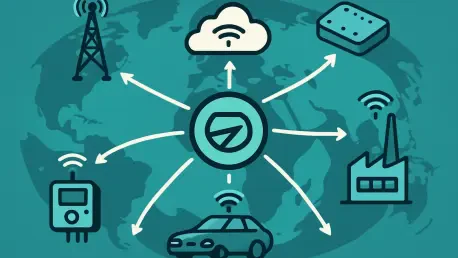

Soracom’s shift toward the MVNE sector addresses a systemic inefficiency in how the telecom industry handles diverse and geographically dispersed hardware. For years, the global Internet of Things landscape was defined by a direct competition between specialized connectivity providers and established Mobile Network Operators, often resulting in fragmented services that hindered enterprise scaling. By pivoting toward a Mobile Virtual Network Enabler model, the company has transitioned from a simple provider of SIM cards to a critical software layer that empowers traditional carriers to refine their own IoT portfolios. This move is not merely a change in business strategy but a fundamental reimagining of how digital infrastructure should function in a world where hardware is ubiquitous. Instead of fighting for control over the radio access network, the emphasis has moved toward providing the programmable tools necessary to manage millions of connections across various regions and radio technologies seamlessly.
Bridging the Gap: Infrastructure and Software Integration
The modern IoT market is increasingly prioritizing software-defined intelligence over simple data transmission, making the programmability of connectivity the new industry standard. Soracom’s MVNE initiative reflects this broader trend where the true value lies in the technical backend, including API integration, automated lifecycle management, and security protocols, rather than just the underlying data pipe. This decoupled approach allows operators to leverage their massive investments in spectrum and physical towers while utilizing a specialized, agile software stack to meet the hyper-specific needs of industrial clients. Consequently, the focus for major carriers has shifted from expansive coverage maps to the operational ease of onboarding and managing diverse device fleets across multiple jurisdictions. By abstracting the complexities of the network layer, enterprises can now treat connectivity as code, integrating it directly into their existing DevOps workflows.
By moving upstream in the value chain, Soracom is fostering a more collaborative ecosystem where infrastructure owners and software specialists work in tandem rather than in isolation. For the MNO, this partnership offers a clear path to capture revenue across various high-growth verticals, such as smart cities and remote healthcare, without the prohibitive cost of building custom software platforms from scratch. This synergy is crucial because traditional billing and provisioning engines used by carriers are often optimized for consumer mobile plans and cannot handle the micro-transactions or long lifecycles typical of industrial sensors. For enterprises and device manufacturers, this results in a more streamlined experience, providing them with robust management tools and consistent APIs that function without interruption across different geographies. The result is a more resilient network environment where the hardware can adapt to local network conditions without manual reconfiguration.
Standardizing Complexity: Solutions for Global Scale
One of the primary challenges in global IoT remains the inherent diversity of hardware requirements and the maze of regional regulations that differ from one country to another. A smart meter deployed in a dense European urban center operates under vastly different technical and legal conditions than a telematics unit installed in a long-haul truck moving across North America. Soracom’s enablement layer acts as the necessary glue that allows MNOs to handle this staggering diversity at scale without overextending internal engineering resources. By providing a unified interface, the model ensures that the complexities of international roaming and local breakout are abstracted away from the end user. This allows for a standardized approach to global connectivity management, where a single pane of glass can monitor health and data usage regardless of which carrier is providing the radio signal. This level of abstraction is now the baseline requirement for any global enterprise deployment.
This transition into the MVNE space serves as a clear indicator of a maturing market that is now focusing intensely on economic and operational feasibility over theoretical connectivity. The industry is moving beyond the basic question of whether a device can be connected to the internet and is now solving the problem of how millions of devices can be managed sustainably over decades. As cellular IoT continues to compete with alternative technologies like satellite constellations and Low-Power Wide-Area Networks, the move toward an agile, software-defined infrastructure ensures that mobile operators remain competitive in a crowded field. This evolution ultimately reduces the friction between network owners and innovators, stabilizing the ecosystem for future growth by providing a predictable cost structure. Furthermore, it allows for a more granular control over data traffic, enabling edge computing capabilities that were previously too complex for standard mobile architectures to support.
Future Evolution: The Rise of Programmable Networks
The strategic expansion into the enablement sector addresses a critical agility gap that has long plagued the telecommunications industry’s enterprise divisions. While MNOs excel at maintaining physical infrastructure and securing licensed spectrum, their legacy systems are often too rigid for the unique, fast-moving demands of modern digital transformation. IoT deployments require massive scale and long lifecycles, which can easily overwhelm traditional back-office systems designed for consumer smartphones. By offering a cloud-native, programmable backend, Soracom allows operators to bypass these legacy hurdles and deploy specialized services with much greater speed than previously possible. This capability is vital as the demand for private 5G and localized industrial networks grows, requiring a level of customization that standard carrier platforms cannot offer. The ability to spin up virtual network instances on demand has become a cornerstone of modern industrial strategy.
In retrospect, the industry recognized that the path to sustainable global IoT required a departure from the monolithic carrier models of the past. Companies that successfully integrated these programmable layers found themselves better equipped to handle the rapid shift toward automated supply chains and intelligent infrastructure. Moving forward, the focus must remain on deeper integration between artificial intelligence and network management to predict and mitigate outages before they impact critical services. Decision-makers were encouraged to prioritize platforms that offered maximum flexibility and avoided vendor lock-in by utilizing open standards. The transition to an enablement-first strategy proved to be the most effective way to bridge the gap between the physical constraints of cellular networks and the potential of cloud software. As organizations refined their deployment strategies, the emphasis shifted toward long-term data sovereignty and security, ensuring that the connectivity model remained robust.