
Samsung’s latest hardware strategy focuses on the nuances of ergonomic utility, positioning the S12 Ultra as a stationary laptop replacement and the S12+ as a versatile handheld. This strategic pivot reflects a maturing market where consumers no longer seek incremental speed boosts but rather demand devices that fit specific physical workflows. In the current landscape of late 2026, the distinction between these two flagship models has moved beyond the internal processor, which remains identical across the lineup. By offering a unified internal architecture, the manufacturer has effectively redirected the consumer’s focus toward form factor and practical application. This shift acknowledges that a tablet’s value is derived from how it is held, placed, and interacted with in various environments, from corporate boardrooms to creative studios.
The introduction of the Galaxy Tab S12 series also signifies a departure from the traditional tiered approach where smaller devices were often viewed as compromised versions of their larger counterparts. Instead, the focus has shifted to providing a consistent premium experience regardless of the screen size chosen by the user. This approach ensures that whether a professional selects the more compact Plus model or the expansive Ultra, they are receiving the pinnacle of mobile engineering. The industry has reached a point where the software and hardware ecosystem can finally support these diverse use cases without sacrificing the core performance that defines a flagship product.
Performance Parity and Visual Excellence
Uniform Internal Hardware and Power
The most significant technical development in this series is the implementation of the MediaTek Dimensity 9500 across both the Galaxy Tab S12+ and the S12 Ultra. For years, the market witnessed a trend where the most capable silicon was exclusive to the largest chassis, creating a performance gap that forced users into buying bigger devices than they actually needed. By standardizing this high-performance chip, the current 2026 lineup ensures that multitasking, high-end rendering, and complex AI processing remain fluid on both screen sizes. This eliminates the “performance anxiety” that once plagued the decision-making process, allowing buyers to choose based on their physical requirements rather than a fear of technical obsolescence.
Beyond the raw numbers of the Dimensity 9500, the thermal engineering within these devices has reached a new level of sophistication. Even in the more constrained frame of the 12.6-inch model, the cooling system manages to maintain peak clock speeds during intensive gaming or video editing sessions without significant throttling. This consistency is vital for professionals who rely on their tablets for sustained workloads. The shared architecture also simplifies the development cycle for software updates, ensuring that both models receive optimized features simultaneously. This commitment to hardware equality sets a new standard for the industry, suggesting that “premium” is a baseline for quality rather than a sliding scale based on price.
Display Quality and Screen Real Estate
Visual fidelity remains the cornerstone of the Samsung experience, with both models utilizing Dynamic AMOLED 2X panels that push the boundaries of color accuracy and contrast. With a peak brightness of 1,600 nits, these displays are specifically designed to handle the variable lighting conditions of modern workspaces, including outdoor environments. The technology behind these panels ensures that deep blacks and vibrant colors remain consistent across the 12.6-inch and 14.6-inch variants. This high level of visual precision is particularly beneficial for creative workflows where color grading and fine detail are paramount, providing a reliable canvas for professional-grade production.
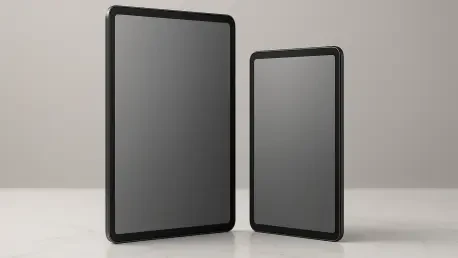
However, the divergence in screen real estate creates two very different user experiences that cater to distinct professional needs. The 14.6-inch display of the Ultra model functions effectively as a standalone workstation, providing enough room for complex timelines in video editing software or sprawling digital illustrations. On the other hand, the 12.6-inch screen of the S12+ is optimized for those who require a balance between high-quality visuals and mobility. It provides a dense, sharp image that is perfect for document review, note-taking, and media consumption while remaining compact enough to use comfortably in transit. This distinction allows the display size to become a functional choice rather than just a cosmetic one.
Ergonomics and the Evolution of the Tablet Form
Rethinking Portability and Usability
The physical footprint of the Galaxy Tab S12 Ultra represents a bold step toward the “stationary tablet” category, challenging traditional notions of handheld usability. At 14.6 inches, the device is an impressive feat of engineering, but its sheer size makes one-handed operation nearly impossible for extended periods. It is a device that thrives on surfaces, whether it is propped up on a desk for a video conference or laid flat for an artistic session. This evolution suggests that the Ultra is less of a traditional tablet and more of a modular computer that happens to lack a permanent hinge. It is designed for the user who prioritizes the largest possible viewing area over the ability to hold the device like a book.
In contrast, the Galaxy Tab S12+ serves as the guardian of the traditional tablet identity, offering a weight and dimension profile that encourages handheld use. It remains the superior choice for users who find themselves taking notes while standing, reading long-form content in casual settings, or traveling frequently. The ergonomic design of the S12+ ensures that it does not become a physical burden during a long commute or a multi-hour flight. While the Ultra dominates the desk, the S12+ dominates the “in-between” spaces of daily life, proving that portability is still a high-value feature for a significant portion of the premium market.
The Laptop Replacement Narrative
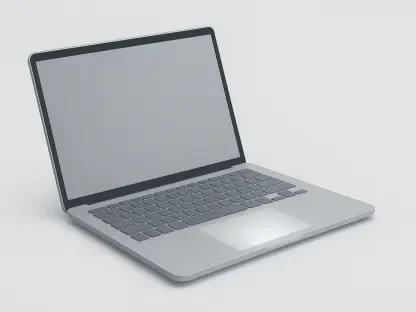
Samsung has leaned heavily into the narrative of the S12 Ultra as a genuine laptop replacement, a transition that is largely facilitated by the Pro Keyboard Cover. This accessory is critical for transforming the oversized tablet into a functional productivity machine, complete with a tactile typing surface and a responsive trackpad. When paired together, the Ultra challenges the hegemony of the traditional ultraportable laptop, offering the versatility of a touch-first interface with the power of a modern workstation. However, this configuration demands a significant physical footprint on a desk, reinforcing the idea that the Ultra is at its best when it is settled into a dedicated workspace.
For the S12+, the keyboard accessory feels more like an optional enhancement rather than a mandatory requirement for daily use. The device is small enough that on-screen typing remains viable for short emails or messages, and its handheld nature is not compromised by the absence of a physical deck. This allows the S12+ to remain a “tablet first” device, whereas the Ultra has become “laptop first” in its practical application. This divergence is a key factor for buyers to consider; if the goal is to replace a primary computer, the Ultra is the logical successor, but for those who want a secondary device to complement an existing PC, the Plus model offers a more flexible and less cumbersome experience.
Software Optimization and Immersive Multimedia
Software Innovations and Galaxy AI
The deployment of One UI 9 across the S12 series introduces a suite of Galaxy AI tools that are specifically optimized for large-format touchscreens. These software enhancements focus on automating tedious tasks, such as transcribing meetings in real-time or organizing handwritten notes into structured documents. The intelligence baked into the operating system is designed to learn from the user’s habits, offering context-aware shortcuts that significantly speed up productivity. While both models share these features, the larger screen of the Ultra allows for a more expansive multitasking layout, where three or more applications can be used simultaneously without feeling cramped or cluttered.
A notable quality-of-life improvement in the current software iteration is the refinement of the in-display fingerprint sensor. On a device of this scale, the placement and responsiveness of biometric security are crucial for a seamless experience. The sensor is positioned to be naturally accessible regardless of whether the tablet is being held in portrait mode or used in a landscape orientation on a stand. This focus on intuitive interaction extends to the updated taskbar and gesture controls, which have been tuned to reduce the physical reach required to navigate the interface. These subtle software refinements ensure that the powerful hardware remains accessible and easy to manage for users of all skill levels.
A New Standard for Mobile Audio
Multimedia consumption has been elevated in the S12 series through the introduction of four-channel spatial audio, a system tuned in collaboration with AKG. The quad-speaker array is designed to adapt to the tablet’s orientation, ensuring that the soundstage remains balanced and immersive whether the device is vertical or horizontal. This technology provides a level of depth and clarity that was previously difficult to achieve in such a thin form factor. For professionals in the music and film industries, this means that the tablet can serve as a reliable reference device for monitoring audio quality while on the go, offering a rich soundscape that rivals many dedicated home audio solutions.
The integration of spatial audio is not just about volume, but about the precision of sound placement within a virtual environment. This is particularly noticeable when viewing modern cinematic content or participating in spatialized video calls, where the direction of the audio matches the visual position of the speaker on the screen. The S12 Ultra, with its larger physical separation between speakers, offers a slightly wider soundstage that fills a room with surprising ease. However, the S12+ maintains an impressive level of punch and detail, ensuring that users who prefer the smaller model do not miss out on the high-fidelity experience that defines the 2026 flagship series.
Market Positioning and Financial Value
Economic Considerations for Potential Buyers
The financial investment required for the Galaxy Tab S12 series reflects its status as a top-tier professional tool. With the S12+ starting at a premium price point and the Ultra commanding an even higher entry fee, the decision often comes down to the perceived value of the additional screen real estate. Since the internal performance is identical, the price gap is essentially a tax on the larger battery and the massive AMOLED panel. When the cost of the Pro Keyboard Cover is added to the Ultra, the total price begins to rival high-end ultrabooks, forcing consumers to weigh the benefits of a modular tablet against the traditional stability of a clamshell laptop.
For many enterprise users, the S12+ represents the better value proposition because it delivers the same processing power and software features in a more portable and affordable package. The lower entry price allows organizations to deploy the devices at scale for mobile workforces without exceeding budgets. However, for specialized professionals such as architects or high-level executives, the extra cost of the Ultra is often justified by the increased productivity afforded by the larger workspace. In the current market, the value is no longer found in the “fastest” model, but in the model that most effectively reduces friction in the user’s specific daily routine.
Strategic Selection: Finding the Right Professional Tool
The market performance of the Galaxy Tab S12 series demonstrated that a unified internal architecture was the correct path for high-end mobile computing. Professionals who required maximum visibility for complex design tasks gravitated toward the Ultra, successfully integrating it into their desks as a primary workstation. Meanwhile, mobile workers and casual users found that the S12+ provided the perfect blend of performance and handheld comfort, allowing it to become a constant companion in various settings. This clear division of labor between the two models helped reduce buyer confusion and established a more logical hierarchy within the premium tablet segment.
To ensure the best return on investment, users identified their primary environment before making a purchase. Those who operated mostly from a fixed location benefited from the Ultra’s expansive screen, while those on the move prioritized the S12+ for its lighter footprint. Looking forward, the success of this series suggested that future developments would likely focus on further reducing the weight of the larger models while continuing to push the boundaries of AI-driven software. By choosing the device that matched their physical workflow, consumers moved away from spec-chasing and toward a more functional relationship with their technology, proving that the right size is just as important as the right processor.