
Minimalists seeking health data without the constant interruption of a wrist-based display are increasingly turning toward screenless trackers like the $100 Fitbit Air. This trend illustrates a significant shift in the 2026 fitness market, where a device’s aesthetic is becoming as important as the sensors it contains. While the Fitbit Edge serves as a reliable mid-range option for $180, it often fails to appeal to those who view a glowing screen as a digital burden rather than a tool. By removing the display, manufacturers have discovered a niche of users who prioritize long-term wellness over real-time notifications and app alerts. This move toward invisible technology allows for more seamless integration into daily life, particularly for individuals who wear traditional luxury timepieces on one wrist and do not wish to clutter the other with a bulky digital counterpart. As the wearable ecosystem continues to fragment, these screenless alternatives are proving that less can indeed be more for the modern consumer.
Minimalist and Screenless Tracking Options
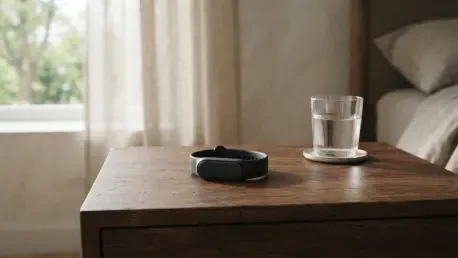
The Fitbit Air represents a strategic pivot for Google, focusing on essential health metrics without the fluff of a traditional interface. At just $100, it provides a cost-effective entry point for users who want to monitor sleep cycles, daily step counts, and continuous heart rate through the Google Health app. The absence of a screen is a deliberate design choice that targets the growing demographic of users suffering from notification fatigue. By offloading all data visualization to the smartphone, the Air maintains a slim, lightweight profile that feels almost weightless on the wrist. This simplicity does not equate to a lack of sophistication; the internal sensors are just as precise as those found in the Edge, ensuring that data integrity remains uncompromised. For the price, it offers a refreshing alternative to the standard fitness band, allowing the user to stay connected to biological data without being tethered to a digital distraction.
A more radical departure from the wrist-bound form factor is the RingConn Gen 2 Air, which effectively moves all tracking technology to the finger for approximately $199. Smart rings have gained significant traction among users who find traditional watches uncomfortable to wear during sleep or intensive keyboard work. The Gen 2 Air is specifically lauded for its ability to track recovery metrics and blood oxygen levels with high precision, utilizing the thinner skin of the finger for more consistent sensor contact. With a 10-day battery life, it vastly outlasts many wrist-based trackers, reducing the friction of frequent charging. While it does not provide the immediate haptic feedback or real-time pacing information that a runner might get from the Fitbit Edge, it serves as an excellent 24/7 wellness companion. For those who want to track their health metrics in a completely discreet manner, the smart ring offers a blend of jewelry-like aesthetics and medical-grade data collection.
Durable and High-Performance Sports Watches
For individuals who find the build quality of the Fitbit Edge insufficient for their lifestyle, the Amazfit Active 3 Premium presents a compelling alternative at a competitive $170 price point. This device is engineered to bridge the gap between a standard fitness band and a high-end rugged sports watch, featuring a 3,000-nit AMOLED display that remains legible under the harshest midday sun. Protected by sapphire glass, the screen is highly resistant to scratches and impacts, making it ideal for trail runners and rock climbers who require more resilient hardware. Beyond its physical toughness, the Active 3 Premium includes specialized training tools such as heart rate variability analysis and recovery time suggestions. These features are often locked behind subscriptions in other ecosystems, but Amazfit provides them as part of the core experience. The addition of physical buttons alongside the touchscreen ensures that the watch remains fully functional even when the user is wearing gloves or has wet hands.
The Garmin Vivoactive 5 remains a dominant force in the mid-range market, valued at $168 for those who prioritize long-term reliability over the latest trendy features. Despite being an older model, its proven track record for GPS accuracy and heart rate monitoring makes it a safer bet for serious athletes than many unproven newcomers. One of its greatest strengths is its 11-day battery life, which significantly outperforms the Fitbit Edge and reduces the anxiety of the device dying during a long weekend excursion. While it lacks the “Training Readiness” score found in the more expensive Vivoactive 6, it still provides comprehensive insights into body battery and stress levels. The Garmin Connect platform is widely regarded as one of the most robust health ecosystems available, offering deep-dive analytics that appeal to data-oriented users. For the fitness enthusiast who wants a dependable workhorse that integrates with a wide variety of third-party sensors, the Vivoactive 5 is a value leader.
Advanced Smartwatches and Full Ecosystems
Users who find the Fitbit Edge too limited in its smart capabilities should consider the Samsung Galaxy Watch 9, which currently retails for $380. This device is far more than a simple fitness tracker; it serves as a comprehensive extension of the smartphone, running a sophisticated mobile operating system that supports a massive library of third-party applications. Beyond standard health metrics, the Galaxy Watch 9 offers advanced medical features such as on-demand blood pressure monitoring and body composition analysis. It allows users to control smart home devices directly from their wrist and manage mobile payments with a level of fluidity that the Edge cannot match. Deep integration with the Samsung ecosystem makes it a natural choice for those already using Galaxy smartphones, providing a seamless flow of information between devices. For the professional who needs to balance intense gym sessions with a high-powered digital workflow, this watch represents the pinnacle of multifunctional wearable technology.
For those whose demands go beyond the standard office or gym environment, the Galaxy Watch Ultra 2 stands as the ultimate alternative for $700. This premium wearable is designed for extreme conditions, offering a level of ruggedness and battery longevity that far surpasses anything in the mid-range Fitbit lineup. It features a titanium casing and an enhanced dual-frequency GPS system that provides pinpoint accuracy in dense urban environments or deep wilderness areas where signals are typically weak. The Ultra 2 is aimed at power users who participate in triathlons, endurance hikes, or deep-sea diving, offering specialized tracking modes for these high-intensity activities. While the price point is significantly higher than the Fitbit Edge, the investment provides a device that can withstand extreme temperatures and high-pressure environments. For the elite athlete or the tech enthusiast who refuses to compromise on hardware capability, the Ultra 2 offers a comprehensive hub that justifies its premium status through sheer utility.
Strategic Choices for Personalized Health
The transition toward specialized wearables in the current market is defined by a rejection of generic functionality in favor of more targeted solutions. Consumers have realized that a single device cannot perfectly serve the marathon runner, the minimalist executive, and the casual gym-goer simultaneously. This evolution has moved the industry past the era of the singular dominant tracker, encouraging a landscape where diverse hardware forms can thrive. The Fitbit Edge remains a safe choice for many, but the rise of specialized alternatives has highlighted its limitations in specific use cases. Users who demanded superior screen visibility or extreme battery life found their needs met by rugged sports watches, while those who preferred a passive data collection experience migrated toward rings and screenless bands. This diversification has ultimately benefited the end user by providing more choices at various price points, ensuring that everyone can find a health partner that fits their specific daily routine.
To successfully navigate the wearable market, one should first audit daily habits to determine whether a screen is a necessity or a hindrance. If the primary goal is long-term wellness and sleep hygiene, a screenless tracker or a smart ring will likely provide a more consistent experience with fewer interruptions. Conversely, those who participate in structured training sessions will find the real-time data and physical buttons of a dedicated sports watch to be indispensable. For the user who wants a singular device to manage their entire digital life, flagship smartwatches remain the only logical choice despite their higher cost and shorter battery windows. The key is to look beyond basic marketing and focus on the specific “edge” that aligns with personal fitness goals. By identifying the features that drive motivation and consistency, users can invest in technology that truly enhances their quality of life rather than just adding another digital chore to their daily schedule.