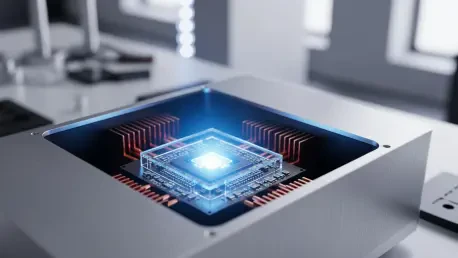

The historic transition of executive power within the world’s most valuable technology organization represents far more than a mere administrative reshuffle; it signals a fundamental recalibration of the company’s mechanical and digital soul as John Ternus prepares to take the helm. As the consumer electronics market shifts away from pure operational scaling toward a period of intense hardware proliferation, the industry is witnessing a strategic pivot. While the previous decade was defined by supply chain mastery, the current landscape demands a return to engineering-led disruption. Competitors are increasingly focused on the marriage of custom silicon and consumer-facing hardware, forcing a transition where logistics take a backseat to product-centric philosophies.
The Shift Toward Hardware Proliferation in a Post-Cook Economy
Apple is currently navigating a pivot that emphasizes its identity as a product organization rather than a logistics powerhouse. This movement is a response to global pressures where software alone no longer provides a sufficient competitive moat. By prioritizing the integration of sophisticated internal technologies with tangible device design, the company seeks to maintain its dominance against rivals who are rapidly closing the gap in mobile computing.
The strategic necessity of this pivot is underscored by evolving technological regulations that challenge traditional software ecosystems. To circumvent these hurdles, there is a clear trend toward making the hardware itself the primary value proposition. This shift allows the organization to leverage its internal engineering talent to create proprietary experiences that are difficult for competitors to replicate through software patches or third-party integrations alone.
Strategic Transitions and the Metrics of Future Success
Emerging Technologies and the Hardware-First AI Mandate
The integration of Apple Intelligence has fundamentally altered the mandate for device design, necessitating a hardware-first approach to local AI execution. Rather than relying solely on cloud-based processing, the new leadership is prioritizing high-performance mobile computing that handles complex workloads on-device. This direction aligns with shifting consumer behaviors that favor privacy-conscious, high-speed interactions within a deeply integrated ecosystem.
Market drivers are also pushing the company toward unexplored frontiers like robotics and environmental interaction. These areas represent significant growth opportunities where hardware engineering must lead the way. By developing machines capable of navigating the physical world, the organization is setting the stage for a new era of interaction that transcends the traditional screen-based interface, turning the entire environment into a platform for computing.
Financial Projections and the Momentum of the Ternus Era
Looking at the current financial trajectory, the growth indicators remain robust despite the massive scale already achieved. The successful launch of the MacBook Neo served as a critical precursor, demonstrating that consumers are willing to invest in high-end hardware when it offers a clear leap in performance. Between 2026 and 2028, analysts anticipate a dual-engine growth strategy where hardware expansion fuels a secondary wave of recurring services income.
Historical performance metrics show a significant rise in unit sales for core products, but the next phase focuses on diversification. The goal is to reach deeper market penetration by introducing a broader range of price points while maintaining the premium allure of the brand. This strategy leverages the immense cash reserves accumulated during the previous administration to fund aggressive research and development in next-generation silicon and physical architecture.
Navigating the Technical and Organizational Obstacles of 1nm Engineering
One of the most daunting technical hurdles involves the move to 1nm transistor sizes, which presents extreme challenges in thermal management and electrical leakage. Shrinking components to this scale requires a complete rethink of how heat is dissipated within slim consumer devices. The leadership must oversee a delicate balance between the desire for thinner profiles and the physics of high-density processing power.
To address these complexities, the organization is consolidating its hardware engineering and technology divisions into a single, unified entity. This internal restructuring aims to eliminate the friction that often exists between chip designers and product architects. By fostering a culture where the silicon and the shell are developed in tandem, the company hopes to achieve a level of synergy that remains elusive for its more fragmented competitors.
The Regulatory Landscape and the Security of Proprietary Ecosystems
Global antitrust laws and new interoperability standards continue to put pressure on the traditional walled garden model. However, by moving more processing directly onto the hardware, the company can argue that its closed system is a necessary component of user data privacy. This focus on hardware-based security becomes a shield against regulatory demands for more open software platforms, as the physical security of the silicon is inherently proprietary.
Compliance with evolving data laws has become a design requirement rather than an afterthought. As AI processing shifts to the user’s palm, the security of the integrated custom silicon becomes a primary selling point. This approach not only protects user information but also establishes new industry standards for manufacturing and device-level encryption that others must scramble to follow.
The Horizon of Innovation: Robotics, Silicon, and Market Saturation
The roadmap for the coming years includes a significant push into robotics, a move that signals a departure from purely digital services. Under an engineering-led CEO, the synergy between custom processors and physical product architecture is expected to deepen. Johny Srouji’s role in this transition is vital, as the processors must be tailored to the specific mechanical requirements of robotic limbs and environmental sensors.
Maintaining global market penetration requires constant innovation to prevent saturation. As traditional smartphone and laptop markets mature, the introduction of entirely new hardware families is essential for long-term survival. The focus is no longer just on selling more of the same, but on creating new categories that make the Apple ecosystem indispensable in every aspect of a user’s physical and digital life.
The leadership transition eventually proved to be the catalyst for a fundamental shift from an era of scale to a more nuanced age of hardware proliferation. Analysts observed that the blend of technical precision and structural efficiency allowed the organization to maintain its premium status while simultaneously expanding its reach. This period of change highlighted the importance of monitoring the diversification of product families as a primary indicator of long-term investment value. Future strategic considerations involved a heavier reliance on the synergy between silicon advancements and physical form factors. The move toward robotics suggested that the company was no longer content with being a window to the internet, but aimed to be an active participant in the physical world. Investors who focused on these engineering milestones rather than short-term service fluctuations were better positioned to understand the true trajectory of the organization’s global dominance.