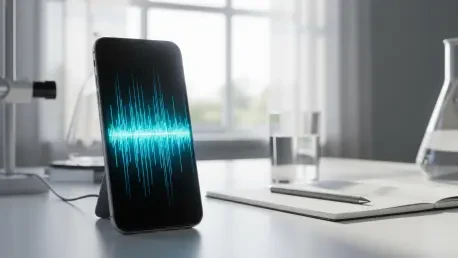

Huntington’s disease remains one of the most challenging neurodegenerative conditions because its gradual onset often masks subtle functional declines that occur long before a clinical diagnosis is confirmed. Traditional monitoring techniques usually require patients to travel to specialized clinics for lengthy assessments, which captures only a fleeting moment of their daily experience and often fails to reflect the true variability of the condition. Researchers have begun exploring the potential of utilizing common mobile technology to bridge this gap, specifically focusing on how speech patterns can serve as a window into the brain’s health. By leveraging the sensors already present in modern smartphones, it is now possible to collect high-frequency data in a natural environment, offering a more nuanced and continuous view of disease progression. This shift toward decentralized monitoring represents a significant departure from standard practice, promising a future where healthcare is as mobile and adaptive as the patients themselves.
Identifying Speech Patterns and Statistical Accuracy
Speech is a complex motor and cognitive task that requires the seamless coordination of multiple brain regions, making it an exceptionally sensitive indicator of neurological integrity. In a recent cross-border study involving participants from the Czech Republic and Germany, researchers employed a specialized mobile application to gather vocal data from individuals living with Huntington’s disease. These participants engaged in various tasks, ranging from structured storytelling to spontaneous speech, which provided a rich dataset for analysis without the need for an in-person examiner. The results demonstrated that even in the early stages of the disease, patients displayed distinct linguistic signatures, such as a significantly reduced vocabulary and a tendency to use shorter, less complex sentence structures. These patterns were not merely random variations but rather consistent reflections of the underlying neural breakdown, suggesting that the way a person speaks can reveal critical information about their cognitive state.
Beyond the mere structure of sentences, the study also identified a high frequency of phrase repetition and elongated pauses, which often correlate with the loss of motor control and executive function. When comparing these digital findings with traditional clinical benchmarks, the correlation was remarkably strong, with automated metrics explaining more than half of the variation seen in motor skills and daily living capabilities. This level of statistical accuracy is vital for clinicians who need reliable data to make informed decisions about patient care and treatment adjustments. Because the smartphone application allowed for independent completion of tasks over several consecutive days, the data collected was far more representative of a patient’s typical performance than a single, high-stress visit to a hospital. This transition toward objective, automated measurement provides a scalable solution for monitoring large populations, potentially transforming the landscape of clinical research and the development of much-needed therapies.
Enhancing Predictive Models Through Digital Data
While automated speech analysis provides a wealth of data on its own, its true power is realized when it is integrated with specific demographic variables such as age, sex, and educational background. Researchers found that while these traditional factors are important, they lack the sensitivity required to track the intricate progression of Huntington’s disease when used in isolation. However, by combining demographic data with the nuanced linguistic features captured by the smartphone application, the predictive power of the models increased to an impressive level. These comprehensive models were capable of accounting for up to eighty-one percent of the differences observed in standardized clinical scores, which is a major leap forward in neurodegenerative diagnostics. This multi-modal approach ensures that the digital assessments are not only accurate but also tailored to the individual characteristics of each patient, allowing for a personalized medicine strategy that was previously unattainable in a remote clinic setting.
The concept of a digital biomarker is central to this evolution, as it replaces subjective human observation with quantifiable, reproducible data streams that can be analyzed by advanced algorithms. Unlike traditional assessments that require a trained specialist to transcribe and interpret speech, this technology functions autonomously, removing the risk of human bias or error. This autonomy is particularly beneficial for global clinical trials, where maintaining consistency across different languages and geographic regions is often a significant hurdle. By focusing on the fundamental mechanics of speech and language, the technology transcends cultural barriers, providing a universal tool for assessing neurological health. Furthermore, the ability to collect data in real-time allows for the immediate identification of health trends, enabling medical teams to intervene much sooner than would be possible under the traditional model of biannual check-ups. This proactive stance is essential for managing a condition that is as dynamic as Huntington’s disease.
Pathways Toward Standardized Digital Neurology
Implementing smartphone-based speech analysis into the standard care routine significantly reduces the logistical and financial burdens placed on patients and their families. Many individuals living with Huntington’s disease face mobility issues that make frequent travel to specialized medical centers a daunting and exhausting task. By moving the primary site of assessment from the clinic to the home, this technology fosters a more inclusive environment for patients who might otherwise be excluded from important clinical trials or monitoring programs. The consistency provided by daily, home-based testing also mitigates the white coat effect, where a patient’s performance is negatively impacted by the anxiety of a formal medical environment. Consequently, the data collected reflects the patient’s actual ability to function in their everyday life, providing a more compassionate and accurate picture of their health. This democratization of clinical data collection ensures that every patient has the opportunity to contribute to their care.
Looking ahead, the validation of these speech-based tools in larger and more diverse patient populations served as the critical next step in moving from experimental research toward widespread clinical adoption. Researchers prioritized the creation of open-source datasets that allowed for the cross-comparison of different speech analysis algorithms to ensure the highest standards of reliability. Medical institutions also developed secure frameworks for handling the sensitive audio data generated by these applications, which successfully balanced the need for deep insight with the imperative of patient privacy. By establishing these technical and ethical foundations, the healthcare community paved a path for a new era of neurology where diagnosis and monitoring became seamless parts of a patient’s daily existence. This progression eventually turned what was once a series of sporadic snapshots into a continuous, high-definition film of neurological health that improved long-term outcomes for patients.