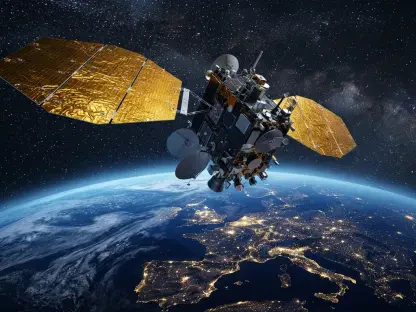

The core of the current industry friction involves whether space-based cellular infrastructure can truly achieve the reliability of terrestrial fiber networks. This debate has intensified as SpaceX maneuvers to transition Starlink from a specialized satellite broadband provider into a formidable direct competitor for mainstream mobile network services. With a current fleet of over 10,200 satellites and a global subscriber base reaching 12 million, the company is leveraging its vertical integration to challenge the traditional “Big Three” carriers. While the promise of universal connectivity is enticing, established telecommunications giants argue that the fundamental physics and economic logic of the mobile industry favor ground-based systems. Leaders within AT&T and T-Mobile have voiced significant skepticism regarding the scalability of Musk’s vision, suggesting that while satellite technology fills critical gaps, it lacks the necessary density and performance to supplant the fiber backbones that sustain modern digital economies.
Technical Barriers: The Physics of Signal Propagation
A primary technical challenge cited by industry experts concerns the immutable laws of physics governing signal propagation from low-Earth orbit to standard handheld devices. T-Mobile executives have been particularly vocal about the “windshield problem,” noting that while terrestrial towers are situated close to users, satellite signals must traverse hundreds of miles of atmosphere before reaching a receiver. Common environmental obstructions such as dense urban foliage, thick concrete walls, and even standard automotive glass can severely degrade or entirely block these space-based transmissions. This vulnerability raises questions about the consistency of service in suburban and urban settings where users expect seamless connectivity while indoors or in transit. Terrestrial networks, which utilize a dense grid of localized towers and small cells, are specifically engineered to mitigate these line-of-sight issues through proximity, a luxury that a satellite constellation simply cannot replicate at scale in 2026.
Capacity and connection density represent another significant hurdle for the expansion of space-based mobile networks in metropolitan hubs. In a typical urban environment, thousands of simultaneous high-bandwidth connections are required within a very narrow geographic area to support streaming and enterprise applications. Critics from legacy carriers argue that satellites lack the spatial multiplexing capabilities necessary to manage this level of concentrated demand. Even with the latest advancements in beamforming technology, a single satellite beam covers a much larger area than a terrestrial cell site, leading to potential congestion during peak usage hours. While SpaceX has demonstrated impressive speeds for isolated rural users, the challenge of maintaining that performance for millions of concentrated urban subscribers remains a point of contention. Traditional infrastructure providers maintain that ground-based towers, connected via fiber, are the only viable solution for the high-throughput performance.
Financial Realities: The Cost of Hybrid Network Deployment
The financial viability of SpaceX’s ambition to operate as a “fourth major carrier” is increasingly under scrutiny by market analysts and industry veterans. To overcome the inherent capacity limitations of direct-to-cell technology, the company has explored a hybrid model that involves deploying millions of small cellular base stations alongside Starlink dishes at residential properties. However, AT&T leadership has pointed out that this strategy essentially requires rebuilding the very terrestrial network SpaceX initially sought to bypass. The capital expenditure involved in manufacturing, distributing, and maintaining millions of these ground units would likely match or exceed the investment required for traditional fiber expansion. Estimates suggest that constructing a space-integrated network capable of rivaling a major carrier could cost upwards of $100 billion. This massive commitment calls into question the long-term profitability of the venture compared to the established footprints of legacy providers.
Beyond the initial hardware costs, the ongoing operational expenses of a global satellite-terrestrial hybrid network pose a unique set of economic risks. Maintaining a constellation of thousands of satellites requires a continuous launch cycle to replace aging units and upgrade technology, a recurring cost that terrestrial carriers do not face to the same degree with fixed ground assets. Furthermore, the logistical complexity of managing a distributed network of millions of privately owned “mini-cell sites” introduces significant maintenance overhead. Traditional providers argue that if this decentralized approach were more efficient than centralized tower networks, they would have already implemented similar systems using their existing backhaul. The skepticism shared by financial stakeholders suggests that while the “space shortcut” is effective for underserved regions, it may struggle to offer a competitive return on investment in markets where fiber is already prevalent.
Terrestrial Strength: The Strategic Reinforcement of Fiber
In a strategic move to reinforce their market dominance, traditional carriers have accelerated their investments in physical fiber-optic infrastructure. AT&T recently finalized a multi-billion-dollar partnership with Corning to expand its fiber footprint, positioning the technology as the indispensable foundation of the digital age. This “fiber-first” philosophy is rooted in the belief that nothing can match the reliability and near-instantaneous latency of light signals traveling through glass cables. By doubling down on these assets, legacy providers are framing Starlink as a secondary tool—a specialized service for maritime and disaster recovery—rather than a primary replacement for urban mobile service. This clear distinction helps maintain investor confidence and emphasizes the limitations of space-based throughput for bandwidth-intensive tasks. The industry consensus remains that while satellite technology has made monumental leaps, it continues to function as a bridge for the bulk of high-performance data traffic.
The focus on terrestrial reliability is further bolstered by the performance gap between fiber-backed cellular networks and current satellite systems. For enterprise-level applications and mission-critical communications, “five-nines” reliability is the standard that space-based networks have yet to consistently achieve in varied weather conditions. Heavy rain, atmospheric interference, and solar activity can still impact satellite signal quality, whereas buried fiber-optic cables are shielded from most environmental variables. This stability is crucial for the development of autonomous vehicle networks and remote healthcare services, where even a momentary loss of connection can have severe consequences. By positioning themselves as the only providers capable of delivering this level of guaranteed performance, traditional telecom companies are solidifying their role as the primary gatekeepers of the mobile market. This strategic differentiation ensures that the core of the digital economy remains firmly anchored to ground systems.
Legal Roadblocks: Regulatory and Logistical Challenges
Regulatory and logistical hurdles represent another complex layer of the confrontation between SpaceX and the telecommunications establishment. The proposal to turn customer properties into active broadcast nodes for a public cellular network faces significant legal challenges regarding zoning and spectrum rights. Current federal and local regulations often restrict the use of private residential property for commercial telecommunications broadcasting without specific permits and adherence to safety standards. Navigating the bureaucratic requirements of thousands of different municipalities presents a logistical nightmare that could delay the rollout of Starlink’s mobile services for years. In contrast, traditional carriers have spent decades establishing professional relationships with tower companies and government agencies, securing the necessary easements and regulatory approvals. These established legal frameworks provide a significant defensive moat for legacy providers, who are well-positioned to challenge this model in the courts.
International spectrum coordination adds a further dimension of difficulty to the global expansion of space-based mobile networks. Because satellite signals do not respect national borders, SpaceX must secure agreements with multiple international regulatory bodies to prevent interference with existing services. Traditional carriers often lobby their respective governments to protect their licensed spectrum, creating a competitive landscape where legal maneuverings are as important as technological innovation. The complexity of managing these cross-border frequency allocations can lead to fragmented service availability, where a device might function seamlessly in one region but lose connectivity when crossing a border. This lack of uniformity contrasts with the standardized global roaming agreements that terrestrial carriers have refined over decades. As the industry moves forward, the ability to resolve these complex spectrum disputes will be a determining factor in whether a truly global, space-based mobile network can become a reality.
Future Synergy: Strategic Integration and Actionable Pathways
The market fluctuations following SpaceX’s aggressive expansion demonstrated that investors remained deeply divided over the future of the telecommunications landscape. As shares of traditional carriers experienced volatility, some financial analysts argued that the industry was approaching a turning point similar to the disruption of the automotive sector. However, the prevailing sentiment among seasoned telecom observers suggested that the transition would be far more gradual than the initial hype indicated. The strategic response from established companies, characterized by massive investments in fiber and the reinforcement of their technological superiority in urban markets, successfully stabilized their positions. This era of competition highlighted the unique strengths of both models, showing that while satellite connectivity could provide a vital safety net, it did not immediately render terrestrial networks obsolete. The high-stakes standoff between these giants eventually shifted from a battle to a search for a market equilibrium.
Stakeholders eventually recognized that the most effective path forward involved a synergistic approach rather than a purely competitive one. Forward-looking carriers began exploring integration strategies where satellite links served as a redundant backup for ground-based systems, ensuring total network resilience during natural disasters. This transition encouraged a more holistic view of connectivity, where the “space-first” and “fiber-first” philosophies were no longer seen as mutually exclusive but as complementary components of a robust global network. For the industry, the primary lesson was the importance of balancing rapid innovation with the reliable performance that consumers and businesses demanded. Actionable steps for future development focused on creating interoperable standards that allowed seamless handoffs between signals, ensuring that mobile users could maintain a high-quality connection regardless of location. This collaborative evolution ultimately strengthened the entire telecommunications ecosystem and provided a more expansive digital infrastructure.