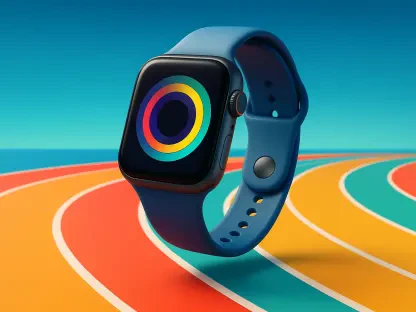

Recent leaks within the Garmin Connect app have sparked a debate regarding whether the brand will maintain its commitment to Memory-in-Pixel displays or transition to high-fidelity AMOLED technology. This discovery has sent ripples through the endurance community, where the Enduro line is revered as the ultimate tool for multi-day expeditions. Historically, this specific series has prioritized extreme longevity over the aesthetic brilliance found in consumer-grade smartwatches, positioning itself as a niche but essential piece of kit for professional athletes. As the industry moves further into 2026, the demand for high-resolution displays has created a strategic friction point for manufacturers. Garmin now faces a pivotal decision: continue catering to a small group of ultra-endurance specialists or pivot toward the broader market preference for vibrant visuals. The outcome of this design choice will likely redefine the expectations for the entire outdoor wearable category for years to come, as battery life remains the primary bottleneck for tech-heavy devices.
Balancing Visual Fidelity and Power Efficiency
The Enduro’s Legacy: A Foundation of Endurance
The Memory-in-Pixel technology that has defined the Enduro series since its inception remains a cornerstone of the brand’s rugged identity. These displays function by reflecting ambient light, which ensures that readability actually improves in direct sunlight while maintaining a near-zero energy draw when the screen is static. For the ultra-marathoner or the solo adventurer navigating the backcountry for weeks at a time, this hardware is not a compromise but a necessity. By utilizing the sun as a light source rather than fighting against it with high-wattage backlighting, Garmin has managed to push battery life into the realm of months rather than days. This engineering philosophy has fostered a loyal following among those who view their watch as a critical survival tool rather than a mere extension of their smartphone. Transitioning away from this standard would require a fundamental shift in how the company defines the concept of endurance in its 2026 product lineup.
The AMOLED Transition: Modern Visual Standards
In contrast to the utilitarian nature of reflective screens, the aggressive industry pivot toward AMOLED technology reflects a changing consumer landscape where visual clarity is paramount. Modern athletes are increasingly looking for devices that can handle complex mapping, high-contrast data overlays, and smooth animations without the washed-out appearance of traditional outdoor displays. Garmin has already successfully integrated these panels into its flagship Fenix and Forerunner models, proving that a significant portion of the market is willing to sacrifice some battery longevity for a more immersive user experience. However, the Enduro has always occupied a different space, serving as the final vanguard against the trend of daily or weekly charging cycles. The challenge in 2026 lies in whether the power efficiency of AMOLED has reached a threshold where it no longer poses a threat to the core mission of an endurance-first device or if it remains a luxury.
Strategic Possibilities: The Next Generation of Wearables
Technological Evolution: Solar and Efficiency Gains
One potential solution for maintaining the Enduro’s reputation while updating its visual hardware involves the next generation of solar-harvesting technology. Engineers have been working on more transparent and efficient conductive layers within the Power Glass sapphire crystals, which could theoretically provide enough supplemental energy to offset the higher drain of a modern display. When paired with advanced 2026-era chipsets that utilize AI-driven power management, the device could dynamically adjust its refresh rate and brightness based on real-time environmental conditions and user activity. For instance, the system might enter a deep-sleep state during steady-state movement while reserving full visual fidelity for complex navigation tasks. This hybrid approach would allow the hardware to maintain its specialized status while adopting the aesthetic standards that current users have come to expect from premium wearables, effectively bridging the gap between two divergent design paths.
Market Strategy: Defining the Professional Standard
The strategic positioning of the Enduro 4 will ultimately serve as a litmus test for the viability of specialized hardware in an increasingly homogenized market. If Garmin chooses to unify its display technology across all high-end models, it risks cannibalizing its own sales and alienating the professional core that relies on the specific benefits of low-power screens. Conversely, maintaining a separate hardware track for a small demographic is an expensive endeavor that requires dedicated supply chains and separate software optimization. The decision reflects a broader debate within the technology sector about whether “pro” gear should remain distinct or if the gap between professional tools and consumer products is closing. As 2026 progresses, the market will dictate whether there is still a sustainable demand for a device that prioritizes absolute reliability over the modern conveniences of high-resolution interfaces and rich color palettes.
Future Implementation: Redefining High-Performance Tools
The analysis of these hardware trends demonstrated that the most effective path forward involved a deliberate separation of display technologies based on specific user intent. It was observed that professional athletes prioritized the psychological security of a non-failing device over the visual benefits of a high-density screen. Consequently, developers focused on refining the background processes and sensor accuracy to provide more value within the existing power constraints. These technological choices allowed the industry to maintain a specialized category for extreme users while the broader market embraced the transition to more vibrant interfaces. The discovery of the new hardware within the application confirmed that manufacturers remained committed to testing the limits of what a single battery charge could achieve. Ultimately, the focus shifted toward a modular ecosystem where the choice of display was treated as a functional preference rather than a hierarchy of quality, ensuring that every type of explorer found a tool suited to their environment.