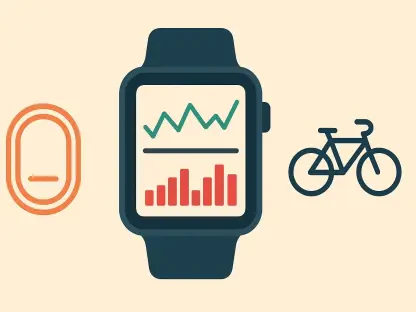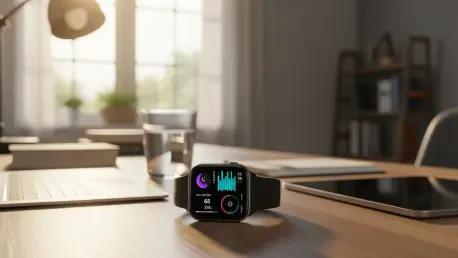

While a gleaming circle of glass and silicon on the wrist has become the primary source of medical truth for millions of people globally, the actual precision of these measurements often falls short of the clinical standards users assume they possess. In the current landscape of wearable technology, the convenience of having a heart rate monitor, sleep laboratory, and calorie counter attached to one’s body has fostered a culture of data dependency. People check their steps before coffee and review their recovery scores before deciding to exercise, yet few pause to consider the vast difference between a direct medical measurement and a calculated algorithmic estimation. This reliance on personal devices is not inherently dangerous, but it does require a sophisticated understanding of what is actually happening beneath the sapphire glass. As these tools become more integrated into daily life, distinguishing between raw physiological signals and the “intelligent guesses” made by software is essential for maintaining both physical and mental health in a data-driven world.
The Gap Between Sensors and Estimates
Biological Inputs: From Skin to Silicon
A smartwatch essentially acts as a sophisticated translator, attempting to turn the subtle language of the human body into a digital format that can be easily understood by the user. The hardware itself is limited to a few specific inputs, primarily using photoplethysmography (PPG) to detect blood flow through the skin, accelerometers to track motion in three-dimensional space, and thermistors to gauge skin temperature. High-end models have expanded this list to include electrical sensors for electrocardiograms, but the fundamental data remain raw and noisy. Every metric beyond these basic signals, such as sleep stages or VO2 max, is the result of a complex mathematical formula. These algorithms are designed to filter out environmental interference, like the movement of the watch on the wrist, and then combine the remaining data with user-provided information such as age, biological sex, and weight to generate an educated guess about the user’s physiological state.
The precision of these sensors is frequently influenced by external factors that have nothing to do with the user’s internal health. For instance, skin tone, ambient light, and even the tightness of the watch band can drastically alter the accuracy of optical heart rate readings. When a sensor fails to get a clear signal, the software often compensates by filling in the gaps with historical data or averages, which can create a misleading picture of reality. This is particularly evident during high-intensity interval training, where rapid fluctuations in heart rate can outpace the sensor’s ability to sample and process the information. Consequently, while the device provides a useful general overview, it is important to remember that the numbers on the screen are interpretations of biological signals rather than direct, clinical-grade observations of the heart or lungs.
Caloric Estimations: The Margin of Error
The calculation of calories burned is one of the most popular features of wearable technology, yet it is also among the least reliable. Because a watch cannot measure oxygen consumption or metabolic rate directly, it must infer energy expenditure based on heart rate and movement intensity. Studies have consistently shown that wearables can vary by 20% to 40% when compared to metabolic carts in a laboratory setting. This discrepancy occurs because the relationship between heart rate and calorie burn is not linear and is influenced by individual fitness levels, caffeine intake, and even stress. A person who is highly fit may have a lower heart rate during a run than someone who is sedentary, but the algorithm might interpret that lower heart rate as a lower energy burn, failing to account for the efficiency and power output of the trained athlete.
This margin of error has significant real-world consequences, particularly for individuals who use their watch to balance their daily caloric intake. When a device overestimates the calories burned during a morning jog, it can lead to “reward eating,” where the user consumes more food than they actually need based on a faulty digital summary. Over time, this reliance on an inflated number can sabotage weight management goals and create a frustrating disconnect between effort and results. To mitigate this, fitness experts suggest using movement data as a relative measure of daily activity rather than an absolute guide for nutrition. Focusing on trends in Non-exercise Activity Thermogenesis (NEAT), such as walking and household chores, often provides a more grounded and sustainable approach to monitoring energy expenditure than obsessing over the specific calorie count of a single workout.
Navigating Daily Health Metrics
Sleep and Stress: Interpreting Autonomic Indicators
Tracking sleep architecture has become a standard feature of the modern smartwatch, yet the technology lacks the ability to monitor the brain activity required for true clinical accuracy. While a formal sleep study utilizes electroencephalography (EEG) to track brain waves, a wearable relies on movement and heart rate variability to predict whether a user is in light, deep, or REM sleep. Because humans often move during various stages of sleep, or conversely, stay perfectly still while awake but resting, the device can easily misclassify these periods. A high sleep score on a watch might suggest a perfect night of rest, but it does not account for the quality of neurological recovery. Users should therefore view these scores as general indicators of sleep duration and consistency rather than a definitive diagnosis of their restorative health.
Similarly, the stress and recovery metrics found on most high-end wearables are based on heart rate variability (HRV), which measures the timing between individual heartbeats. While HRV is a powerful indicator of the autonomic nervous system’s state, it is a non-specific metric that reflects physiological arousal rather than just emotional stress. A “high stress” alert from a watch could be triggered by a difficult conversation, but it is just as likely to be caused by a heavy meal, dehydration, or a few milligrams of caffeine. Without the context of what the user was doing at the time, the data can be alarming and lead to unnecessary anxiety. Understanding that these metrics represent the body’s physical response to any stimulus allows for a more balanced perspective, where the data is used to inform lifestyle adjustments rather than to dictate a person’s emotional state.
Contextual Awareness: The Role of AI Synthesis
The evolution of wearable technology is currently shifting away from raw data delivery and toward contextual awareness powered by on-device artificial intelligence. Modern platforms are beginning to synthesize inputs from multiple sensors simultaneously to provide a more accurate narrative of the user’s health. For example, if a watch detects a spike in heart rate without any accompanying movement, the AI can cross-reference skin temperature and recent sleep patterns to determine if the user is potentially fighting off an illness. This shift from reactive to proactive monitoring represents a major leap in the utility of these devices. Instead of just telling a user their heart rate is high, the device can offer a meaningful explanation or a suggestion to rest, transforming the watch from a simple pedometer into a primitive health assistant.
This synthetic approach also helps to filter out the noise that often plagues individual data points. By looking at a broader range of inputs over a longer period, the software can distinguish between an anomaly caused by a loose watch strap and a genuine physiological shift. However, even the most advanced AI is limited by the quality of the sensors and the biases of the training data used to create its algorithms. Most of these models are developed using specific demographics, which means they may not be as accurate for individuals outside those core groups. Users must remain aware that while the AI-driven insights are becoming more sophisticated, they are still based on statistical probabilities rather than a personalized, comprehensive understanding of an individual’s unique biology and lifestyle.
Strategies for Better Health Tracking
Lifestyle Integration: Human Intuition vs. Algorithms
The most effective way to utilize health data from a smartwatch is to treat it as a secondary source of information that supports, rather than replaces, human intuition. If a wearable suggests a low recovery score and advises against exercise, but the user feels energized and strong, they should feel empowered to follow their own physical sensations. The human body provides a wealth of internal signals—such as muscle soreness, mental clarity, and hunger—that sensors on the wrist simply cannot capture. Over-reliance on an algorithm can lead to a state of “digital hypochondria,” where every minor fluctuation in a sleep score or resting heart rate becomes a source of stress. By maintaining a skeptical but curious attitude toward the data, users can use their devices to reinforce healthy habits without becoming slaves to the numbers.
When used correctly, these devices are excellent motivational tools that encourage a higher baseline of physical activity. The primary benefit of a smartwatch is often found in its ability to remind a person to move more frequently throughout the day or to prioritize a consistent bedtime. These broad behavioral changes are far more impactful for long-term health than the precise accuracy of a single calorie or step count. By focusing on the “big picture” and the human element of wellness, individuals can cultivate a relationship with technology that is both informative and empowering. This approach ensures that the smartwatch remains a helpful companion on the journey toward better health, rather than a judge that determines a person’s self-worth based on a daily performance summary.
Clinical Collaboration: Bridging the Gap With Professionals
Wearable health data served as an invaluable bridge for communication between patients and healthcare professionals, provided it was used with the proper context. While a smartwatch should never be used to self-diagnose serious conditions, it was often the first tool to flag a sustained change in resting heart rate or a potential irregular rhythm. These trends, when presented to a doctor, offered a starting point for more rigorous clinical testing. The transition toward high-fidelity wellness monitoring encouraged a cultural shift where individuals prioritized biometric trends over momentary fluctuations. Healthcare systems that successfully integrated this continuous stream of patient-led data saw improved early intervention rates for chronic conditions like hypertension and sleep apnea.
The widespread adoption of these devices also highlighted the importance of digital health literacy among the general population. Users who learned to identify the environmental factors that influenced their data—such as alcohol consumption or high altitudes—were better equipped to interpret their scores accurately. This matured understanding of technology allowed for a more collaborative relationship between humans and their digital tools. Moving forward, the most successful adopters were those who balanced algorithmic suggestions with an intuitive understanding of their own physical limits, using technology as a supportive scaffold rather than a definitive diagnostic authority. By treating the smartwatch as a trend tracker rather than a medical truth, people fostered a healthier, more sustainable relationship with the data on their wrists.