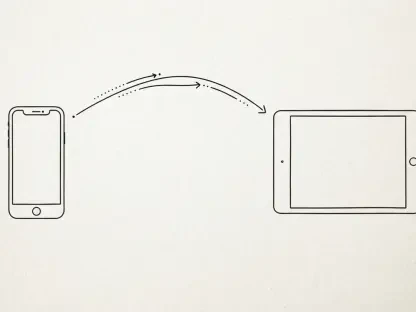

The move toward touch-sensitive displays reflects a recognition that modern computing habits have become more fragmented and task-oriented than in years past. For nearly two decades, the laptop market has been bifurcated by a rigid distinction between mobile tablets and traditional workstations, but the upcoming late October release of the first touchscreen-enabled MacBook Pro signals the end of this hardware segregation. This historical pivot, expected to be unveiled on October 28, 2026, marks a significant departure from the foundational design principles that have defined Apple’s portable computing strategy since the dawn of the mobile era. While the competition has long embraced hybrid functionalities, Apple’s decision to integrate touch into its flagship laptop line is not merely a reactive measure to market trends but a calculated evolution of the macOS ecosystem. This transition suggests that the previously impenetrable wall between iPadOS and macOS is finally being dismantled to accommodate a generation of users who grew up with tactile interfaces. As the tech industry prepares for this landmark shift, the move represents a fundamental reimagining of how professional-grade hardware can balance traditional precision with the intuitive fluidity of modern mobile interaction, effectively setting the stage for a new standard in high-performance computing.
Moving Past the Legacy of Ergonomic Rejection
The resistance to a touch-sensitive Mac can be traced directly back to Steve Jobs, who famously dismissed the concept as being ergonomically terrible for the end user. During a 2010 keynote address, Jobs argued that vertical touchscreens lead to physical exhaustion and discomfort, a phenomenon that engineers and researchers often refer to as Gorilla Arm. His critique was rooted in the physiological reality that holding one’s arm in an outstretched, unsupported position to interact with a vertical display becomes taxing over even short periods of time. He maintained that touch interfaces were revolutionary for devices held in the hand or rested on the lap, like the iPhone and iPad, but were fundamentally ill-suited for the upright geometry of a traditional clamshell laptop. For sixteen years, this philosophy served as the primary justification for keeping the Mac cursor-centric, ensuring that the trackpad remained the sole bridge between the user and the software.
This long-standing adherence to ergonomic purity created a clear and intentional distinction between Apple’s various product lines, forcing users to choose between the tactile intimacy of the iPad and the heavy-duty productivity of the Mac. However, as the computing landscape has matured through 2026, the rigid separation between these two worlds has become increasingly difficult to maintain in a professional environment that demands multi-modal flexibility. Modern workflows often require users to jump between deep-focus coding or writing and quick, gestural interactions like zooming into a design mockup or swiping through a gallery of assets. By moving past the strict ergonomic rules established in the early 2010s, Apple is acknowledging that the ways people interact with their machines have become more varied. The company is now betting that users can manage their own physical comfort by utilizing touch as a secondary, rather than primary, input method, thereby gaining efficiency without sacrificing the health of their posture.
The Factors Driving Apple’s Strategic Pivot
Several key technological and design factors have converged to make the introduction of a touchscreen MacBook feasible and necessary in 2026. Primarily, the visual language of macOS has undergone a subtle but profound transformation to mirror the aesthetics and functionality of iOS and iPadOS. Over the last few development cycles, users have seen the implementation of larger, touch-friendly icons, a unified Control Center, and multitasking tools like Stage Manager that feel naturally suited for tactile interaction. As more developers prioritize building cross-platform applications that run seamlessly across the entire Apple hardware stack, providing a consistent input method has evolved from a luxury into a practical requirement. When a user interacts with the same application on an iPad and then moves to a MacBook, the instinct to reach out and touch the screen is a natural byproduct of a unified software experience that the company has spent years cultivating.
Beyond software synergy, the shift toward OLED display technology has played a critical role in making this transition possible without compromising the MacBook’s iconic industrial design. Modern OLED panels are significantly thinner and more power-efficient than the liquid crystal displays of the previous decade, allowing engineers to integrate touch-sensitive layers without adding noticeable thickness or weight to the laptop’s lid. In the past, the additional hardware required for touch input often resulted in bulkier frames and diminished battery life, two compromises that Apple was notoriously unwilling to make. With the current generation of display technology, these hurdles have been cleared, allowing for a high-performance screen that maintains the responsiveness of an iPad Pro while delivering the color accuracy required by creative professionals. This technical milestone ensures that the addition of touch feels like an enhancement of the existing hardware rather than a cumbersome hardware trade-off.
Enhancing Productivity Without Replacing the Trackpad
It is important for both critics and enthusiasts to understand that the introduction of a touchscreen is not intended to replace the traditional keyboard and trackpad experience that defines the MacBook Pro. Apple remains deeply committed to the precision, haptic feedback, and ergonomic comfort that professional users expect from a high-end workstation. Instead, the touch interface is being strategically positioned as a supplemental tool designed for micro-tasks that are more intuitive when performed directly on the glass. This philosophy mimics how professional illustrators often use a mouse for file management while switching to a stylus for creative work. By integrating touch into the existing clamshell design, the company is providing a layer of “occasional-use” functionality that enhances specific workflows without forcing a total change in how the operating system is navigated for high-precision tasks like text selection or spreadsheet management.
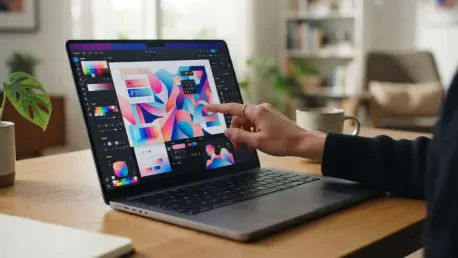
In practical terms, this means that a video editor in Final Cut Pro might use the trackpad for frame-by-frame adjustments but find it much faster to use their finger to scrub through a long project timeline or move clips across the magnetic storyboard. Similarly, creative directors using the Adobe Creative Cloud suite could find that selecting layers or toggling visibility in Photoshop is more immediate when handled via a direct tap on the display. By offering touch as an optional layer of interaction, Apple is empowering users to choose the most efficient input method for their specific task in real-time. This dual-input mastery allows for a fluid blending of high-precision cursor control and the organic, gestural movements of a mobile interface. The goal is to reduce the friction of the user interface, making the hardware feel like an extension of the user’s intent rather than a barrier to it.
Bridging the Gap Toward a More Versatile Form Factor
Looking beyond the immediate release of a standard clamshell MacBook with a touch-sensitive screen, there is significant industry speculation that this update is merely the first phase of a broader revolution in the Mac form factor. The introduction of touch-sensitive hardware opens the door for future models to support the Apple Pencil, a development that would fundamentally change the value proposition for digital artists and designers. Currently, many professionals are forced to carry both a MacBook and an iPad to complete their work, utilizing the Mac for its file system and raw processing power while relying on the iPad for its artistic freedom. A Mac that bridges this gap would streamline the hardware ecosystem and eliminate the redundancy of owning two separate pro-grade devices. This evolution could eventually lead to a convertible design or a 360-degree hinge, providing the flexibility to transform the workstation into a dedicated drawing surface.
Such a shift would effectively solve the ergonomic challenges that were once used to argue against the touchscreen Mac. By allowing the screen to sit at various angles or fold back entirely, Apple could create a machine that handles heavy-duty macOS software while providing a comfortable physical posture for stylus-based work. This would represent a total merger of the two most successful portable computing philosophies in the company’s history. While the 2026 MacBook Pro is expected to maintain its traditional shape, the underlying hardware foundations are being laid to support a future where the device adapts to the user’s physical environment rather than the other way around. This trajectory suggests that the MacBook of the late 2020s will be a hybrid powerhouse, capable of serving as a traditional laptop, a high-end digital canvas, and a collaborative presentation tool all within a single, unified chassis.
Adapting to a Modern and Competitive Market
Ultimately, the decision to bring touch to the MacBook line is a pragmatic response to a mature and highly competitive hardware market. For over a decade, users in the Windows ecosystem have enjoyed the versatility of touch input across a wide range of devices, from the Microsoft Surface to the Dell XPS series. In this context, Apple’s refusal to offer the feature was increasingly viewed by the broader market as an artificial limitation rather than a curated design choice. By updating the MacBook Pro to reflect contemporary user expectations, the company is ensuring that its flagship laptop remains the gold standard for versatility and performance. The move is a recognition that even the most loyal professional users value the choice of input, and that providing that choice is essential for maintaining market leadership in a world where the boundaries between different types of computers are rapidly disappearing.
The 2026 transition to a touchscreen interface represented a pivotal moment where hardware philosophy finally caught up to the realities of modern software design. During the rollout, Apple successfully demonstrated that touch could be integrated into macOS without compromising the power or the professional identity of the platform. This shift marked the end of the long-standing hardware taboo against tactile laptops and provided a clear roadmap for the future of the product line. For users looking to maximize their efficiency, the next logical step involves auditing current software libraries to identify which professional tools benefit most from gestured-based shortcuts. Developers should prioritize updating their macOS applications to support high-fidelity touch inputs, ensuring they are ready for a user base that will soon expect a unified experience. This evolution has solidified the MacBook’s position as a truly multi-modal tool, ready to handle the diverse challenges of the next decade of professional computing.