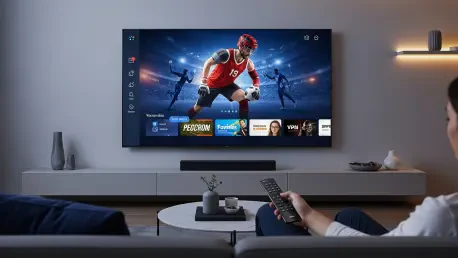

The frustrating experience of watching a high-definition sports broadcast stutter while a smartphone struggles to mirror its screen to a television is a technical headache that most modern viewers no longer need to tolerate. In the current landscape of 2026, the transition from clunky workarounds to streamlined, built-in software has redefined the home theater experience. Relying on secondary devices to feed a primary screen often results in dropped frames and connectivity issues that ruin the momentum of live events.
The End of the “Fiddle Factor” During High-Stakes Streaming
Moving past the frustration of laggy wireless casting and cumbersome HDMI cables allows for a more immersive viewing experience. When guests gather for a major tournament, the technical troubleshooting of a temperamental connection creates an awkward social friction. No one wants to spend the first half of a match squinting at a buffering icon or tripping over a physical cable.The shift from treating a television as a secondary monitor to a standalone powerhouse reflects a change in consumer behavior. Modern hardware now handles encryption and high-bitrate video simultaneously. This autonomy ensures that the viewing experience remains consistent, regardless of what other tasks a mobile phone or laptop might be performing in the background.
Why Native Integration Is the New Standard for Living Room Privacy
The evolution of VPN support on platforms like Apple TV, Fire TV, and Android TV has bridged a significant security gap. Today, dedicated applications mean that privacy is just a few remote clicks away, ensuring every stream remains anonymous and protected from ISP throttling. This convenience has transformed the VPN into a standard utility for the connected household.Secure streaming connections are essential for global events like the World Cup, where regional restrictions often dictate accessibility. Moving away from unreliable workarounds toward “app-happy” convenience allows users to maintain a stable digital footprint. This native integration ensures that privacy does not come at the cost of performance.
Performance Breakdown: Native Apps vs. Traditional Casting Methods
The reliability gap between native applications and methods like AirPlay or Chromecast remains a hurdle for many. While casting offers a quick way to share content, it often falls short due to network congestion and device overhead. Native apps bypass this middleman, requesting data directly from the server for a more robust signal.Dedicated apps on Fire Sticks and Apple TV boxes eliminate the latency that plagues mirrored streams. Operating system nuances play a role here; the ease of Android TV offers a flexible environment, whereas Samsung and LG sets require specialized requirements. Choosing the right hardware avoids the dreaded “spinning wheel” during pivotal moments of a broadcast.
Industry Favorites and the Best Tools for Stress-Free Viewing
Analyzing the “streaming-first” features of providers like ExpressVPN and NordVPN reveals a focus on high-speed networks optimized for video. These services support 4K content without the lag associated with older encryption protocols. Such advancements ensure that security does not become a bottleneck for the entertainment experience.The 60-day safety net provided by Norton VPN’s extended guarantee is a game-changer for major tournament cycles. For sets lacking native support, Smart DNS solutions bridge the gap for platforms like BBC iPlayer or SBS. These tools offer a middle ground for users who prioritize accessibility over full-tunnel encryption.
A Practical Strategy for Optimizing Your Television Setup
Installing VPN software via native app stores was a simple process that mirrored the setup of any other streaming service. Once active, selecting a server in a target country enabled immediate access to localized broadcasts. This method removed the need for external hardware when the television OS was compatible with the software.Best practices for server selection involved choosing locations with the lowest ping for smooth access to international platforms. When a built-in OS was limited, switching to a dedicated media streamer became the most effective hardware-specific solution. This strategic approach ensured that viewers optimized their setups for reliability, leaving pixelated mirroring in the past.