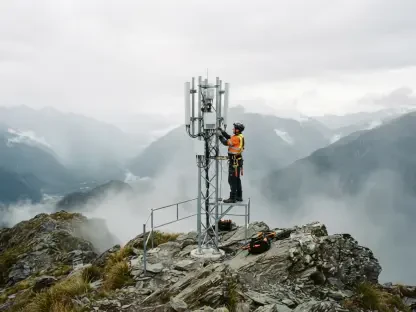

Standard smartphones currently in use will soon be able to bypass the lack of ground-based signals by connecting directly to Starlink’s massive low-Earth-orbit satellite array. This development follows the high-profile announcement on November 18, 2026, in which the Botswana Telecommunications Corporation (BTC) revealed its strategic partnership with Starlink to launch a service known as BTC Satellite. This initiative introduces Direct-to-Mobile technology specifically designed to address the persistent connectivity challenges posed by Botswana’s vast and often rugged geography. By shifting the technical focus from traditional ground-based towers to sophisticated orbital constellations, the partnership aims to provide a reliable safety net for those living and working in the most isolated regions of the country. This transition is not merely a technical upgrade but a major socioeconomic shift intended to eliminate “dead zones” that have long hampered development in areas like the Kalahari Desert and the Okavango Delta. The collaboration marks a significant evolution in Southern Africa’s telecommunications landscape, prioritizing universal access over the logistical limitations of physical hardware. As the nation prepares for the commercial rollout in early 2027, the emphasis remains on fostering national growth through advanced space technology that brings even the most remote districts into the digital fold.
Core Philosophy: The Democratization of Satellite Access
The partnership centers on a revolutionary approach to connectivity that removes traditional barriers to satellite communication, such as the need for specialized and expensive hardware. Traditionally, satellite access required bulky fixed dishes or dedicated satellite phones that were often out of reach for the average consumer. However, the BTC Satellite initiative utilizes hardware already in the pockets of millions. This “Direct-to-Mobile” approach allows a standard smartphone to communicate directly with satellites without any modifications or external peripherals. This breakthrough is intended to provide a thin but vital layer of connectivity that supplements existing 4G and 5G networks rather than attempting to replace them entirely. In environments where building a cell tower is geographically impossible or economically unviable, this orbital layer acts as a permanent secondary network. It ensures that the basic right to communicate is not limited by proximity to urban infrastructure. By leveraging Starlink’s low Earth orbit (LEO) satellites, BTC is effectively democratizing access to the sky, ensuring that even the most remote travelers or rural residents can maintain a basic digital presence without investing in specialized equipment.
This focus on essential connectivity prioritizes reliability and safety over raw data speed during its initial phases. The primary functions identified for the early rollout include messaging, location sharing, and emergency communication services. These features allow users to send text-based data and precise coordinates even when they are hundreds of miles away from the nearest terrestrial signal. By focusing on low-bandwidth tasks, the system can ensure high reliability even in challenging weather conditions or during periods of high network demand. This creates a critical lifeline for individuals navigating the deep wilderness, where a vehicle breakdown or a medical emergency can quickly become life-threatening without a means of signaling for help. The philosophy behind this move is one of inclusive safety; the network is designed to be there when everything else fails. It represents a paradigm shift from viewing satellite technology as a luxury for high-end corporations to seeing it as a fundamental tool for public safety and rural empowerment. As Botswana continues to grow its tourism and agricultural sectors, having a reliable, low-barrier communication method in uninhabited regions becomes a strategic national asset that enhances the resilience of the entire population.
Market Positioning: Managing Expectations and Technical Readiness
A critical aspect of the rollout involves distinguishing between the BTC Satellite mobile service and the standard Starlink broadband offerings that have already gained traction globally. While the fixed Starlink dish provides high-speed, low-latency internet suitable for video streaming and large-scale business operations, the mobile partnership offers a narrower data pipe optimized for mobility. It is essential for consumers to understand that this mobile service is a specialized tool for essential communication rather than a replacement for high-speed home internet. By clearly defining these boundaries, BTC and Starlink aim to manage consumer expectations and prevent network congestion. The mobile service is geared toward “thin” data tasks that require minimal throughput but high availability. This strategic positioning ensures that the network remains robust for emergency and logistical use while terrestrial 4G and 5G networks continue to handle the bulk of high-bandwidth traffic in populated areas. This dual-layered approach creates a comprehensive ecosystem where fixed satellite, mobile satellite, and terrestrial cellular networks work in harmony to cover every square inch of the country’s territory.
The messaging surrounding the launch also reveals a standard gap between marketing enthusiasm and technical readiness, which is common in major infrastructure projects. BTC has marketed the upcoming service as a “done deal,” using slogans like “coming soon” to build public anticipation and secure its brand as an innovator. In contrast, Starlink’s official communication has been more measured, targeting a launch window of “early next year” to account for the complexities of orbital calibration and local regulatory hurdles. This discrepancy highlights the reality of deploying such an advanced network; while the partnership agreement is finalized, the actual commercial activation depends on a variety of external factors. These include the final density of the satellite constellation over the Southern African region and the completion of rigorous field testing to ensure that the handoff between satellites is seamless for mobile users. Despite these nuances, the strategic intent remains clear: BTC is positioning itself as a forward-thinking national carrier that is not afraid to embrace disruptive technologies. This proactive stance is designed to capture the “first-mover” advantage in the satellite-to-phone market, establishing BTC as the go-to provider for explorers, miners, and rural businesses.
Technical Architecture: Bridging the Gap Between Ground and Sky
The technical foundation of BTC Satellite involves a sophisticated orchestration of networks where satellites essentially function as cell towers in space. Because a standard smartphone has a much smaller antenna and significantly less power than a traditional satellite dish, data throughput is naturally limited. To overcome this, the satellites “look down” on the entire country, using advanced phased-array antennas to focus signals on specific regions. This allows the network to pick up the relatively weak signals emitted by handheld devices. The initial focus on messaging and location data is a direct result of these physical constraints, as text-based communication requires very little bandwidth and can tolerate the slight latency inherent in satellite-to-phone links. By focusing on these high-priority, low-data tasks, the system maximizes the number of users it can support simultaneously. This architecture allows BTC to bypass the immense economic challenges of building and maintaining physical towers in sparsely populated or environmentally sensitive areas, where the costs of construction and power supply often outweigh the potential revenue from a limited user base.
By moving from a purely terrestrial model to a multilayered orbital approach, the network provides blanket coverage without the need for additional ground-based hardware. In many parts of Botswana, the terrain is so vast and the population so dispersed that traditional cellular expansion is physically impossible or prohibitively expensive. Satellite technology effectively solves this problem by providing a consistent signal regardless of the geography below. This is particularly important for the country’s national parks and desert regions, where installing infrastructure would also pose environmental risks. The orbital layer ensures that connectivity is “on” by default, covering every hectare of land without requiring a single meter of fiber-optic cable or a new concrete foundation in the wilderness. This makes the BTC Satellite service an environmentally friendly and cost-effective solution for expanding national reach. Furthermore, the integration of software-defined radios and specific frequency allocations allows the system to scale as the technology matures. As more satellites are launched and hardware efficiency improves, the network is expected to eventually support more data-intensive functions, though the current priority remains firmly on reliable text and location services.
Socio-Economic Gains: Transforming Key National Industries
The agricultural sector, particularly the cattle industry, stands to be one of the most significant beneficiaries of this technological leap. Botswana’s commercial farms and grazing lands often span thousands of hectares in remote districts, far from the nearest urban centers or cell towers. For decades, farmers have struggled with a lack of communication that hindered logistics and safety. With the introduction of BTC Satellite, farm owners and managers can now monitor market prices, coordinate with logistics teams, and stay in contact with staff directly from the field. This increases operational efficiency and allows for quicker responses to issues such as livestock theft, disease outbreaks, or equipment failure. The ability to send coordinates and messages from the most isolated grazing areas means that farmers no longer need to travel for hours to a town just to make a phone call or send an update. This connectivity fosters a more resilient agricultural economy, allowing rural communities to integrate more effectively into national and international supply chains without the constant barrier of a digital divide.
The mining industry, which serves as a cornerstone of Botswana’s national economy, will see equally transformative gains in safety and operational coordination. Mineral exploration frequently occurs in deep wilderness areas where teams may be out of range of traditional communication for weeks at a time. The direct-to-mobile satellite service ensures that these exploration teams can maintain constant contact with headquarters for safety checks and real-time operational updates. In the event of a technical failure or a medical emergency at a remote site, the ability to share a precise location and call for assistance through a standard smartphone is a game-changer for workplace safety. Similarly, the tourism and conservation sectors, which are vital for Botswana’s global image and ecotourism revenue, will benefit from an added layer of security. Wildlife guides operating in the Okavango Delta or the national parks can provide a safer experience for international tourists, knowing that help is always a message away. This enhanced safety profile makes Botswana an even more attractive destination for high-end ecotourism, as visitors can feel secure exploring the country’s most pristine and remote natural wonders.
Regional Evolution: The Global Trend Toward Collaborative Models
The deal between BTC and Starlink reflects a significant global shift in which satellite companies and traditional mobile network operators increasingly choose to act as partners rather than competitors. In the past, satellite internet was often viewed as a threat to traditional carriers or as a niche service for high-budget corporate clients. However, the current trend favors an “operator-led” model where firms like Starlink utilize the established infrastructure of local carriers like BTC. This partnership allows Starlink to leverage BTC’s existing customer base, localized billing systems, and deep understanding of the domestic regulatory landscape. For consumers, this simplifies the entire experience, as they do not need to sign up for a separate satellite service or deal with foreign billing entities. Instead, they can simply add the satellite feature to their existing BTC plan. This model provides a blueprint for how legacy telecommunications companies can stay relevant in a rapidly changing technological environment by embracing innovation rather than resisting it.
In the African context, this collaborative model is particularly innovative because it moves away from using satellites strictly for “backhaul” or community Wi-Fi hubs. Traditionally, satellite technology in the region was used behind the scenes to connect remote towers to the core network, but end users still had to be near a physical tower to get a signal. By enabling direct-to-handset communication, BTC is setting a precedent that is likely to trigger a competitive response across the continent. Regional rivals, such as Mascom and Orange, may soon find themselves under pressure to seek their own satellite partnerships to avoid falling behind in the “total coverage” narrative. This competition is likely to drive further innovation and lower costs for consumers across Southern Africa. We may see other major satellite players, such as AST SpaceMobile or Amazon’s Project Kuiper, entering into similar agreements with African carriers in the near future. The BTC-Starlink partnership is the first step in a broader movement that will likely result in a competitive marketplace where orbital connectivity becomes a standard feature of every mobile subscription, effectively ending the era of the “unreachable” remote area.
Operational Hurdles: Navigating Regulatory and Technical Gaps
Despite the excitement surrounding the BTC satellite announcement, several significant regulatory and technical hurdles remain before the service can go live. A major factor is the approval process involving the Botswana Communications Regulatory Authority (BOCRA), which must authorize the use of specific radio frequencies for satellite-to-phone links. These frequencies are often tightly controlled to prevent interference with other critical communication systems, including aviation and emergency services. Until these legal frameworks are fully established and licenses are granted, the early 2027 launch window remains subject to adjustment. Furthermore, the partnership must navigate the complexities of international spectrum coordination, as satellite signals do not respect national borders. Ensuring the service operates seamlessly within Botswana without causing interference in neighboring countries is a technical requirement that takes time to calibrate. These “gray zones” represent the final mile of the project, where corporate vision meets the reality of government oversight and international law.
There are also unanswered questions regarding the initial scope of the service, particularly concerning voice and video capabilities. While messaging and location sharing are confirmed, high-fidelity voice calls require more bandwidth and a denser satellite constellation than what is currently operational. Most industry experts anticipate that voice services will be introduced in a later phase of the rollout, once the LEO network reaches full operational capacity. Additionally, while the service is advertised as working with “standard smartphones,” initial compatibility may be limited to high-end flagship devices that feature the latest chipsets capable of processing satellite-specific frequencies. This creates a period of technical uncertainty for budget-conscious consumers who may need to wait longer for the technology to trickle down to entry-level hardware. Final pricing structures also remain a closely guarded secret, leaving many to wonder whether this will be an included feature for all subscribers or a premium add-on for high-tier plans. Clarifying these points will be the next major step in BTC’s communication strategy as the launch date approaches.
Strategic Roadmap: Predictions for the Commercial Rollout
As the early 2027 launch date nears, the service is expected to follow a carefully tiered rollout strategy to ensure network stability. The initial phase will likely begin with a beta period involving a limited number of users in specific high-traffic rural areas, such as major mining districts and tourism corridors. This allows BTC and Starlink to monitor traffic loads and address any technical glitches before a full national launch. The first available features will almost certainly be limited to basic SMS and emergency alerts, with messaging apps like WhatsApp or Signal being integrated shortly after. This incremental approach ensures that the most critical communication functions—those that save lives in emergencies—are functional and prioritized from day one. By managing the rollout in stages, BTC can maintain high service quality and build consumer trust in the reliability of the orbital layer, which is essential for a technology being marketed as a literal lifeline for the population.
Subscription models for the BTC satellite service are expected to target the high-tier postpaid market initially, often bundled as part of “adventure” or “roaming” packages. This strategy allows BTC to recoup initial investment costs while catering to those who frequently travel to remote regions for work or leisure. Over time, as the technology scales and the satellite constellation grows, these features are predicted to become more affordable and eventually accessible to prepaid users. Furthermore, the competitive pressure created by this launch is likely to force other carriers in Botswana to announce rival satellite partnerships within twelve months of the BTC activation. This will lead to a more diverse market where consumers can choose between different satellite providers based on coverage quality and price. Ultimately, the success of the project will depend on the affordability of the service and the breadth of compatible devices, ensuring that the benefits of space-age connectivity reach the widest possible segment of the population.
National Connectivity: A New Standard for the Digital Era
The partnership between BTC and Starlink established a clear blueprint for universal connectivity that effectively bridged the digital divide across the nation. By prioritizing orbital infrastructure, the collaboration addressed the fundamental geographical limitations that had hindered terrestrial expansion for decades. The strategic focus was placed on safety and essential communication, ensuring that no individual or business remained “off the grid” due to their location. This move not only enhanced the resilience of the agricultural and mining sectors but also elevated the country’s profile as a leader in technological adoption within the Southern African region. The initial planning phase emphasized a robust integration with existing standard smartphones, which minimized the entry barrier for the general public and allowed the service to gain immediate relevance. The roadmap created by the two entities prioritized a phased deployment that balanced technical stability with the urgent need for rural accessibility.
As the program moved toward its implementation phase, the focus shifted toward establishing a sustainable economic model that ensured long-term viability. BTC and Starlink worked to finalize pricing tiers that reflected the value of the service while remaining accessible to the key industries that needed it most. Regulatory hurdles were addressed through proactive engagement with national authorities, setting a standard for how satellite-to-phone frequencies could be managed responsibly. This partnership ultimately transformed the way connectivity was perceived in the region, moving it from a localized ground-based service to an omnipresent orbital resource. The lessons learned during the formation of this initiative provided actionable insights for other nations facing similar geographical challenges, proving that space technology is a practical solution for ground-level problems. The groundwork laid by this collaboration ensured that the national telecommunications infrastructure was no longer bound by the horizon, but rather by the limitless reach of the sky.