
Both the high-end smartwatch and the affordable tracker grant access to AI-driven coaching and workout plans through the same Fitbit Premium subscription. As the wearable market continues to mature in 2026, consumers find themselves at a crossroads between the luxurious versatility of a full smartwatch and the focused, long-lasting utility of a dedicated fitness tracker. Google has effectively bracketed this market with its flagship Pixel Watch 5 and the more accessible Fitbit Edge, creating a significant $220 price gap that demands a closer look at what that premium truly buys. While the underlying health metrics might seem identical at first glance, the two devices cater to fundamentally different lifestyles and technical requirements. The decision is no longer just about tracking steps; it is about how much of a smartphone experience one desires to carry on their wrist. This evolution reflects a broader trend where software ecosystems define hardware value more than ever before in the modern digital industry.
Core Distinctions in Hardware and Software
The Smartwatch Experience: Powering the Pixel Watch 5
The Pixel Watch 5 represents the pinnacle of Google’s wearable engineering, operating on the latest version of Wear OS to provide a seamless extension of the Android ecosystem. Priced at $400, this device is equipped with a high-performance processor and a vibrant, domed display that facilitates complex interactions, including full Google Assistant integration via Gemini. Users can manage their entire smart home through the Google Home app directly from their wrist or engage in clear phone calls using the built-in microphone and speaker. This level of functionality allows the watch to act as a secondary communication hub, reducing the need to constantly reach for a smartphone in a pocket or bag. Furthermore, the inclusion of an expansive app library means that third-party services like Spotify and WhatsApp run natively with full feature sets. This richness of features provides a modern, interactive experience that justifies the higher entry price for many professional users.
The Tracker Efficiency: Evaluating the Fitbit Edge Approach
In contrast, the Fitbit Edge is positioned as a premium fitness tracker that strips away the complexity of a full operating system in favor of streamlined utility and endurance. Retailing at $180, it focuses on the core pillars of health and activity monitoring without the heavy overhead of a secondary smartphone interface. While it lacks the microphone and speaker found in its more expensive counterpart, it does not sacrifice essential modern conveniences like Google Wallet for contactless payments or turn-by-turn navigation through Google Maps. The device features a crisp screen for viewing notifications and media controls, but the simplified software ensures that the hardware remains easy to navigate. This approach appeals to users who find the constant connectivity of a smartwatch overwhelming. By bridging the gap between basic bands and complex smartwatches, the Edge offers a refined tool for those who prioritize physical data and digital assistance over total wrist computing.
Strategic Wellness and Longevity Analysis
Shared Health Tech: Biometrics and Precision Tracking
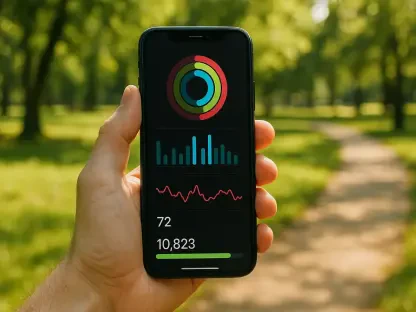
Despite the substantial price difference, the core health and wellness experience remains remarkably consistent across both Google devices, thanks to shared sensor technology. Both wearables integrate seamlessly with the Google Health app, offering a comprehensive suite of biometric tracking that includes heart rate monitoring, ECG capabilities, and blood oxygen sensing. Furthermore, the inclusion of skin temperature sensors and advanced sleep tracking allows for a holistic view of one’s physical state. In 2026, these devices have been upgraded with Health Guardian features, which monitor blood pressure trends and provide insights into insulin resistance, providing medical-grade oversight for the consumer. This parity in data collection means that from a purely physiological standpoint, the extra $220 for the Pixel Watch 5 does not equate to more accurate health metrics. Both devices leverage the same cloud-based algorithms to interpret user data, ensuring a high standard of reporting regardless of hardware.
Connectivity and Ecosystem: Finding the Right Fit
Hardware performance and battery life offer another significant point of divergence that dictates ultimate satisfaction. The Pixel Watch 5 utilizes dual-frequency GPS to provide pinpoint accuracy in dense urban environments or heavy forest cover, making it a superior choice for serious runners. However, this precision comes at the cost of battery life, which generally ranges from 30 to 48 hours. On the other hand, the Fitbit Edge utilizes standard single-band GPS but excels in longevity, often lasting up to seven days on a single charge. This difference in power management defines the user experience; one device requires a daily charging ritual while the other can be worn through multiple nights for consistent sleep tracking without interruption. Additionally, the Edge maintains cross-platform compatibility, working with both iPhones and Android devices, whereas the Pixel Watch 5 is strictly reserved for those who are currently within the Android ecosystem.
Navigating the Final Selection: Practical Guidance
Choosing between these two sophisticated wearables ultimately required a clear understanding of personal priorities regarding communication and maintenance habits. The analysis of these devices showed that the Pixel Watch 5 functioned best for those who viewed their watch as an essential extension of their digital life, requiring constant access to apps. Conversely, the Fitbit Edge emerged as the logical choice for individuals who prioritized long-term biometric monitoring and a minimalist aesthetic over redundant technical features. Many users found that the tracker provided all the necessary data for a healthy lifestyle without the financial or battery burdens of a flagship smartwatch. Strategic buyers weighed the importance of dual-frequency GPS against the convenience of weekly charging before making their final investment. The market in 2026 proved that high-quality health data was no longer a luxury reserved for the most expensive models. Moving forward, owners should evaluate their need for voice calls.