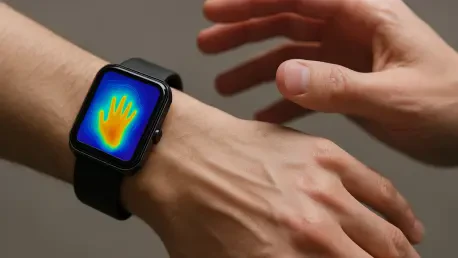

By focusing on the internal mechanics of the wrist, Northwestern engineers have developed a way for smartwatches to function even when a user’s hand is occluded. This development from the McCormick School of Engineering represents a fundamental departure from the standard fitness metrics that have dominated the wearable market for the last few years. At the heart of this innovation is the Sensing, Perception, Interactive Computing and Experiences (SPICE) Lab, where researchers have introduced two distinct yet complementary systems known as EITWatch and TransfHAR. These technologies do not merely rely on superficial movements or external visual data; instead, they interpret human physical intent by analyzing internal physiological signals and the nuanced dynamics of arm motion. By transforming the smartwatch from a simple recording device into a sophisticated interpreter of musculoskeletal activity, the engineering team has paved the way for a generation of devices that truly understand the complexity of human interaction with the physical world. This research, recently showcased at the Association for Computing Machinery’s Symposium on User Interface Software and Technology, highlights a significant leap in how users might soon control digital environments without ever touching a screen or standing in front of a camera.
Overcoming Current Barriers: The Challenge of Privacy and Occlusion
The pursuit of high-fidelity gesture recognition has historically been hampered by the limitations of external optical sensors. For years, the gold standard for tracking hand movements involved the use of high-resolution cameras or specialized depth sensors, which require a direct line of sight to the user’s hand to function correctly. This dependency creates a persistent issue known as occlusion, where the hand is blocked by an object or moved outside the camera’s field of view, causing the system to fail immediately. Furthermore, the reliance on visual monitoring has sparked significant privacy concerns, particularly as smart devices move deeper into the most private areas of the home, such as bedrooms and bathrooms. In healthcare settings, for example, many patients and elderly individuals find the presence of a lens intrusive, creating a barrier to the adoption of lifesaving monitoring technologies that could otherwise track their physical well-being and daily activities around the clock.
In contrast to these external systems, modern smartwatches offer a unique advantage because they maintain persistent, 24/7 contact with the human body, yet they have long been underutilized for complex interaction. Until now, commercial wearables have been largely restricted to a narrow, pre-programmed library of motions such as walking, cycling, or swimming. These devices often lack the resolution to identify subtle finger movements or the flexibility to learn the personalized routines of an individual user. The Northwestern team recognized that the wrist acts as a biological gateway to the hand, where the movement of every finger is reflected in the shifting of tendons and muscles beneath the skin. By moving the “eyes” of the sensing system from an external camera to an internal physiological sensor, the researchers successfully bypassed the occlusion problem entirely while providing a high level of data privacy that is simply impossible to achieve with video-based tracking methods.
Internal Imaging: The Mechanics of EITWatch and Tissue Sensing
The EITWatch system introduces a revolutionary hardware architecture that utilizes electrical impedance tomography to look beneath the surface of the skin. The prototype is equipped with eight compact electrodes integrated into the interior of the watchband, which maintain constant contact with the user’s wrist. These electrodes function by emitting imperceptible, low-level electrical currents that travel through the muscle and bone tissue. Because different types of tissue—such as muscle, fat, and bone—have different levels of electrical resistance, the system can create a cross-sectional map of the internal structures. When a user performs a gesture, the tendons and muscles in the wrist shift and change shape, which in turn alters the electrical impedance of the area. EITWatch captures these changes in real time, effectively creating a digital “signature” for every specific movement of the hand, whether it is a subtle finger tap or a complex clenching motion.
During rigorous testing, this deep-tissue sensing approach demonstrated an exceptional level of precision, correctly identifying a wide range of gestures with over 92 percent accuracy. This included six common hand postures and five distinct finger movements, proving that the system can distinguish between very similar physical actions that would be indistinguishable to a standard accelerometer. The potential applications for this level of detail are expansive, particularly in the realm of accessibility and assistive technology. For individuals with motor impairments who cannot use traditional touchscreens, EITWatch provides a robust, touchless interface that can be triggered by nearly any reliable muscle contraction. Moreover, because the signals generated by the system are a direct reflection of motor intent, this research provides a foundational framework for the development of advanced prosthetic limbs that can be controlled with the same fluidity and intuition as a biological hand.
Adaptive Intelligence: TransfHAR and the Power of Foundation Models
While fine motor control is the focus of EITWatch, the second system, known as TransfHAR, addresses the need for broader activity recognition through a flexible machine learning framework. One of the most common complaints regarding existing wearable technology is its inherent rigidity; most devices are only as smart as the factory-installed software allows them to be. TransfHAR, which stands for Transfer Learning for Human Activity Recognition, disrupts this model by allowing users to teach their smartwatches new, customized activities on demand. Instead of relying on a static list of exercises or chores, a user can record a brief demonstration of a unique movement—such as a specific rehabilitation exercise or a professional task—and the system will learn to recognize it moving forward. This shift toward personalization ensures that the wearable experience is tailored to the specific needs and habits of the individual wearer rather than a generic average.
The technical strength of TransfHAR lies in its use of a massive foundation model, which was pre-trained on more than 2,700 hours of unlabeled human motion data to understand the fundamental grammar of movement. By establishing this broad understanding of how the human body moves in three-dimensional space, the researchers were able to implement “transfer learning,” which significantly reduces the amount of new data required to learn a specific task. In practical terms, this means that a user only needs to perform a new activity for approximately one minute for the system to achieve high-accuracy recognition. In a study involving multiple participants, TransfHAR successfully identified seven newly taught activities with a 90 percent success rate. This capability is especially valuable for specialized occupations, such as dental hygienists or mechanics, who may want to track repetitive motions that are not covered by standard consumer fitness apps, providing a level of professional-grade monitoring that was previously unattainable.
Dignity and Precision: Transforming Healthcare Through Passive Monitoring
A critical component of the research at the SPICE Lab is the ethical application of sensing technology within the healthcare and eldercare sectors. Monitoring “activities of daily living,” or ADLs, is a vital part of maintaining the safety and health of the elderly, as changes in routine can often be early indicators of cognitive decline or physical illness. However, current methods of tracking whether a person has brushed their teeth, taken their medication, or maintained their hygiene often involve intrusive surveillance or frequent manual check-ins that can be dehumanizing. EITWatch and TransfHAR offer a path toward “passive monitoring,” where the device on the user’s wrist handles the tracking entirely in the background. Because the sensors are always present and in contact with the body, they can provide clinical-grade data to caregivers and medical professionals without the need for cameras or constant self-reporting by the patient.
By utilizing these internal and motion-based sensors, the Northwestern engineering team has created a system that respects individual privacy while ensuring safety. This approach is particularly effective for monitoring chronic conditions where the frequency or quality of specific motions is a key health metric. For example, a patient recovering from a stroke could have their physical therapy progress tracked automatically throughout the day, providing their doctor with a continuous stream of objective data rather than a snapshot from a brief office visit. The ability to monitor these activities in a non-intrusive way ensures that healthcare can be proactive and preventative. By placing the sensing technology on the wrist, the researchers have ensured that the monitoring environment is always “on,” regardless of which room the user is in, providing a seamless safety net that fits naturally into the rhythms of everyday life.
Strategic Evolution: The Future of Human-Machine Interaction
The integration of internal physiological sensing and adaptive machine learning signals a major shift in the trajectory of the wearable industry as it moves toward 2027 and beyond. The trend is moving clearly away from external environmental sensors and toward the body itself as the primary medium for data generation. Researchers at Northwestern, in partnership with global tech leaders like Google Health, are already looking for ways to scale these findings across a variety of different form factors. While the current prototype is a smartwatch, the principles of bio-impedance and transfer learning are being adapted for use in smart rings and medical wristbands. This suggests a future where an entire ecosystem of context-aware accessories can communicate with one another to provide a comprehensive and private map of a user’s health and daily interactions, effectively turning the human body into a high-fidelity input device for the digital world.
The Northwestern engineering team successfully proved that internal wrist mechanics and foundation-based machine learning provide a robust and private alternative to traditional camera-based gesture sensing. They established that by analyzing the musculoskeletal signatures of the wrist, a device could maintain high accuracy even in complex, occluded environments. Moving forward, the strategic focus shifted toward the development of zero-calibration hardware that functioned immediately for any wearer, regardless of individual anatomical differences like bone density or muscle mass. Engineers worked to miniaturize the electronic components further to fit within the increasingly slim profiles of consumer jewelry. These advancements demonstrated that the future of interaction rested on systems that were both deeply personal and inherently private, transforming simple movements into a powerful language of digital commands. Actionable steps for the industry now involve the standardization of bio-impedance datasets to ensure that these sophisticated sensing capabilities become accessible to a broader demographic of users in diverse clinical and consumer settings.