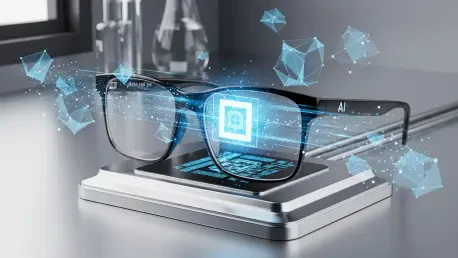

The traditional smartphone, which has served as the undisputed center of the digital universe for nearly two decades, is finally facing a formidable challenger that intends to move technology from the pocket directly onto the user’s face. Meta’s strategic pivot toward high-performance AI glasses represents a fundamental shift in how human beings interact with both their physical environment and their digital data. By prioritizing a hands-free experience, the company is attempting to dismantle the “phone-first” paradigm that has dictated social media consumption and personal communication. This transition is not merely about a new form factor; it is a calculated effort to own the ambient layer of daily life, where artificial intelligence assists with tasks in real-time without requiring a screen to be held. As adoption rates among creators and early tech enthusiasts continue to climb, the industry is witnessing the birth of a wearable ecosystem designed to make the handheld mobile device feel increasingly redundant and disconnected from actual lived experiences.
The Evolution of Content Capture and Creation
Shifting From Handheld: Ambient Documentation
Meta’s current hardware strategy focuses on removing the physical barriers that have long separated the act of experiencing a moment from the act of recording it. For a generation, sharing a life event meant reaching for a phone, unlocking a screen, and viewing the world through a small rectangular lens, which inherently disrupted the natural flow of human interaction. Smart glasses have changed this dynamic by introducing a “face-first” approach to digital capture, allowing for a perspective that is fundamentally more authentic and less curated. This ambient form of documentation enables creators to maintain eye contact with their surroundings while simultaneously broadcasting a high-definition point-of-view stream. By turning the act of capture into a passive background process rather than a deliberate foreground event, the technology bridges the gap between reality and the digital social layer. This shift is expected to redefine the aesthetics of online video, moving away from the polished look of handheld shots toward a more immersive and raw visual language.
Specialized Use Cases: Empowering Specific User Segments
Beyond general social media usage, the hardware ecosystem is being segmented to cater to the specific needs of athletes, creative professionals, and mobile workers. In sports, for example, high-performance wearables allow cyclists or runners to receive real-time biometric feedback and navigation prompts directly in their field of vision without the safety risks associated with glancing at a mounted smartphone. For professional designers and engineers, these devices provide a hands-free method for documenting complex workflows or consulting with remote collaborators through integrated cameras. This targeted approach ensures that the glasses are viewed as essential productivity tools rather than mere lifestyle accessories. By providing value in these high-stakes environments, Meta is establishing a foundation of utility that will eventually trickle down to the broader consumer market. The goal is to create a scenario where leaving the house with only smart glasses is as viable as leaving with only a phone, particularly as battery life and processing power reach new levels of efficiency.
Social Implications and Technical Integration
Public Trust: Navigating Privacy and Perception
As the presence of camera-equipped eyewear becomes more common in public spaces, the industry must address the significant social friction caused by the lack of clear recording signals. Unlike the conspicuous gesture of holding up a smartphone, which serves as a universal warning that a photo or video is being taken, smart glasses can operate with much more subtlety. This creates a tension between the user’s desire for convenience and the public’s expectation of privacy and consent. To combat potential backlash, designers have implemented more obvious visual indicators, such as bright LED lights, to signal when the device is active. However, the long-term success of this technology depends on the development of new social etiquette and the general public’s willingness to accept these devices as a standard part of modern attire. Establishing these norms is critical, as any perceived breach of privacy could lead to restrictive legislation or widespread social exclusion. The challenge lies in balancing the benefits of a connected interface with the ethical responsibility of maintaining a transparent environment for everyone.
Intelligent Assistants: The Role of Integrated AI
The true engine driving the obsolescence of the smartphone is the deep integration of sophisticated artificial intelligence that acts as a real-time cognitive assistant. Users are no longer required to type queries into a search engine; instead, they can simply ask their glasses about objects or landmarks they are currently seeing. This multimodal AI capability allows the device to provide contextual information, translate foreign text on the fly, or suggest the best reply to an incoming message based on the user’s current activity. By positioning an AI assistant at the primary point of sensory input—the eyes and ears—Meta is creating a more immediate and intuitive interface than any touchscreen could ever offer. This seamless integration ensures that information is delivered right when it is needed, reducing the cognitive load and making digital interaction feel like a natural extension of the self. As these AI models become more personalized and efficient from 2026 to 2028, the necessity of interacting with a physical screen will continue to diminish, further cementing the move toward a truly hands-free future for global telecommunications.
The strategic shift toward wearable AI demonstrated that the most effective way to integrate technology was to make it nearly invisible to the user while remaining highly visible to the software. Developers who prioritized the creation of glanceable interfaces and voice-driven commands successfully captured the first wave of post-smartphone adoption. For companies looking to compete in this space, the primary takeaway was the importance of building trust through transparent privacy policies and reliable hardware performance. Moving forward, the focus must remain on refining the battery technology and thermal management systems that previously limited the duration of face-first engagement. The successful transition away from handheld devices relied on the industry’s ability to offer a compelling alternative that enhanced human connection rather than replacing it with a digital barrier. This evolution proved that the hardware of the future was not about adding more screens, but about removing the friction between thought and action, ultimately allowing users to remain present in their physical reality while staying connected to the global information grid.