
Even the most compact version of the lineup, the iPad mini, underwent a significant technological overhaul in 2021 to adopt the modern design language and connectivity standards of its larger counterparts. This shift reflected a broader philosophy that began in 2010, when the original iPad was unveiled as a bridge between the smartphone and the laptop. Initially, Steve Jobs conceptualized the tablet as a consumption-heavy device, famously presenting it while sitting in a comfortable leather chair to emphasize its role in leisure. Critics at the time dismissed it as a ‘large iPod touch,’ doubting the utility of a slate without a physical keyboard. However, the integration of Apple’s custom A4 silicon signaled a pivot toward vertical hardware integration that would eventually allow the device to outpace many contemporary notebooks. This early focus on custom architecture provided a solid foundation for the market adoption that followed shortly after.
Expanding Into Professional Workflows
The trajectory of the tablet changed fundamentally with the launch of the iPad Pro in 2015, which introduced high-performance hardware tailored for creative industries. By integrating the Apple Pencil and the Smart Keyboard, the company shifted the narrative from passive media consumption to active content creation. This era marked the beginning of a push toward multitasking and precision, allowing illustrators and graphic designers to work with a level of tactility previously unavailable on standard laptops. The pressure-sensitive stylus transformed the screen into a digital canvas, while the keyboard accessory bridged the gap for writers and office professionals. This evolution was not merely about adding accessories but about redefining the underlying architecture to handle heavier graphical loads. It demonstrated a clear intent to challenge the dominance of traditional portable PCs by offering a versatile alternative for the modern workforce.
A definitive architectural leap occurred in 2018 when the Pro series abandoned the proprietary Lightning connector in favor of the industry-standard USB-C port. This transition was a watershed moment for power users, as it enabled the direct connection of external monitors, cameras, and mass storage devices without the need for cumbersome adapters. Alongside this change, the move to an all-screen design with Face ID eliminated the home button, maximizing the usable workspace while maintaining a compact footprint. These advancements signaled that the tablet was no longer just a companion device but a primary workstation capable of handling complex file management and external peripheral support. By aligning the iPad’s connectivity with that of the Mac, the ecosystem became more cohesive, allowing professional workflows to move seamlessly between different form factors. This shift ended the debate over whether a tablet could handle production.
Scaling Innovation Across the Ecosystem
The innovations pioneered in the flagship models eventually trickled down to the iPad Air and iPad mini, ensuring that the entire range shared a unified design language and performance standards. By the time the current lineup solidified in 2026, the distinction between ‘pro’ and ‘consumer’ models had become more about specific niche features rather than raw processing power. The inclusion of M-series chips across multiple tiers meant that even students using an iPad Air could access the same computational capabilities as video editors. This democratization of power ensured that the software ecosystem remained robust, as developers could create complex applications knowing that a majority of the user base had the hardware to run them. The transition to bezel-less displays across the board further standardized the user experience, providing a consistent interface regardless of screen size. This strategy successfully maintained the product’s relevance in a competitive market.
Looking toward the horizon from 2026 to 2028, the integration of advanced display technologies like Tandem OLED and enhanced thermal management systems continues to push the boundaries of what a slim device can achieve. These hardware improvements are increasingly matched by software refinements in iPadOS, which has evolved to offer more sophisticated windowing and desktop-class file handling. The convergence of mobile portability and high-tier performance has allowed the device to dominate sectors like field engineering, medical imaging, and remote education. As mobile connectivity standards like 5G and early 6G prototypes become more prevalent, the tablet’s role as a cellular-first workstation becomes even more pronounced. The ability to maintain data transfers while on the move has made it a vital tool for the digital nomad. This ongoing cycle of innovation ensures that the hardware does not just keep pace with user demands but actively anticipates them.
Strategic Integration of Tablet Technology
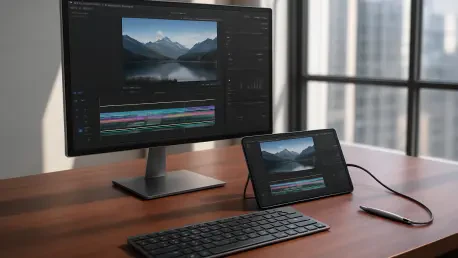
Maximizing the utility of these powerful machines required users to adopt a modular mindset by leveraging the extensive ecosystem of Thunderbolt peripherals and specialized software suites. Moving beyond simple application use to full-scale project management demanded a deep understanding of Stage Manager and external display support, which became essential for true desktop-class productivity. Organizations that successfully deployed these devices focused on training staff to use touch-first interfaces alongside traditional inputs to unlock creative potential that standard laptops could not facilitate. The shift toward a multi-modal workflow—where a single device served as a sketchpad, a video editor, and a communication hub—remained the most effective way to see a return on investment. Professionals who embraced this versatility found that they could reduce their reliance on bulky hardware without sacrificing quality, streamlining their technical overhead while increasing mobility.
The journey of the iPad reflected a transformation from a niche luxury item into a cornerstone of professional and personal computing. By consistently prioritizing custom silicon and refined industrial design, the platform managed to carve out a unique space that neither smartphones nor laptops could fully occupy. The transition from the simplified interface of the early 2010s to the complex, multi-tasking environment of the mid-2020s proved that user expectations could drive massive hardware shifts. Developers responded by building a library of professional-grade software that utilized every ounce of performance provided by the internal chips. This evolution ultimately validated the original vision of a versatile, touch-centric computer that could adapt to any situation. By the time the market matured, the device had become a benchmark for excellence, showing how a clear focus on user interaction could disrupt industry norms and digital work.