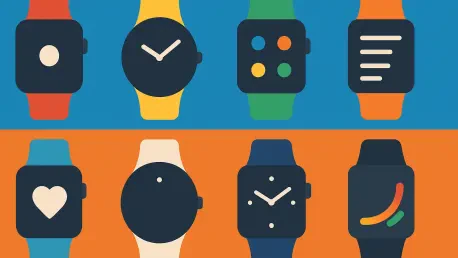

The shift toward brand-specific health ecosystems means that many premium features are now locked behind a requirement to own a specific brand of smartphone. This evolution has fundamentally changed how consumers approach the purchase of a wearable, turning a simple accessory choice into a long-term commitment to a particular hardware family. As the market reaches a state of high maturity, the Google Pixel Watch series has emerged as a beacon for those who demand flexibility without sacrificing the polished aesthetic usually found in closed systems. Its rounded, minimalist silhouette and thin-bezel display represent a pinnacle of modern industrial design, yet it remains fundamentally a tool for the tech-conscious urbanite rather than a formal replacement for high-end horology. While its universal compatibility is a major draw, the broader industry continues to trend toward proprietary silos where the most advanced health insights and remote device controls are reserved exclusively for brand loyalists.
Top Contenders: Integration and Value
Synergy: Samsung and the Galaxy Ecosystem
Samsung has cemented its position as the primary architect of the high-end Android wearable experience by focusing on a “better together” philosophy that rewards users within its own product loop. The transition between recent generations has prioritized refinement over massive overhauls, introducing sophisticated biometric sensors capable of measuring an antioxidant index and detecting early signs of sleep apnea. However, these innovations come with a catch: critical functionalities like ECG monitoring and blood pressure tracking are generally inaccessible to those using non-Samsung handsets. This strategy forces a decision between the broad utility of the Google Play ecosystem and the deep, specialized health insights provided by Samsung’s integrated hardware and software stack. For the budget-savvy, older models still offer a surprisingly robust feature set, including full support for Google Gemini, proving that the most expensive option isn’t always the most logical choice.
Flexibility: Affordable Style With Amazfit
In sharp contrast to the high-priced ecosystem leaders, the Amazfit series, particularly the Active 2, serves as a bridge for users who want the appearance of a premium smartwatch without the associated financial burden. At a fraction of the cost of its rivals, it manages to offer multiple strap configurations, such as faux leather and silicone, allowing it to transition seamlessly from a professional meeting to a late-evening workout. This versatility is its strongest selling point, even as it makes necessary compromises in the technical department. Users often encounter less-than-perfect GPS accuracy and occasional software bugs within the proprietary Zepp Health application, which can be frustrating for those who require precision data. Despite these hurdles, it remains a compelling option for the minimalist who views a smartwatch as a tool for basic notification management and step counting rather than a professional medical or athletic diagnostic device.
Specialized Tools: Performance and Durability
Precision: Garmin and Athletic Performance
For the dedicated athlete whose training revolves around performance metrics rather than simple activity tracking, Garmin continues to offer a distinct technical advantage that mainstream manufacturers struggle to replicate. The Forerunner series exemplifies this by prioritizing tactile reliability through the use of physical buttons, a crucial design choice that recognizes the limitations of touchscreens during high-intensity exercise or adverse weather conditions. When sweat or rain makes a screen unresponsive, these physical controls ensure that a runner can accurately log intervals or navigate menus without breaking their pace. Beyond the hardware, Garmin’s software ecosystem provides an unparalleled level of data density, offering deep dives into Heart Rate Variability, sleep coaching, and recovery windows. This data-heavy approach transforms the watch from a passive monitor into an active coaching tool that helps serious competitors avoid overtraining and optimize their personal records.
Durability: Extreme Environments and Rugged Hardware
At the intersection of extreme durability and high-end display technology sits the Galaxy Watch Ultra 2, a device engineered specifically for users who venture far beyond the limits of urban connectivity. Its 5,000-nit AMOLED screen is designed to remain perfectly legible under the most punishing direct sunlight, a feature that sets it apart from more traditional rugged watches with dimmer panels. Furthermore, its dive certification and dual-band GPS provide a level of reliability essential for off-the-grid navigation and underwater exploration. This watch effectively bridges the gap between a standard lifestyle wearable and a specialized survival tool, offering multi-day battery life that addresses the perennial weakness of most high-performance smartwatches. While it represents a significant investment, its construction from aerospace-grade materials ensures it can withstand environments that would destroy a standard consumer device, making it the definitive choice for the modern adventurer.
Tactical Considerations: Choosing the Right Path
The landscape of wearable technology matured into a complex array of specialized niches that demanded more than just a passing interest from consumers. It became clear that the choice of a smartwatch was no longer a standalone decision but a strategic alignment with one’s existing mobile infrastructure and fitness ambitions. Before committing to a new device, users evaluated whether they prioritized the open integration of a Pixel, the health-centric silos of Samsung, or the rugged precision of Garmin. They also recognized that display standards like AMOLED and water resistance ratings like IP68 became baseline requirements for any reliable wearable. Moving forward, potential buyers should audit their daily routines to determine if they need a sophisticated coaching engine or a simple notification hub. Investing in a device with a versatile strap system and a high-brightness display ensured long-term satisfaction across diverse social and environmental settings.