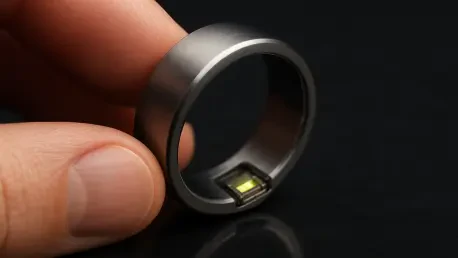

The permanent nature of internal batteries in current smart rings often turns high-end health wearables into disposable electronics within just a few years of regular use. Despite the impressive engineering required to cram heart rate sensors, accelerometers, and Bluetooth radios into a tiny band, the lithium-polymer cells remain the primary point of failure. These batteries typically support only a few hundred charge cycles before their capacity begins to drop significantly, leaving users with a device that barely lasts a full day. Because most smart rings are sealed with industrial adhesives or resin to achieve water resistance, there is no way to replace the battery without destroying the outer shell. This inherent design flaw creates a significant sustainability issue in an industry that increasingly markets itself on long-term health tracking. As consumers become more aware of the environmental cost of disposable high-tech gadgets, the pressure on manufacturers to find a more modular solution has reached a critical tipping point in the global market.
Technical Challenges: The Path to Modular Design
Managing Physical Durability and Waterproofing
Designing a modular battery for a smart ring requires a fundamental shift in how structural integrity is maintained under daily stress. Traditional rings are solid, but a modular version must include a seam or a hatch that can be opened and closed repeatedly without compromising the electrical connection. Engineers are now focusing on micro-mechanical latching systems that use surgical-grade steel or titanium to secure the battery module in place. These connectors must withstand the constant vibrations, moisture, and pressure changes that a finger experiences throughout the day. One promising approach involves the use of high-strength magnetic couplings combined with a physical locking pin to prevent accidental disconnection. This ensures that the power supply remains stable even during high-impact sports or heavy manual labor. The challenge lies in making these components small enough to fit within the ring’s narrow profile while still being robust enough for years of use by non-technical consumers.
Overcoming Miniaturization: Integrating New Power Sources
Miniaturization remains the most significant hurdle in the transition to modular power systems for finger-worn devices. To accommodate a removable cell, manufacturers must dedicate precious internal volume to the docking mechanism, which often comes at the expense of battery capacity or sensor variety. However, recent breakthroughs in solid-state battery technology have allowed for higher energy densities in smaller footprints, potentially offsetting the space lost to modular components. These solid-state cells are also safer and more durable than their liquid-electrolyte counterparts, making them ideal for a system where the battery is frequently handled by the user. Furthermore, advanced 3D printing techniques are being used to create custom internal frames that maximize every cubic millimeter of space. By integrating the electrical pathways directly into the ring’s structural chassis, designers can free up enough room for a secure, swappable battery module without increasing the overall thickness. This evolution represents a sophisticated blend of material science.
Industry Impacts: Regulation and Sustainability
Navigating Right to Repair: Legislative Requirements
Regulatory bodies have begun to enforce stricter rules regarding the repairability of portable electronics, directly impacting the wearable sector. New mandates in several regions now require that batteries be replaceable with commonly available tools, a move designed to reduce the millions of tons of e-waste generated annually. For smart ring companies, this means that the “sealed for life” design philosophy is no longer legally or economically viable in key markets. In response, manufacturers are developing standardized battery modules that could theoretically work across different models or even different brands. This shift toward standardization would allow a more robust secondary market for components to emerge, similar to how watch batteries have functioned for decades. Companies that adopt these standards early are finding a competitive advantage by appealing to the growing demographic of eco-conscious buyers. The transition necessitates a total overhaul of the manufacturing supply chain, moving away from planned obsolescence.
Strategic Shifts: The Future of Wearable Longevity
The successful implementation of modular batteries fundamentally changed how consumers perceived the value and longevity of their wearable technology. Instead of viewing a smart ring as a temporary gadget with a three-year lifespan, users began to treat these devices as long-term investments in their personal health infrastructure. The secondary market flourished as the ability to swap a degraded battery meant that older rings retained a significant portion of their original resale value. Manufacturers shifted their revenue models away from frequent hardware refreshes and toward premium software services and high-quality replacement modules. This transition also encouraged a more transparent relationship between brands and customers, as companies provided clear documentation on repair procedures and component sourcing. By solving the battery dilemma, the industry proved that even the most compact electronics could be designed with sustainability as a core principle. The shift required buyers to prioritize repairability scores, ensuring that future hardware purchases promoted ecological responsibility.