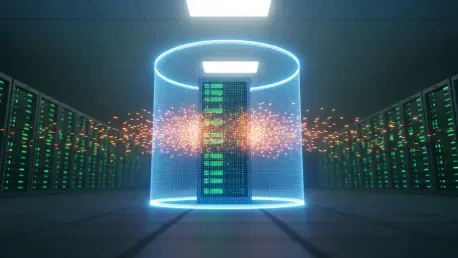

The modern cyber threat landscape has evolved into a high-stakes arena where the interval between a successful initial breach and the total encryption of a corporate network is now measured in mere minutes rather than days or weeks. As of 2026, the sophistication of automated ransomware and hands-on-keyboard attacks has surpassed the cognitive processing limits of even the most seasoned security analysts. This velocity creates a critical gap in defense where human intervention, traditionally the final safeguard, becomes a liability due to inherent latency. In response to this existential challenge, Microsoft has introduced a preview capability within its Defender for Endpoint platform that automatically isolates compromised devices, effectively removing the human element from the immediate containment phase.
The significance of this development cannot be overstated, as it represents a paradigm shift from passive detection to active, autonomous disruption. By leveraging the vast telemetry of the Extended Detection and Response (XDR) ecosystem, the system can now identify and neutralize threats at machine speed. This transition is essential for modern enterprises that manage thousands of endpoints, where a single second of delay can mean the difference between a localized incident and a catastrophic financial loss. However, as organizations move toward this automated future, they must also grapple with the complexities of delegating executive authority to an algorithm that may not fully grasp the operational nuances of a specific business environment.
Why Human Response Times are Obsolete in the Face of Machine-Speed Attacks
The traditional security operations center (SOC) model relies on a sequence of detection, triaging, and manual remediation that is increasingly incompatible with the speed of modern exploits. In previous years, an attacker might spend days moving laterally through a network, providing analysts with a window of opportunity to intervene. Today, automated scripts can identify vulnerabilities and propagate through an entire enterprise infrastructure in the time it takes an analyst to finish reading a single alert notification. This temporal mismatch has forced a reconsideration of how defensive actions are triggered and executed across the digital estate.
Moreover, the psychological and cognitive load on human defenders often leads to “analysis paralysis” during high-pressure incidents. When faced with a flurry of alerts from different vectors, the human brain requires time to correlate data and confirm the severity of a threat before taking the drastic step of isolating a critical server. Machines, in contrast, do not hesitate; they process millions of data points per second to reach a high-confidence conclusion. By automating the isolation of an endpoint, the system eliminates the delay caused by human doubt and bureaucratic approval chains, providing a nearly instantaneous response to an unfolding crisis.
The Strategic Shift Toward Autonomous Disruption in Endpoint Defense
The evolution of Microsoft Defender has transitioned from a basic antivirus solution to a comprehensive, autonomous disruption engine. The strategic goal of this shift is to create a “logical air gap” around an infected machine the moment malicious behavior is identified. This is not merely about stopping a file from running; it is about severing the attacker’s lifeline to the rest of the network. By automatically containing an endpoint, the platform prevents the “metastasization” of the threat, ensuring that a single compromised workstation does not become the gateway to the entire corporate domain controller.
Furthermore, this strategic autonomy allows security teams to move from a reactive posture to one that is fundamentally proactive. Instead of spending hours attempting to clean up a widespread infection, the SOC team can focus on investigating a single isolated incident that was neutralized before it could spread. This approach acknowledges that breaches are inevitable in the current environment and shifts the priority to minimizing the blast radius. The ability to disrupt an attack in its infancy changes the economic equation for cybercriminals, as it significantly increases the effort required to achieve their objectives while decreasing their chances of a successful payday.
Technical Architecture of AI-Driven Isolation and Network Control
The technical foundation of this automated isolation feature is built upon the Microsoft Defender XDR stack, specifically requiring a subscription to Defender for Endpoint Plan 2. This architecture relies on a deep integration of telemetry from diverse sources, including identity management, email, cloud applications, and endpoint sensors. When a potential threat is detected, the AI engine evaluates the incident by correlating these signals to determine if the behavior matches known attack patterns, such as those seen in Business Email Compromise (BEC) or Adversary-in-the-Middle (AiTM) scenarios.
Once the system reaches a high-confidence threshold, it initiates a series of network-level restrictions. The isolation process severs the device’s communication with almost all external and internal destinations, with the crucial exception of the connection to the Defender for Endpoint service itself. This ensures that the device remains manageable by the security team while preventing it from communicating with an attacker’s command-and-control server or attempting to infect neighboring devices. The logic used to trigger these actions is dynamic and context-aware, moving beyond simple signature matching to analyze the behavioral intent behind every network request and process execution.
Preserving Volatile Data and Forensic Evidence During Containment
One of the most significant advantages of logical, automated isolation over traditional manual methods is the preservation of forensic integrity. In many past incidents, the instinctive reaction of an IT administrator was to physically pull the network cable or shut down the machine entirely. While effective at stopping the spread, these “brute force” actions often destroyed volatile memory (RAM) and cleared system logs that were vital for understanding the root cause of the breach. Automated logical isolation keeps the system powered on and the memory intact, providing a “frozen crime scene” for forensic investigators.
This preservation allows the security team to perform remote investigations without the risk of the attacker noticing the scrutiny and deploying “wiper” malware to cover their tracks. Because the isolated device maintains a secure tunnel to the Defender service, analysts can pull memory dumps, examine running processes, and trace the initial entry point of the malware in real time. This capability is instrumental in developing a complete picture of the adversary’s tactics, techniques, and procedures (TTPs), which can then be used to harden the rest of the network against similar future incursions.
Navigating the Risks of Autonomous Defense Induced Disruption
While the benefits of automation are clear, the rise of what researchers call Autonomous Defense Induced Disruption (ADID) presents a new set of challenges. Recent studies from the SANS Institute have highlighted how an attacker who understands the defensive triggers of an autonomous system can intentionally manipulate them to cause operational harm. For instance, if an adversary simulates malicious behavior across several administrative accounts, the automated system might respond by disabling those accounts or isolating the devices they are associated with. In a worst-case scenario, this could result in a self-inflicted “denial of service” where the organization’s own security tools lock out the IT staff.
A real-world instance in early 2026 demonstrated the friction that can occur when humans and AI do not communicate effectively. After a phishing attack triggered automated account resets and device isolations, the SOC team—unaware that the actions were automated—assumed they were witnessing a massive, coordinated manual attack by a sophisticated threat actor. This led to an unnecessary escalation and a brief period of internal chaos. This incident underscores the fact that while AI can act with incredible speed, it does not always provide the necessary context to human operators, potentially leading to misunderstandings that can be as disruptive as the initial attack itself.
A Practical Guide: Tuning Safeguards and Maintaining Transparency
To successfully implement automated isolation, organizations must adopt a model of “governed autonomy” that balances aggressive defense with operational stability. This begins with the careful tuning of automation levels based on the criticality of specific device groups. For example, a workstation used by a high-risk employee might warrant the highest level of automated response, whereas a core database server might require a more measured approach or a “human-in-the-loop” confirmation before isolation occurs. This granularity ensures that the most vital parts of the business are not accidentally taken offline by a false positive.
The creation of exclusion policies is another essential step in maintaining a resilient defense. Security teams should identify “un-isolatable” assets—such as domain controllers or critical infrastructure management consoles—and ensure they are exempt from automated network severing. Simultaneously, transparency must be built into the SOC workflow. The platform’s monitoring tools should be configured to provide immediate, clear notifications whenever an automated action is taken, explaining the rationale and the specific triggers involved. This allows human analysts to quickly review and, if necessary, reverse the action, ensuring that the machine serves as a powerful extension of the human team rather than a black-box authority.
The implementation of automated device isolation represented a pivotal moment in the ongoing conflict between network defenders and sophisticated cyber adversaries. By adopting these tools, organizations recognized that the only way to defeat machine-speed attacks was to empower their defensive systems with equivalent velocity and autonomy. The move toward logical containment allowed for the preservation of critical evidence while simultaneously halting the lateral movement that once defined successful ransomware campaigns.
Future security strategies will likely prioritize the refinement of these AI triggers to better distinguish between adversarial behavior and legitimate, albeit unusual, administrative activity. The industry demonstrated that while automation introduced new risks of self-inflicted disruption, the danger of inaction was far greater in a landscape dominated by rapid exploits. Moving forward, the focus should remain on developing deeper integration between automated response engines and human-centric governance frameworks to ensure that the digital estate remained both secure and operational.