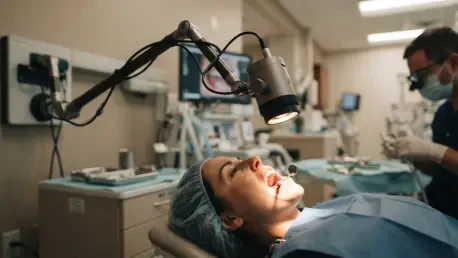

By converting silent lip movements into audible synthetic speech, this technology provides a sense of dignity and autonomy to those facing long-term hospital stays. The initiative, known as Conecta2, was spearheaded by a group of innovative students at the University of Malaga who specialized in cybersecurity and artificial intelligence. These developers, including Yeray Peralta and Sofía Casermeiro, identified a profound gap in the clinical care of patients who are unable to speak due to medical intervention or physical trauma. In high-pressure environments like the intensive care unit, the inability to voice basic needs—such as requesting a glass of water or describing a specific type of pain—can lead to extreme psychological distress and slower recovery times. By integrating advanced computer vision with neural networks, the team created a bridge between the silent intent of the patient and the active response of the caregiver. This system does not just provide a technical service; it restores a fundamental human right to individuals who have been temporarily or permanently silenced by their conditions, ensuring they remain active participants in their own medical journey.
Engineering a Solution: The Mechanics of Virtual Speech
Advanced Framework: Identifying Visemes and Contextual Patterns
At the core of the Conecta2 system is a sophisticated two-tiered artificial intelligence framework designed to decode the subtle nuances of human lip movement with high precision. The primary layer of the technology utilizes a high-definition camera that focuses exclusively on the patient’s mouth, capturing every twitch and shift in facial musculature. This visual data is then analyzed by a neural network specifically trained to recognize “visemes,” which are the visual representations of phonemes in spoken language. However, the team quickly discovered that lip-reading is an inherently flawed science when relied upon in isolation, as many distinct sounds and vowels produce nearly identical lip shapes. For instance, the visual distinction between certain bilabial consonants or open vowels is often too subtle for a standard camera to differentiate without additional help. This realization necessitated a more complex architectural approach to ensure that the patient’s intended message was not lost in a sea of visual ambiguities or misinterpretations.
To solve the inherent ambiguity of visual speech, the developers integrated a secondary AI layer that functions as a sophisticated linguistic filter. This second model acts as the “brain” of the operation, receiving a list of potential word sequences from the visual sensor and evaluating them based on logical and grammatical probability. By analyzing the context of the phrases, the system can distinguish between words that look similar but mean very different things in a clinical environment. For example, if a patient’s lip movements suggest both “water” and a nonsensical phonetic string, the AI prioritizes the request for hydration as the most likely intent. This “context-aware” approach has been a game-changer for the project’s reliability, transforming a simple camera-based tool into a robust communication device. It ensures that the final output, whether displayed as text on a tablet or broadcast through a synthetic voice speaker, is a highly accurate reflection of what the patient would have said if they possessed the physical capacity to do so.
Practical Validation: From Hackathon to Hospital Beds
The inception of Conecta2 was not confined to a laboratory; it took shape during a social innovation hackathon at the La Noria center, where the goal was to create technological solutions with a tangible social impact. The University of Malaga team focused their efforts on enhancing the independence of individuals with disabilities, aiming to provide a tool that could be deployed immediately in high-stress healthcare environments. To ensure the software was grounded in reality, the students partnered with the Arrabal-AID association, engaging directly with older adults and individuals with limited mobility. This collaboration allowed the developers to move beyond theoretical coding and focus on the ergonomics of the user interface. By gathering feedback from those who might actually use the tool, they were able to refine the process of camera alignment and message delivery, ensuring that the system remained functional even when the user was fatigued or physically constrained by hospital equipment or restricted movement.
This user-centric philosophy guided the team through the difficult transition from a technical prototype to a viable clinical tool. They recognized that in a hospital setting, simplicity is as important as accuracy; a nurse or a family member needs to be able to set up the device in seconds without navigating complex menus. The feedback from the Arrabal-AID participants highlighted the necessity of a clean, high-contrast interface and a voice synthesis system that was clear and easy to understand. By focusing on these human elements, the Conecta2 team ensured that their technology did not become another piece of complicated hospital machinery, but rather a seamless extension of the patient’s own intent. The project successfully demonstrated that when advanced artificial intelligence is paired with empathetic design, the result is a tool that can fundamentally improve the quality of life for vulnerable populations. This bridge between high-level engineering and practical application became the defining characteristic of the project’s development cycle.
Navigating Implementation: Obstacles and Ethical Standards
Regional Adaptation: Refining Spanish Linguistic Precision
Despite the initial success of the prototype, which accurately identified over half of the tested sentences word-for-word in controlled trials, significant technical hurdles remain. One of the most prominent challenges is the disparity in global research data for lip-reading technologies. While English-language models benefit from massive, multi-decade datasets, resources for Spanish speakers are comparatively scarce. This gap forced the team to dedicate a substantial portion of their current work to curating and improving localized datasets to boost the system’s precision for Spanish-speaking patients. The developers understood that for the tool to be truly effective in their local community, it had to handle the specific phonetic and visual patterns of their native tongue with the same level of accuracy found in international models. By focusing on these linguistic nuances, they are working to ensure that no patient is left behind due to a lack of available data, making the tool more inclusive and effective for a wider demographic of hospital users.
During live demonstrations, the system proved its real-time capabilities, a crucial requirement for any tool intended for use in an emergency or critical care setting. In one specific instance at the La Noria competition, a student silently stated the current time, and the AI correctly interpreted and broadcast the message within seconds. This successful test confirmed that the system was not relying on pre-recorded sequences or a limited vocabulary, but was instead actively processing visual data on the fly. The team acknowledged that while a one-hundred percent accuracy rate is the ultimate goal, even a partially correct transcription can provide enough context for a caregiver to intervene. If the system translates a patient’s silent plea into “water please,” even with slight phonetic errors, the primary goal of communication has been achieved. This focus on functional utility over theoretical perfection has allowed the project to maintain its momentum as the students continue to refine the neural networks and expand the library of recognized phrases.
Ethical Protection: Security and the Mobile Future
Given the team’s background in cybersecurity, data protection was integrated into the very foundation of Conecta2. They recognized that deploying a camera-based system in a hospital ward presents significant privacy risks, particularly regarding the biometric data of vulnerable patients. To address this, the developers implemented strict security protocols that minimize the amount of data transmitted over the network. The system was designed to process the raw video images locally on the device or discard them immediately after the lip movements were translated. Only the resulting text strings were sent to the cloud for final processing, ensuring that sensitive video footage of a patient’s face was never exposed to potential security breaches. This commitment to digital ethics ensures that the technology adheres to the highest standards of medical privacy, providing peace of mind to both healthcare providers and the families of patients who are relying on the system to facilitate their communication and care.
Looking toward the future, the ultimate objective for the Conecta2 team is to transition this technology from a specialized prototype into a universally accessible mobile application. The vision is to create a “point-and-speak” interface that utilizes a standard smartphone’s front-facing camera as the primary sensor. This would eliminate the need for expensive, specialized hardware, allowing any patient with a mobile device to regain their voice by simply holding the phone in front of their face. To achieve this scale, the students are actively seeking partnerships with healthcare organizations and corporate entities that can provide the resources needed to refine the AI further. By transforming complex neural networks into a simple, downloadable app, the team aims to democratize access to assistive technology. This evolution represents more than just a technical upgrade; it is a commitment to ensuring that dignity and autonomy are restored to every patient who has been silenced by illness, regardless of their location or financial status.
The Path Forward: Restoring the Power of Speech
The Conecta2 project demonstrated that the intersection of artificial intelligence and humanitarian need could yield life-changing results for the medical community. By prioritizing patient privacy and linguistic accuracy, the development team created a framework that offered a viable path forward for non-verbal communication in clinical settings. The successful testing of the prototype established a foundation for future mobile applications that could potentially scale this technology to hospitals worldwide. Moving forward, the integration of these tools into standard patient care protocols was seen as a necessary step for modern healthcare systems. Stakeholders were encouraged to support the continued expansion of multilingual datasets and the refinement of edge-computing security to ensure these tools remained both effective and safe. Ultimately, the work of these students provided a clear roadmap for how specialized AI could be harnessed to restore the basic human dignity of speech to those who had previously been forced to suffer in silence.