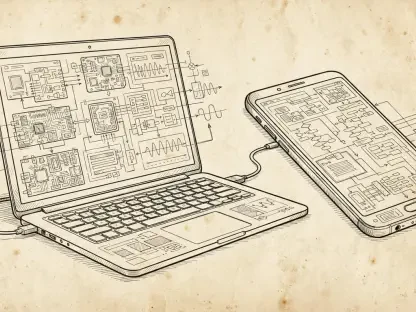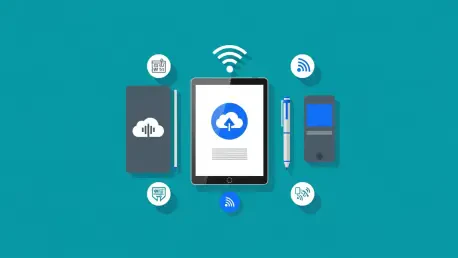

The traditional boundary separating high-performance workstations from portable media consumption devices has eroded to a point where hardware specifications no longer dictate the limits of professional productivity. For nearly a decade, the promise of a tablet-first workflow remained an elusive goal for most power users, yet the landscape shifted dramatically as silicon architecture evolved to prioritize both extreme efficiency and raw computational power. Recent shifts in the retail market have seen premium tablets equipped with desktop-grade processors becoming more accessible, effectively challenging the dominance of the clamshell laptop in both corporate and creative environments. This evolution is driven by more than just faster chips; it is the result of a fundamental transformation in how operating systems manage complex multitasking and how peripherals bridge the physical gap between touch interfaces and tactile precision. As professional-grade software becomes native to mobile ecosystems, the debate is no longer about whether a tablet can perform these tasks, but rather how much more efficient a mobile-first approach can be for the modern professional.
Samsung and Apple: The High-Stakes Performance Race
Samsung has effectively carved out a niche by positioning its flagship Galaxy Tab series as a direct alternative to the traditional PC through the refinement of its proprietary DeX environment. By offering a software layer that mimics the window-based interface of a desktop, the Galaxy Tab S11 allows users to interact with applications in a way that feels familiar to those accustomed to Windows or macOS. This commitment to versatility is further underscored by the inclusion of the S Pen in the standard retail package, a move that provides immediate value for digital illustrators and administrative professionals who rely on precise input. Furthermore, the introduction of the S10 FE+ demonstrates a strategic attempt to capture the mid-range market by offering expansive screen real estate and robust processing power at a price point that undercuts many premium ultra-portables. This aggressive pricing strategy, combined with hardware that supports advanced multitasking without stuttering, suggests that Samsung views the tablet not just as a secondary screen, but as a primary computing hub for a wide range of users.
Apple continues to leverage its vertically integrated ecosystem to push the iPad Air and iPad Pro models into a performance tier that was previously the exclusive domain of the MacBook Pro. By equipping these slim devices with M4 chips, Apple provides a level of thermal efficiency and computational throughput that allows for seamless 4K video editing and complex 3D rendering on the go. However, the experience of using an iPad as a laptop replacement is distinctly modular, often requiring a significant secondary investment in accessories like the Magic Keyboard or the Apple Pencil Pro to reach its full potential. This approach highlights a specific philosophy where the tablet remains a versatile core that can be specialized through hardware additions depending on the user’s current project or environment. While the software limitations of iPadOS are still a point of discussion among enthusiasts, the raw power available in the current hardware cycle ensures that the device never feels underpowered, even when handling the most demanding creative workflows that traditionally required a bulky desktop setup.
Specialized Tools: The Windows Connection and Beyond
The emergence of the Microsoft Surface Pro equipped with Snapdragon X Elite processors marks a pivotal moment in the convergence of mobile hardware and traditional desktop software. By utilizing ARM-based architecture, these devices finally deliver the long-promised combination of multi-day battery life and the unfettered ability to run full-scale Windows applications without the performance penalties of previous emulation layers. This breakthrough is particularly significant for corporate professionals who require specific enterprise software that remains unavailable on mobile platforms like iOS or Android. The Surface Pro bridges this gap by maintaining the form factor of a lightweight tablet while offering the utility of a full PC, complete with a kickstand and a detachable keyboard that has become the industry standard for 2-in-1 designs. As developers increasingly optimize their software for ARM, the distinction between a mobile application and a desktop program continues to fade, allowing users to transition from a boardroom presentation to a deep-focus spreadsheet analysis without ever needing to switch to a different machine.
While high-end flagships often dominate the headlines, the broader democratization of productivity features is perhaps most visible in the budget-friendly segment led by brands like Lenovo. By bundling essential productivity tools such as pressure-sensitive styluses and magnetic folio cases with their tablets, these companies are catering to a demographic that prioritizes value and out-of-the-box functionality. These devices prove that a tablet does not need a four-figure price tag to serve as a reliable companion for students or remote workers who primarily engage in document editing, video conferencing, and research. The software on these more affordable machines has matured to support split-screen multitasking and external display output, features that were once reserved for the most expensive models on the market. This shift has forced a reorganization of consumer expectations, as the basic tablet has effectively been replaced by entry-level workstations that are more than capable of handling the daily digital workload of an average user, thereby challenging the necessity of purchasing a low-end laptop for general tasks.
Ecosystem Maturity: The New Reality of Mobile Productivity
One of the most significant shifts in the current technology landscape is the total disappearance of the underpowered, media-only tablet that once defined the lower end of the market. In the current cycle starting from 2026, even the most accessible tablets are built with high-capacity storage options and high-refresh-rate displays that were considered premium features just a few years ago. This baseline elevation in hardware quality means that modern tablets are better equipped to handle the rigors of professional life, such as constant cloud synchronization and heavy web-based application usage. The rise of high-speed connectivity, including integrated 5G and Wi-Fi 7, has further untethered these devices from the office, making them more versatile than many laptops that still lack native cellular options. As sales events and retail cycles continue to bring these advanced features to a wider audience at lower price points, the barrier to entry for a tablet-first lifestyle has never been lower. This widespread availability of capable hardware ensures that the mobile-first workflow is a practical reality for a diverse range of users.
The decision to transition from a laptop to a tablet depended less on hardware limitations and more on the specific ergonomic and software requirements of an individual’s professional workflow. Prospective users evaluated their most frequently used applications to determine if they were optimized for touch and stylus input, as this remained the primary advantage of the tablet form factor over the traditional clamshell. For those who prioritized extreme portability and modularity, the current generation of 11-inch to 13-inch slates offered a compelling alternative that outperformed older laptops in both speed and battery longevity. It was essential for consumers to account for the total cost of ownership, factoring in the price of keyboards and docks which were often necessary to unlock the full utility of the device. Moving forward, the industry pointed toward a future where the distinction between mobile and desktop computing became irrelevant, as cross-platform compatibility and cloud-based processing handled the heavy lifting. Ultimately, the successful adoption of a tablet-only setup required a willingness to adapt to new interaction models, but the rewards in flexibility and efficiency proved to be well worth the initial learning curve.