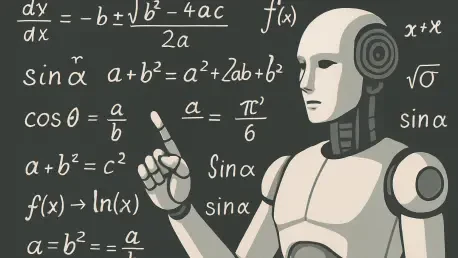

The chaotic nature of human speech, which often relies on unspoken context and cultural nuance, has finally hit a breaking point in the high-stakes world of autonomous military and industrial intelligence. While large language models have mastered the art of mimicking human conversation, the U.S. Defense Advanced Research Projects Agency (DARPA) is betting that the future of autonomous systems lies in pure mathematics. By stripping away the ambiguity of words, the agency aims to create a streamlined, error-proof method for digital agents to collaborate on the world’s most difficult problems.
Beyond Words: Why DARPA Is Teaching Machines to Abandon Natural Language
Human language is inherently messy, filled with nuances and double meanings that often baffle even the most advanced silicon brains. DARPA recognizes that for autonomous systems to function with absolute reliability, they must move beyond the constraints of natural language. Current large language models remain prone to hallucinations and logical inconsistencies when forced to communicate within linguistic frameworks designed for humans.
The agency is pivoting toward a communication protocol that removes these unnecessary layers of abstraction. In a world where sub-second decisions determine the safety of power grids or defense systems, the luxury of interpreting nuanced sentences is a liability. Establishing a mathematical certainty offers a clear path toward a more reliable and secure digital infrastructure where agents understand one another without confusion.
The Precision Gap: Challenges in the Age of Agentic Intelligence
The shift toward agentic AI—systems capable of independent action rather than just answering prompts—has exposed a critical flaw in current machine communication. When autonomous agents attempt to coordinate using natural language, they inherit human inefficiencies, leading to potential misalignments and computational lag. As AI transitions from solitary chatbots to integrated collectives that manage infrastructure, logistics, or defense, a universal protocol becomes a matter of security.
Establishing a mathematical bedrock for these interactions ensures that intent and execution remain perfectly synchronized across complex digital ecosystems. This transition focuses on making collective behavior predictable and verifiable. By closing the precision gap, developers can ensure that integrated systems operate without the risks associated with the translation of abstract concepts into binary logic.
Decoding MATHBAC: A New Frontier for Collective AI
The Mathematics for Boosting Agentic Communication (MATHBAC) initiative represents a departure from traditional machine learning improvements. Rather than refining existing models, this project seeks to establish an entirely new field of study centered on collective agentic intelligence. The core focus is the development of a sophisticated mathematical code designed specifically for inter-agent dialogue.
This specialized mathematical language allows for high-level problem-solving by ensuring that information is shared with absolute clarity. It facilitates a level of synchronization that natural language simply cannot sustain, allowing multiple agents to function as a single, cohesive unit. The research aims to maximize information density while reducing the potential for error to nearly zero.
The DARPA Mandate: Pursuing Radical Innovation Over Incremental Gains
DARPA has built its reputation on high-risk, high-reward breakthroughs, and MATHBAC is no exception. The agency has explicitly stated its refusal to fund research that merely offers slight optimizations to current AI methodologies. The goal is a fundamental discovery of the mathematical principles that govern how independent digital entities can function as a cohesive collective.
This strategic emphasis on radical innovation ensures that the project moves beyond the capabilities of contemporary individual agents. The agency seeks to replace the current “black box” nature of AI communication with a transparent, verifiable structure based on mathematical proof. This approach prepares autonomous systems to handle multifaceted, real-world challenges that require perfect coordination.
The 34-Month Roadmap: Building a Mathematical Lingua Franca
The transition to a math-based AI communication system was structured into a rigorous, two-phase timeline starting in 2026. The initial phase prioritized the derivation of essential mathematical frameworks, focusing on how these structures could bridge the gap between disparate autonomous systems. This foundational work established the basic grammar required for different AI architectures to understand one another without the need for human translation.
The second phase expanded these findings into practical tools and the scientific foundations necessary for multi-agent intelligence to operate at scale. Scientists developed the infrastructure for synchronized networks of autonomous entities to collaborate with unprecedented transparency and efficiency. This framework provided a clear path for moving AI from isolated task-performers to a synchronized network capable of solving complex problems through mathematical consensus.