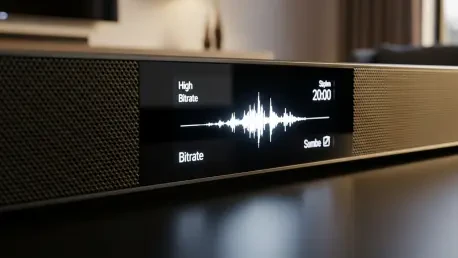

While legacy audio manufacturers have spent decades resting on their laurels, a quiet revolution has been brewing in the corners of living rooms where compact streamers and clever software have slowly replaced bulky, aging receivers. For years, the market for home theater audio was neatly divided between the complex, high-end installations favored by audiophiles and the convenient, yet often sonically compromised, soundbars sold in big-box retailers. This divide began to blur as users increasingly sought the simplicity of a single-cable solution without sacrificing the high-resolution fidelity of a dedicated hi-fi system. Entering this fray is WiiM, a brand that has spent the last several years mastering the art of invisible integration. By embedding its streaming technology into over 10 million products worldwide, the company has quietly built a foundation of trust and technical reliability that few competitors can match. The debut of its first dedicated soundbar represents a strategic shift from being a complementary accessory provider to a primary orchestrator of the modern living room experience.
The ambition behind this move goes beyond simply adding another product to a catalog; it is an direct challenge to the incumbents who have dominated the home theater space for a generation. Most established brands focus on aesthetic-first designs and aggressive marketing campaigns, often neglecting the underlying software stability and acoustic transparency that high-end listeners demand. WiiM has reversed this tradition, targeting a specific and rapidly growing demographic of listeners who have outgrown entry-level bars but remain intimidated by the footprint of traditional AV receivers. These consumers are looking for a “hero” device that serves as the heart of their media center, capable of handling everything from a nuanced jazz recording to the explosive dynamics of a contemporary action film. By pivoting toward a primary hardware role, the brand is leveraging its reputation for “hi-fi add-ons” to convince a skeptical public that a compact, integrated system can indeed deliver a high-fidelity performance.
Challenging the Dominance of Established Home Theater Brands
The transition from a niche component manufacturer to a home theater powerhouse is a path fraught with technical and logistical obstacles. For most companies, the primary hurdle is building an ecosystem from scratch, but WiiM possesses a unique advantage in its pre-existing installation base. Having already refined its streaming platform through millions of third-party devices, the company is not entering the living room as a stranger. Instead, it is arriving as a familiar presence that already knows how to navigate the complexities of home networks and digital music services. This move targets the pervasive frustration surrounding modern consumer electronics, where hardware is often released before the software is fully matured. By prioritizing a stable, user-centric interface from the outset, the brand positions itself as a reliable alternative to the heavyweights who have struggled to maintain their technological lead in an increasingly connected world.
Success in this category requires more than just technical specifications; it demands an understanding of the evolving role of the television as the central hub of the modern home. As physical media has declined in favor of high-bitrate streaming, the demand for audio gear that can handle sophisticated codecs without the clutter of legacy equipment has surged. The brand recognizes that the modern listener refuses to settle for the thin, tinny sound characteristic of entry-level bars that rely solely on small drivers and excessive digital processing. By focusing on a primary home theater contender, the organization is making a statement that “simple” does not have to mean “inferior.” This philosophy appeals to the professional demographic that values both time and quality, offering a streamlined path to a cinematic experience that honors the original intent of the content creators.
Timing the Market During a Period of Brand Instability
The timing of this soundbar launch is anything but accidental, occurring precisely as consumer loyalty toward traditional industry leaders has begun to fracture. In recent years, several long-standing audio giants have suffered from significant software failures and poorly received platform updates, creating a palpable sense of disillusionment among their once-loyal fanbases. When users experience repeated connectivity issues or lose access to essential features through mandatory updates, they naturally begin looking for a dependable alternative. This shift has created a unique vacuum in the market for a brand that prioritizes functional reliability over flashy, yet buggy, feature sets. As users began moving their existing streamers from secondary spaces like home offices into their primary media rooms, the community demand for a comprehensive, all-in-one cinema solution reached a tipping point that became impossible for the manufacturer to ignore.
This transition into a full-fledged ecosystem represents a calculated response to a fundamental change in how people interact with their home audio systems. We are currently witnessing a period where the traditional “separate” components are being replaced by modular, software-driven hubs that can grow with the user’s needs. The brand has observed a consistent trend where consumers start with a single, small streaming box and eventually want that same ease of use for their television audio. By addressing this modern trend of TV-centric audio without the traditional clutter of cables and receivers, the brand is capitalizing on a shift in domestic aesthetics. The desire for a clean, minimalist living environment no longer has to come at the expense of an immersive soundstage, provided the hardware is designed with enough processing overhead to handle the complex demands of modern spatial audio.
Breaking Down the Acoustic-First Hardware Architecture
While many manufacturers begin their design process by determining an attractive physical shape and then squeezing drivers into the remaining space, the development of this soundbar followed a “bottom-up” engineering methodology. The engineering team set a rigorous acoustic benchmark early in the process: the device had to achieve a meaningful 50Hz bass response without the mandatory assistance of an external subwoofer. Achieving this level of low-frequency extension in a slim chassis required a deep dive into the physics of air displacement and cabinet resonance. To meet these targets, the team utilized four passive radiators strategically placed to maximize the internal acoustic volume. The physical dimensions were not chosen for aesthetic symmetry alone; they were scaled specifically to complement the 55-inch and larger televisions that are now the standard in American and European households, ensuring that the device has the physical presence required to move enough air for a convincing cinematic experience.
Connectivity was another area where the design team chose a path of deliberate simplicity to solve common user frustrations. The decision to center the device around a single HDMI eARC port serves to eliminate the confusion often caused by the multiple, sometimes incompatible, inputs found on legacy gear. By leaning into the TV-as-hub model, the soundbar becomes a transparent extension of the screen rather than a separate, competing interface. Perhaps the most innovative hardware inclusion is the front-facing screen, which provides explicit, real-time status feedback. In an industry where most devices rely on cryptic, blinking LED patterns that require a manual to decipher, a clear display that confirms network health, input status, and the current audio codec is a revelation. This design choice addresses the primary complaint of home theater users: the anxiety of not knowing whether their system is actually receiving a high-quality Dolby Atmos signal or a downmixed stereo track.
The Leadership Philosophy Behind the Lossless Audio Movement
The technical direction of the company is steered by Dr. Lifeng Zhao, the CEO of Linkplay Technology, whose background in electrical engineering and extensive patent portfolio informs every design decision. Zhao’s philosophy is rooted in a “digital-first” approach that prioritizes the integrity of the signal path above all else. This commitment to transparency is best illustrated by the strategic decision to omit Apple AirPlay 2 in the latest hardware iterations. While many would consider the omission of a major casting protocol a risk, Zhao argues that maintaining strict lossless audio standards across more than 25 direct-integrated music services is more important for the long-term health of the audiophile ecosystem. By avoiding the compression and potential synchronization issues inherent in certain generic casting protocols, the brand ensures that the listener always hears the highest quality version of the source material.
To balance this rigid digital precision with the “warmth” and musicality expected of high-end audio, the company has recruited a team of industry veterans from established firms like Harman Kardon. This fusion of Silicon Valley software expertise and traditional acoustic engineering has resulted in a sound signature that seeks to act as a transparent conduit for the artist’s work. Whether the device is decoding a complex, multi-channel Dolby Atmos cinema mix or a high-resolution stereo recording of a string quartet, the goal remains the same: minimal coloration and maximum detail. This expert-led approach has moved the brand away from the “V-shaped” sound signatures common in mass-market soundbars—where bass and treble are boosted at the expense of the midrange—and toward a more balanced, reference-quality presentation that appeals to serious listeners.
Implementing a Modular Surround System Through RoomFit Technology
Foundationally, the soundbar is designed to be the starting point of a scalable, wireless environment that can adapt to the unique acoustics of any room. Leveraging the latest Wi-Fi 6E standards, the system is capable of handling the high-bandwidth requirements of uncompressed audio with nearly zero latency, a feat that was previously only possible with expensive, wired installations. This networking prowess allows users to start with a single bar and eventually expand to a full 5.1.2 configuration by adding wireless rear surrounds or even traditional passive speakers powered by the brand’s existing range of amplifiers. The system acts as a central coordinator, ensuring that every speaker in the room is perfectly synchronized, a task that requires immense processing power and sophisticated timing algorithms to prevent the “echo” effect that plagues lesser wireless systems.
The crown jewel of this integration is the proprietary RoomFit technology, which has been significantly upgraded to handle the complexities of multi-channel spatial audio. With a simple “one-tap” calibration process initiated via a smartphone, the system uses the device’s microphones to analyze the acoustic reflections of the environment. RoomFit does more than just adjust volume levels; it calculates precise timing delays and applies surgical equalization to compensate for furniture, wall materials, and speaker placement. This ensures that the sweet spot of the audio experience is optimized for the listener’s actual seating position rather than a laboratory ideal. Because the hardware is built with significant processing headroom, the entire system is designed to evolve through over-the-air updates. This future-ready framework ensures that emerging technologies, such as Dolby Atmos FlexConnect, can be integrated into the ecosystem long after the initial purchase, protecting the user’s investment.
The journey of developing this integrated audio system culminated in a realization that the modern home required a departure from the static, unchangeable hardware of the twentieth century. The design team successfully navigated the shift toward a software-defined architecture, ensuring that the soundbar functioned not just as a speaker, but as an intelligent node within a larger digital network. By prioritizing acoustic physics and signal integrity over marketing-driven features, the organization established a new benchmark for what consumers should expect from a compact home theater solution. The inclusion of high-speed networking and advanced room correction allowed the device to overcome the physical limitations of its form factor, proving that digital innovation could indeed compensate for environmental challenges.
As the market continues to move away from fragmented, multi-brand setups, the emphasis on a unified and reliable ecosystem became the primary driver of consumer satisfaction. The decision to focus on lossless audio and transparent feedback through integrated displays resolved many of the historical frustrations associated with high-end home audio. Looking ahead, the focus must remain on maintaining this level of transparency while expanding the modularity of the system to include even more diverse hardware configurations. Providing users with the tools to customize their acoustic environment through intuitive software will be the key to sustaining this momentum. The success of this inaugural soundbar serves as a clear indicator that the future of home entertainment lies in the perfect marriage of sophisticated software and uncompromising acoustic engineering.