
The relentless pursuit of ultra-slim profiles in the mobile industry has often left the most practical users stranded with devices that barely survive a single workday without a recharge. For those who prioritize utility over the vanity of a razor-thin chassis, the Motorola G77 Power arrives as a stark reminder that physical substance still has a vital place in the mid-range market. Priced at approximately $310, this smartphone does not attempt to compete with the high-octane flagships that dominate the headlines; instead, it carves out a niche for itself by focusing on extreme longevity and rugged reliability. As the latest entry in the storied Power sub-series, the device is built to handle the rigors of long commutes, outdoor jobs, and multi-day travel without the constant anxiety of finding a wall outlet. While it clearly makes significant concessions in raw processing speed and computational photography, the G77 Power leans heavily into a philosophy of simplicity. This approach ensures a consistent, albeit slower, experience for a demographic that values a phone that stays powered for days on end above all other features.
Durable Construction and Visual Fidelity
The industrial design of the G77 Power reflects a sophisticated evolution for Motorola, successfully transitioning the series away from the utilitarian plastic aesthetics of previous years toward a more premium finish. Utilizing a Pantone-validated color palette, the device is available in striking options like Nautical Blue and Fuchsia Red, providing a sense of style that belies its mid-range price point. However, the true value of the exterior lies in its resilience, featuring Corning Gorilla Glass 7i and a military-grade certification that ensures it can withstand drops and harsh environmental conditions. Despite housing a massive internal battery that typically adds significant bulk, Motorola engineers managed to maintain a thickness of just under 9mm. The weight distribution is handled with care, ensuring that while the phone feels substantial in the hand, it does not become an ergonomic burden during extended periods of use. The textured back provides a secure grip, reducing the likelihood of accidental slips while contributing to the overall sense of a device built for the real world.
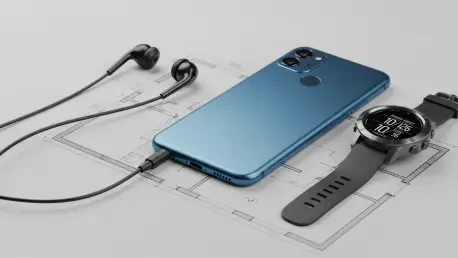
On the front, the G77 Power features a 6.72-inch Full HD+ LCD panel that operates at a smooth 120Hz refresh rate, delivering a fluid interface experience for scrolling and basic animations. While many competitors in this price bracket have made the jump to AMOLED technology, the choice of a high-quality LCD allows for exceptional legibility under direct sunlight thanks to its 1050-nit peak brightness. This screen technology also avoids the common flickering issues some sensitive users experience with OLED panels at lower brightness levels. Beyond the visuals, the device caters to a traditionalist audience by retaining the 3.5mm headphone jack, a feature that is rapidly disappearing even in the mid-range segment. This is paired with stereo speakers that have been expertly tuned with Dolby Atmos, offering a surprisingly rich and spatial audio profile for media consumption. For users who prefer high-quality wired audio or who work in noisy environments where Bluetooth headsets might be impractical, this combination of a bright, clear display and versatile audio options makes the G77 Power a highly functional tool.
Processor Architecture and Operational Limitations
At the center of the performance debate is the MediaTek Dimensity 6400 chipset, a 6nm processor that was specifically selected for its thermal efficiency and low power draw rather than its ability to crunch complex data. While this silicon choice ensures that the device never overheats during standard operations, it also imposes a strict performance ceiling that becomes apparent during intensive tasks. Benchmark results indicate that the G77 Power handles social media browsing, light document editing, and video streaming with relative ease, but it begins to stutter when tasked with modern mobile gaming or heavy multitasking. The transition between apps is noticeably slower than on more expensive mid-range alternatives, which may frustrate users accustomed to the instantaneous response times of high-end silicon. This chipset is clearly optimized for the casual user who views their smartphone as a communication and information tool rather than a mobile gaming console or a professional workstation, marking a clear boundary for the device’s capabilities.
The constraints of the Dimensity 6400 extend deep into the hardware integration, specifically affecting the internal Image Signal Processor which acts as a primary bottleneck for the camera system. Although Motorola integrated high-quality physical sensors into the G77 Power, the processor lacks the computational overhead required to leverage advanced photography algorithms effectively. This results in a mismatch where the hardware is capable of capturing more detail than the software can process, leading to a noticeable lag in the camera app and limited options for high-resolution video recording. The lack of raw horsepower means that features like real-time AI object removal or complex night mode processing are either absent or significantly slower than on competing devices. This design choice reinforces the narrative that the G77 Power was never intended to be a multimedia powerhouse; instead, it functions as a reliable workhorse where the processing power is secondary to the goal of maintaining a stable and energy-efficient operating environment over a long period.
Massive Power Reserves and Recharging Challenges
The absolute centerpiece of the G77 Power experience is its 7,000 mAh battery, a massive cell that sets a new standard for endurance in the current market. In real-world testing scenarios, this capacity translates to an incredible two full days of heavy use, often pushing toward a third day for those with more conservative habits. Users can expect nearly eight hours of screen-on time even with the 120Hz refresh rate enabled and brightness set to high, making it a peerless companion for long-distance travelers or field workers who do not have access to charging infrastructure. Furthermore, the device includes a 6W reverse wired charging feature, allowing it to act as an emergency power bank for smaller accessories like wireless earbuds or smartwatches. This level of utility transforms the phone from a simple communication device into a central energy hub for a user’s entire mobile ecosystem, providing a sense of security that few other smartphones can match in the current technological landscape.
However, the sheer size of the battery highlights a frustrating reality regarding the 30W TurboPower charging speeds provided by Motorola. In a competitive environment where many mid-range handsets now support 65W or even 100W fast charging, the G77 Power requires nearly two hours to reach a full charge from a completely depleted state. This creates a significant trade-off for the user; while the phone stays powered longer than almost anything else in its class, the downtime required to “refuel” is substantial and requires careful planning. A quick ten-minute charge before leaving the house provides very little meaningful range for a battery of this magnitude, which may be a deal-breaker for those with erratic schedules. The charging process is a slow and steady affair, designed to preserve the long-term health of the large lithium-ion cell, but it necessitates a shift in user behavior toward overnight charging rather than the rapid top-ups that have become common with modern high-speed charging standards.
Photographic Capabilities and Software Sustainability
While the G77 Power is equipped with a respectable 50MP Sony main sensor, the resulting photographic quality is often hampered by inconsistent software processing and the previously mentioned processor limitations. In daylight conditions, the camera captures decent images with natural colors, but it frequently struggles with high-contrast scenes where bright backgrounds become overexposed. The dynamic range is somewhat limited, leading to a loss of detail in the shadows during sunset or sunrise shots. Because the chipset cannot support 4K video recording, users are restricted to 1080p, which may feel outdated for a device released in the current era. Furthermore, the 32MP front-facing camera tends to apply an aggressive smoothing effect to skin textures, which can result in selfies that look artificial and lack fine detail. These shortcomings make it clear that while the camera is perfectly adequate for documentation and casual social sharing, it will likely disappoint anyone who considers mobile photography a serious hobby or a primary creative outlet.
The software environment is built on Android 16, featuring Motorola’s Hello UI, which maintains a clean and intuitive interface while incorporating useful modern features like Google Gemini AI tools. This software layer adds genuine value through classic Moto Gestures and a highly customizable lock screen, providing a responsive experience despite the hardware’s modest power. However, the long-term value of the G77 Power is significantly impacted by Motorola’s current update policy, which only guarantees one major Android OS version upgrade. This means the device will likely reach its end-of-life for major software changes with the arrival of Android 17, a relatively short lifecycle for a phone purchased in 2026. For consumers who expect their devices to remain current for three or four years, this lack of a robust software roadmap represents a significant hurdle. The combination of mediocre camera processing and a limited update window suggests that the G77 Power is intended as a temporary utility tool rather than a long-term investment for the tech-savvy user.
Strategic Recommendations for Potential Consumers
The Motorola G77 Power represented a clear strategic pivot toward a specific type of user who prioritized longevity over the bells and whistles of the modern smartphone era. It was a device that excelled in environments where power was scarce and durability was non-negotiable, making it a favorite for delivery drivers, outdoor enthusiasts, and long-range commuters. For these individuals, the trade-offs in processing speed and camera quality were seen as acceptable sacrifices in exchange for a battery that refused to quit. To maximize the utility of the device, owners were encouraged to lean into its strengths as a media consumption and communication tool, utilizing the headphone jack and the bright display for long trips. The reverse charging feature also offered a unique solution for those who carried multiple gadgets, effectively turning the phone into a portable energy station. Prospective buyers had to weigh these functional benefits against the reality of slow charging and a short software support window, ensuring their expectations aligned with the phone’s utilitarian design.
As the industry moved forward, the G77 Power served as a case study in the importance of balanced hardware, demonstrating that a massive battery alone was not enough to satisfy the broader market. The device highlighted a growing divide between users who needed a specialized tool and those who desired a versatile all-rounder. For those looking to purchase such a device, the best approach was to view it as a dedicated secondary phone or a primary device for those with very specific, high-endurance requirements. It was essential for users to invest in a reliable 30W charger and adopt a disciplined charging routine to mitigate the slow replenishment times. Ultimately, the G77 Power succeeded in its narrow mission of providing unparalleled battery life, but it also illustrated the limitations of the mid-range segment when processing power was neglected. It remained a niche champion, reminding the industry that while “Power” starts with the battery, it must eventually be supported by the silicon that drives the entire user experience.