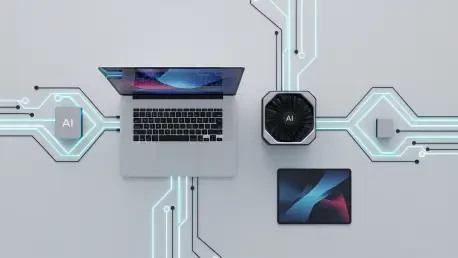

The release of Google Gemma 4 12B represents a seismic shift where the cloud is no longer the sole gatekeeper of high-level intelligence, moving sophisticated agency directly onto the silicon of individual workstations. This transformation signals a departure from the monolithic reliance on massive, distant data centers, allowing for a more immediate and personalized interaction with artificial intelligence. As the technological landscape evolves in 2026, the emphasis is pivoting toward decentralized systems that prioritize speed, privacy, and specialized utility over raw, generalized scale.
The primary objective of this exploration is to address the fundamental questions surrounding the adoption of localized agentic AI and to clarify how Google’s latest architecture facilitates this transition. By examining the interplay between software capabilities and hardware requirements, this article provides guidance for enterprises and developers looking to navigate the new reality of edge computing. Readers can expect to gain insights into the technical, economic, and security implications of deploying these advanced models within their own private infrastructures.
This discussion covers the technical specifications of the Gemma 4 12B model, the evolving hardware landscape, and the shifting economic models from operational to capital expenditures. It also delves into the governance challenges inherent in a decentralized environment and the strategic importance of task-specific AI. By the end of this analysis, the scope of localized AI adoption will be clearly defined, highlighting both the immense opportunities and the practical hurdles that define the current era of intelligence.
Key Questions or Key Topics Section
What Technical Innovations Distinguish Gemma 4 12B From Earlier Local Models?
The integration of the Google AI Edge stack is the cornerstone of this release, providing a seamless bridge between complex model architecture and local execution. Previous iterations of local models often struggled with tool use and autonomous decision-making, frequently requiring a tether to cloud-based APIs for heavy lifting. However, the Gemma 4 12B architecture is specifically optimized for visual insight generation and complex data processing without an internet connection, making it a true “agentic” tool rather than a simple text predictor.
A significant advancement is found in the Google AI Edge Gallery for macOS and the enhanced LiteRT-LM command-line interface. The addition of a specialized serve command allows developers to transform a standard workstation into a local large language model server, enabling standard software development kits to interact with the model via a local endpoint. This infrastructure supports applications like the Eloquent voice dictation tool, which now performs transcription and text manipulation entirely on-device, ensuring that sensitive data never leaves the local environment.
Why is the Industry Moving Toward Task-Specific Architectures?
Industry analysts have observed a growing disconnect between the capabilities of general-purpose models and the specific needs of modern enterprises. While massive models like Gemini Ultra are impressive, they often introduce unnecessary latency and cost for routine business functions. Consequently, there is a clear trend toward models that are contextualized for specific workflows, such as local file analysis or automated code generation. By 2027, it is expected that organizations will utilize these smaller, specialized systems three times more frequently than their larger counterparts.
This shift is driven by the need for efficiency and privacy in professional environments where proprietary data is a primary asset. Task-specific models like Gemma 4 12B allow for highly focused performance that can be fine-tuned for a company’s unique vocabulary and operational requirements. Moreover, by reducing the dependency on external providers, businesses can ensure that their AI agents remain functional even during network outages, providing a level of reliability that cloud-only solutions cannot match.
Which Hardware Constraints Currently Limit the Ubiquity of Local Agentic AI?
Despite the software advancements, the physical reality of running a 12-billion-parameter model remains a significant challenge for the average business user. Fluid, multi-turn agentic execution typically demands at least 16GB of unified memory or dedicated VRAM to maintain acceptable performance levels. Most standard-issue corporate laptops, including many models deployed during recent hardware refreshes, lack the necessary memory bandwidth and neural processing units to handle these workloads without significant lag.
Furthermore, the architectural limitations of local machines mean that AI agents are often restricted to a single instance of a model at any given time. Unlike cloud environments that scale horizontally across thousands of GPUs, a local workstation is a closed system with finite resources. This necessitates a different approach to AI development, where efficiency is prioritized over raw power. The resulting “memflation” or the rising cost of high-memory hardware has created a temporary barrier to entry for organizations that are not yet ready for a full-scale hardware upgrade.
How Does the Transition to Edge AI Complicate Corporate Governance?
The decentralization of intelligence introduces a complex layer of security concerns that IT departments are only beginning to address. When an AI agent is granted the ability to execute scripts or interact with local file systems, it effectively becomes a powerful actor within the internal network. Ensuring that these agents are properly sandboxed is a major technical hurdle, as a single vulnerability could allow an agent to inadvertently access or modify sensitive employee records or trade secrets.
From a governance perspective, the move away from the cloud makes auditing and monitoring significantly more difficult. In a centralized model, every interaction is logged on a server, allowing for easy tracking of model performance and compliance. In contrast, local AI operates as a private box on every individual laptop, making it nearly impossible for administrators to capture logs or detect model drift in real time. This lack of visibility forces companies to rethink their compliance frameworks to accommodate a fragmented and offline AI workforce.
What Economic Realignments Are Driven by the Move to Local Inference?
The shift from cloud-based AI to local deployment represents a fundamental change in how technology is financed within the corporate world. Currently, most AI usage is categorized as an operational expenditure, where companies pay variable fees based on their monthly API consumption. Moving to a local model shifts this burden to a capital expenditure, requiring a significant upfront investment in high-end, AI-capable hardware. While this can lead to long-term savings by eliminating recurring cloud bills, it forces an accelerated hardware replacement cycle.
Enterprises must now evaluate whether the privacy and latency benefits of edge AI justify the high cost of equipping an entire workforce with specialized machines. This is particularly relevant for organizations that recently invested in hardware that is now considered underpowered for the current generation of agentic models. The trade-off between the flexibility of the cloud and the privacy of the edge has become a central theme in strategic planning, as leaders balance immediate costs against the promise of a more secure and efficient future.
Summary or Recap
The transition to local agentic AI, spearheaded by architectures like Gemma 4 12B, marks a pivotal moment in the evolution of digital intelligence. The move toward on-device inference addresses critical needs for privacy, reduced latency, and task-specific efficiency that cloud-based systems often struggle to fulfill. However, the adoption of this technology is not without its obstacles, as hardware limitations and the complexities of decentralized governance require careful navigation. Enterprises are currently caught between the traditional convenience of cloud services and the emerging necessity of localized processing.
The long-term outlook suggests a hybrid approach where local nodes handle high-privacy tasks while the cloud remains the home for massive, data-heavy workflows. As the hardware ecosystem catches up with the demands of models like Gemma 4 12B, the individual workstation is likely to become an autonomous hub of intelligence. This shift ultimately empowers the user, providing a level of control over AI tools that was previously impossible. Continued development in this space will likely focus on optimizing these models for even smaller footprints without sacrificing their agentic capabilities.
Conclusion or Final Thoughts
The deployment of Google Gemma 4 12B acted as a catalyst for a broader discussion on the sovereignty of data and the autonomy of individual users. Organizations that recognized the value of local inference early were able to build more resilient workflows that minimized their exposure to the risks of centralized outages and data breaches. This period of transition highlighted the fact that the most effective AI tools were those that could operate seamlessly within the constraints of private hardware. The focus shifted from simply having access to intelligence to owning the infrastructure that powered it.
As the industry moved forward, the emphasis on capital investment in specialized hardware became a standard part of corporate strategy. The challenges of auditing decentralized models prompted the creation of new security protocols that prioritized local sandboxing and localized compliance tracking. Ultimately, the lessons learned from the shift to edge AI provided a framework for a more balanced relationship between human workers and their digital agents. By embracing the localized model, the technology community ensured that the next generation of AI would be both more private and more profoundly integrated into daily operations.