
The sheer ubiquity of instant messaging today makes it difficult to recall a time when the simple act of sending a short burst of text to a mobile phone was considered a groundbreaking laboratory experiment. On December 3, 1992, a pivotal moment in the history of communication occurred when a young engineer successfully transmitted a message that would eventually redefine the boundaries of human interaction. This specific event was not a choreographed media stunt or a high-stakes corporate launch; instead, it was a routine technical demonstration meant to verify that software could interact correctly with cellular network protocols. While the participants at the time likely viewed the transmission as a standard checkbox in a larger project, they were unknowingly laying the foundation for a global cultural shift that prioritized brief communication over voice calls. This silent revolution created a new layer of connectivity that remained invisible to the public for years before fundamentally altering how societies share information.
Milestone of the First Transmission
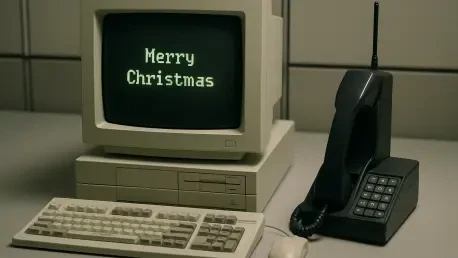
Neil Papworth, a twenty-two-year-old software developer working for Sema Group, found himself at the center of this technological milestone while on a contract for Vodafone UK. His primary objective was not to create a social media precursor but to develop and install a Short Message Service Center that could facilitate communication between mobile devices. Although the core standards for SMS had been discussed and refined within international telecommunications committees since the late 1980s, the theoretical frameworks had yet to be put into practice on a live, functioning network. On that quiet December evening, Papworth utilized a desktop computer to type the phrase “Merry Christmas” and hit the send button. The recipient of this historic transmission was Richard Jarvis, a director at Vodafone who was attending a holiday celebration at the time. This successful delivery confirmed that text-based data could indeed traverse a network designed primarily for voice, marking a transition from theory to reality.
The choice of a desktop computer to send the first message was a necessity of the era rather than a preference, as mobile handsets lacked the physical capabilities to compose text at the time. This technical detail serves as a reminder that the innovation was initially viewed as a unidirectional tool, perhaps for network operators to send status alerts or for paging services. Even though the technology had been successfully demonstrated, there was no immediate rush to market the service to consumers because the industry had not yet grasped the potential for peer-to-peer messaging. The industry focus remained fixed on improving voice quality and expanding network coverage, leaving SMS to linger in the background as a secondary feature for engineers and technicians. It took several more years of refinement and a significant shift in corporate strategy before the true potential of the Short Message Service was recognized as a viable consumer product. This slow start illustrates the unpredictable nature of tech.
Hardware Challenges and the Evolution of Handsets
The hardware used to receive that first historic message was a far cry from the sleek, pocket-sized smartphones that define the landscape of 2026. Richard Jarvis viewed the “Merry Christmas” greeting on an Orbitel 901, a device that pushed the boundaries of what could be considered a mobile phone. Weighing over four pounds and resembling a bulky briefcase more than a handheld accessory, the Orbitel 901 was indicative of the hardware limitations that early developers had to navigate. While it featured a monochrome screen capable of displaying characters, it was entirely devoid of an alphanumeric keyboard. Consequently, even if Jarvis had wanted to reply to the festive greeting, the device offered no mechanism to type or transmit a response. This asymmetry meant that early text messaging was a strictly one-way experience, reinforcing the perception that SMS was a professional notification system rather than a conversational platform. The physical presence of such devices underscored the engineering challenges.
Bridging the gap between a one-way notification system and a two-way conversational tool required a complete overhaul of handset design and network infrastructure. It took another full year before Nokia introduced the first mobile phone that allowed users to both send and receive text messages with relative ease. This development was crucial because it empowered the average user to engage with the technology without needing access to a desktop terminal. Furthermore, the introduction of distinctive notification tones played a subtle yet significant role in integrating SMS into daily life, as it created an auditory cue that demanded attention without the urgency of a ringing phone. These early handsets also had to contend with limited battery life and small memory capacities, which meant that users often had to delete old messages to make room for new ones. These constraints helped users prioritize information, fostering a culture of brevity that would persist long after storage capacities became virtually unlimited on modern devices.
Engineering the Character Limit and Linguistic Shift
One of the most recognizable and enduring constraints of the original SMS protocol is the 160-character limit, a ceiling that was the result of calculated engineering rather than an arbitrary choice. During the design phase, researchers discovered that they could transmit short bursts of text by utilizing the signaling pathways used to manage call setups. Because these pathways were usually idle during the actual voice transmission, engineers realized they could slip small packets of data into these gaps without consuming additional bandwidth. After analyzing postcards and telegrams, Friedhelm Hillebrand determined that 160 characters were sufficient to convey most concise thoughts or instructions. This clever use of existing resources allowed carriers to offer messaging services without building entirely new infrastructure, a cost-saving measure that eventually proved to be one of the most profitable decisions in the history of mobile telecommunications. It maximized efficiency by utilizing idle space within cellular standards.
The impact of this 160-character limit extended far beyond the technical realm, sparking a linguistic transformation that redefined written English for a generation. Faced with a hard cap on their expression, users began to innovate by stripping away vowels, utilizing phonetic spellings, and creating acronyms that have since become part of the global lexicon. Terms like “LOL” or “BRB” were born out of a practical need to save space, but they quickly evolved into a shorthand that signaled digital literacy and cultural belonging. This “text speak” was often criticized by traditionalists who feared the degradation of formal language, yet it demonstrated a remarkable level of human adaptability and creative problem-solving. Furthermore, the character limit encouraged the use of emoticons to convey tone and emotion that might otherwise be lost in a short format. This drive toward micro-compression set the stage for later platforms that would adopt similar constraints, proving that limited space can foster much more creativity.
Commercial Peak and Modern System Integration
Despite its humble beginnings as a technical test, the commercial expansion of text messaging was nothing short of a global phenomenon that caught many industry leaders by surprise. Mobile carriers initially struggled with how to monetize the service, often providing it for free or as a minor add-on to voice plans. However, as manufacturers integrated more efficient text-entry systems, such as predictive text and QWERTY keyboards, adoption rates skyrocketed among younger demographics who valued the privacy and convenience of silent communication. By the time usage hit its peak, trillions of messages were being sent annually, generating staggering revenue for companies worldwide. Even as high-speed data networks and internet-based messaging apps began to dominate the market starting from 2026 and moving forward, the original SMS protocol maintained its relevance. Its universal compatibility ensures that messages can be delivered across different carriers without the need for a specific third-party application, making it highly accessible.
The journey of the Short Message Service from a simple “Merry Christmas” to a global standard of communication provided valuable insights into how technology evolves through user behavior rather than just corporate planning. To maximize the efficiency of current communication systems, organizations moved to integrate SMS as a foundational layer for two-factor authentication and emergency alert systems. These applications utilized the high open rates and reliability of the protocol to ensure that critical information reached users even in areas with poor data connectivity. Engineers and developers focused on refining the interoperability between legacy SMS systems and modern Rich Communication Services to provide a seamless user experience across all devices. By prioritizing the stability of these basic protocols, the industry ensured that the digital revolution sparked in 1992 continued to serve as a dependable backbone for global interaction. This strategic focus allowed the essence of that first message to endure as a vital tool.