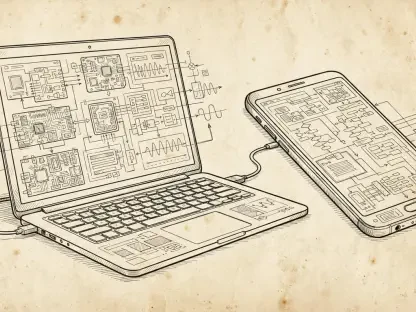

The landscape of personal computing is undergoing a fundamental transformation as the industry pivots from cloud-dependent services to highly efficient, on-device intelligence that prioritizes user privacy and real-time responsiveness. This transition is not merely a technical update but a comprehensive reimagining of how a laptop or desktop functions as a cognitive partner rather than a passive tool for data entry and file management. Apple is currently leading this charge by leveraging its proprietary silicon architecture to embed advanced generative models directly into the macOS core, ensuring that sophisticated tasks remain local. By moving away from a reliance on external servers, the company is effectively addressing the latency and security concerns that have previously hindered the widespread adoption of artificial intelligence in professional environments. As these specialized neural engines become more integrated into the daily workflow, the very definition of a personal computer is being rewritten to emphasize proactive assistance and seamless, high-speed execution.
The Architectural Foundation of Local Intelligence
Silicon Integration: Powering the Edge AI Revolution
The current success of local artificial intelligence on the Mac is rooted in the meticulous design of the M-series chips, which feature dedicated Neural Engines specifically optimized for the mathematical demands of large language models. Unlike traditional architectures that offload complex computations to the cloud, Apple Silicon is engineered to handle massive datasets locally, allowing the operating system to perform high-level analysis without transferring sensitive information across the internet. This hardware-first approach ensures that features like live translation, advanced image manipulation, and real-time coding assistance happen almost instantaneously. Furthermore, the unified memory architecture found in modern Mac devices enables the GPU and the Neural Engine to share resources with unprecedented efficiency, minimizing the energy consumption typically associated with generative AI tasks. By keeping the processing on the physical device, the system maintains a level of reliability that cloud-based competitors struggle to match, particularly in bandwidth-constrained environments where stable connectivity is not guaranteed.
Data Privacy: Protecting Information Through On-Device Processing
By prioritizing on-device processing, the latest version of macOS creates a secure sandbox where personal data never leaves the hardware, setting a new standard for digital privacy in an era of pervasive data harvesting. This strategy effectively mitigates the risks of data breaches and unauthorized profiling by ensuring that the training and execution of user-specific models occur entirely within the local environment. When a user asks the system to summarize a confidential legal document or analyze a private financial spreadsheet, the intelligence layer operates without creating a digital footprint on a remote server. This localized execution is not just a security feature but a structural philosophy that differentiates the Mac from platforms that rely on the monetization of user interactions. As a result, professional users in regulated industries, such as healthcare and finance, can now utilize advanced generative tools with the confidence that their intellectual property remains entirely under their own control, free from the prying eyes of third-party cloud providers.
The Evolution of the User Interface
Siri Reborn: From Basic Commands to Contextual Awareness
The transformation of Siri from a simple voice-activated trigger into a sophisticated, context-aware digital agent represents the most significant shift in the human-computer interface in recent years. This new iteration of the assistant is capable of understanding deep linguistic nuances and maintaining a coherent memory of previous interactions, allowing it to execute complex, multi-step workflows across diverse applications. Instead of merely opening a folder or setting a timer, the assistant can now synthesize information from emails, calendar events, and local files to draft comprehensive responses or organize project timelines autonomously. This level of integration is made possible by the system’s ability to index and understand the specific context of the user’s digital life in real-time. Consequently, the Mac is evolving into a proactive collaborator that anticipates the next step in a professional sequence, effectively reducing the cognitive load on the individual and streamlining the bridge between creative thought and digital execution within the macOS ecosystem.
Workflow Optimization: Intelligent Automation for Professionals
Modern macOS features have moved beyond simple automation scripts to incorporate intelligent systems that learn from user behavior to optimize file management and application switching. The integration of local AI allows the system to organize the desktop dynamically, surfacing the most relevant documents based on the current project or time of day without manual intervention. For creative professionals, this means the operating system can suggest specific color palettes, identify recurring patterns in code, or automatically generate metadata for thousands of media assets using local recognition models. These advancements have turned the Mac into a self-optimizing environment where the software adapts to the user’s unique habits rather than forcing the user to conform to a rigid file structure. By automating the mundane aspects of data organization and retrieval, the local AI strategy enables users to focus on high-level problem solving and creative expression, ultimately making the personal computer a more intuitive extension of the human mind than ever before.
Future Considerations for Hardware Synergy
The transition toward a fully localized artificial intelligence model suggested that future hardware iterations will likely focus on expanding thermal efficiency and dedicated AI memory pools to support even larger parameters. As developers began to take advantage of the expanded Neural Engine capabilities, it became clear that the synergy between software and silicon would define the competitive landscape of the late decade. Moving forward, the industry was expected to continue prioritizing the reduction of model sizes to fit within the constraints of mobile and desktop hardware without sacrificing accuracy. This evolution ensured that the Mac remained a preferred platform for those who valued the intersection of high performance and uncompromising data sovereignty. By establishing a robust framework for edge intelligence, the groundwork was laid for a new generation of computing that was both more powerful and more personal.