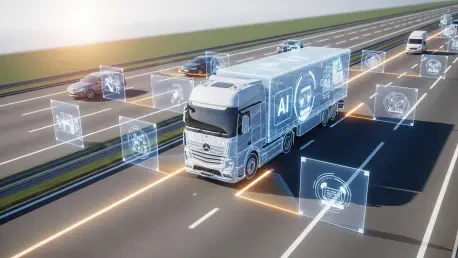

The modern landscape of commercial transportation is currently being reshaped by an unprecedented surge in legal liabilities that threaten to destabilize even the most established logistics companies across the country. As traditional safety protocols prove increasingly insufficient against sophisticated modern litigation tactics, the reliance on high-definition, AI-powered recording devices has shifted from a luxury to an absolute operational necessity. The primary catalyst for this shift is the alarming rise of “nuclear verdicts,” where jury awards in trucking-related accidents have skyrocketed, often exceeding ten million dollars. In recent years, the average verdict in the United States has climbed from a few million dollars to a staggering twenty-two million dollars, creating a financial environment where a single incident can bankrupt a mid-sized fleet. Without objective video evidence, companies are forced to rely on driver testimony, which often struggles to compete against the emotional narratives presented in a courtroom today.
Addressing Financial Risks and Market Stability
Neutralizing Fraudulent Claims: Protecting the Fleet
Organized insurance fraud has become a pervasive threat to the commercial transport industry, with criminal groups meticulously staging accidents to exploit corporate liability. These sophisticated operations often involve multiple vehicles and “witnesses” who provide coordinated, false accounts designed to portray the professional driver as negligent or reckless. For fleet managers, these fraudulent claims are more than a nuisance; they represent a significant drain on resources and a threat to the company’s reputation. AI-enhanced dash cams provide a critical layer of defense by capturing the precise dynamics of an incident, often revealing the erratic behavior of the third party that preceded the collision. By documenting the moments leading up to an impact, these systems provide the irrefutable evidence required to dismantle false narratives before they gain traction in a legal setting. This proactive transparency allows companies to protect their assets from predatory legal strategies.
Beyond simply documenting the event, the presence of advanced surveillance technology serves as a powerful deterrent against those who might otherwise target a commercial vehicle for an insurance scam. When a potential claimant realizes that a vehicle is equipped with high-resolution, multi-angle cameras that upload footage to the cloud in real-time, the likelihood of a fraudulent lawsuit diminishes significantly. This transition toward technological accountability has allowed fleets to settle legitimate claims quickly while standing firm against manufactured disputes. In many instances, providing a single video clip to opposing counsel or insurance adjusters has resulted in the immediate withdrawal of a claim, saving the company months of litigation and hundreds of thousands of dollars in legal fees. This shift toward evidence-based defense ensures that the financial stability of the fleet is not compromised by the actions of opportunistic actors seeking to profit from the inherent risks of the road.
Managing Insurance Volatility: Securing Coverage
The current high-risk environment has led to a severe contraction in the insurance market, creating what specialists call a “hard market” characterized by restricted capacity and soaring premiums. Many insurance providers, unable to predict or manage the volatility of legal awards, have opted to exit the commercial trucking space entirely, leaving fewer options for fleet operators. For the companies that remain, premiums have surged by twenty-five percent or more as insurers attempt to offset the costs of massive payouts. This lack of market stability has made it difficult for fleets to forecast operational expenses and maintain profitable margins. Consequently, insurers are now prioritizing clients who demonstrate a commitment to risk mitigation through the adoption of advanced safety technologies. A fleet without a comprehensive telematics and video solution is often viewed as an uninsurable risk, or at the very least, subject to the most expensive and restrictive policies available in the marketplace.
To navigate this challenging financial landscape, commercial fleets are using AI dash cam data to prove their safety records and negotiate more favorable terms with their insurance carriers. By presenting detailed analytics on driver behavior and a history of avoided incidents, fleet managers can demonstrate a level of control that traditional safety metrics simply cannot provide. This technological transparency often leads to significant premium reductions, as insurers gain confidence in the company’s ability to manage its risk profile effectively. In many cases, the implementation of an AI-powered safety stack is no longer viewed as a voluntary improvement but as a mandatory prerequisite for securing any form of commercial coverage. As the industry moves forward, the divide between tech-enabled fleets and those relying on legacy systems will only widen, with the former enjoying greater access to stable insurance options and the latter facing increasing difficulty in maintaining the legal requirements for operation.
The Evolution of Safety Technology
Real-Time Prevention: Moving Beyond Reactive Video
The transition from standard recording devices to AI-powered dash cams represents a fundamental shift from reactive monitoring to proactive accident prevention within the industry. Traditional cameras were essentially digital black boxes that provided value only after a collision had occurred, requiring manual review to understand what happened. In contrast, modern systems leverage sophisticated computer vision algorithms to analyze the driving environment in real-time, functioning as an intelligent co-pilot for the driver. These AI models are trained to recognize a wide variety of hazardous situations, ranging from tailgating and lane departures to signs of driver fatigue or distraction. By processing this visual data instantaneously, the system can identify risks that a human driver might overlook, especially during long hauls where monotony and physical exhaustion are common factors. This continuous oversight ensures that safety standards are maintained throughout the duration of every trip, regardless of the time of day.
One of the most significant advantages of real-time AI analysis is its ability to provide immediate feedback through in-cab alerts, allowing drivers to correct dangerous behaviors before they escalate into an accident. For example, if the camera detects that a driver is looking down at a mobile device or if their eyes are closing due to fatigue, an audible warning is triggered to refocus their attention. This immediate intervention is a critical component of a modern safety strategy, as it addresses the root causes of many collisions rather than just documenting the result. Industry reports indicate that fleets utilizing a comprehensive AI safety stack can reduce their overall crash rates by as much as seventy-three percent. By preventing the accident from occurring in the first place, companies avoid the legal, financial, and emotional fallout associated with highway incidents. This shift toward preventative technology signifies a new era of fleet management where data is used to actively save lives and protect assets.
Irrefutable Evidence: The Power of Video in Court
In the high-stakes environment of a courtroom, the clarity and perspective provided by high-definition video can be the single most influential factor in determining the outcome of a case. Traditional legal battles often devolved into a “he-said, she-said” dynamic, where the professional driver was frequently at a disadvantage due to public perceptions regarding large vehicles. AI dash cams eliminate this ambiguity by providing a clear, unbiased account of the events that transpired, capturing details that human witnesses might miss or misremember. Modern systems offer wide-angle views that show not only the road ahead but also the driver’s actions and the perimeter of the vehicle. This comprehensive visual record allows defense attorneys to present a factual narrative that can effectively counter the emotional appeals often used by opposing counsel. When a jury can see the exact speed and visual conditions of an incident, they are much more likely to reach a fair and objective conclusion based on facts.
The adoption of advanced recording hardware and structured coaching programs established a new standard for operational excellence and legal protection within the transport sector. Successful organizations moved beyond simple device installation to create comprehensive safety cultures where data-driven insights informed every aspect of driver training and risk management. By prioritizing high-resolution cameras with infrared capabilities and cloud connectivity, these companies ensured that critical evidence was always preserved and accessible when needed most. These technological investments provided a robust defense against the rising tide of nuclear verdicts and fraudulent claims that threatened the industry’s stability. Furthermore, the proactive use of real-time intervention tools significantly lowered accident frequencies, which secured long-term financial health and reduced insurance volatility. Ultimately, the integration of these sophisticated tools transformed fleet safety from a reactive administrative task into a proactive strategic advantage that defined market leadership.