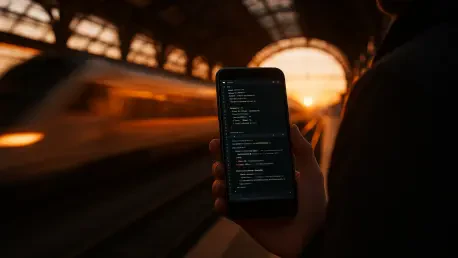

The distinction between local and cloud-based engineering is becoming increasingly invisible as mobile tools provide full access to virtualized coding environments. For a long time, the primary limitation for developers wanting to work remotely was the sheer hardware requirement of modern integrated development environments and the local resources needed to compile complex applications. In 2026, the arrival of the Cursor mobile application has fundamentally challenged the notion that serious software engineering requires a desk and a high-end workstation. By offloading the most resource-intensive processes to the cloud while maintaining a highly responsive mobile interface, Cursor allows for a level of productivity that was previously impossible on a smartphone. This shift is not merely about convenience; it represents a reimagining of the developer’s relationship with their environment, prioritizing access and speed over physical hardware. As professional workflows become more fragmented and distributed, the ability to engage with a codebase from any location becomes a critical advantage for individual contributors and large-scale engineering teams alike.
Evolution of Mobile Engineering Environments
Bridging the Gap: Performance and Synchronization
The mobile version of Cursor distinguishes itself by offering a native-feeling experience that mirrors the power of its desktop predecessor without the typical compromises of a mobile port. Developers can navigate through thousands of files and millions of lines of code with a fluidity that suggests a deep integration between the mobile hardware and the underlying cloud infrastructure. This performance is achieved through a sophisticated caching mechanism and a remote indexing service that handles the heavy lifting of code analysis and search. Consequently, the act of opening a project on a mobile device no longer feels like a desperate measure for emergencies but rather a deliberate choice for high-speed review or minor feature implementation. The interface has been meticulously designed to maximize the limited screen real estate of a smartphone, ensuring that essential tools like the terminal, file explorer, and debugger are always within reach. This architectural focus on performance ensures that the creative flow of the developer is never interrupted by technical latency.
Real-time synchronization ensures that the transition between different devices is completely frictionless, maintaining the state of the workspace across the entire ecosystem. In 2026, developers frequently move from a multi-monitor office setup to a handheld device while traveling, and the Cursor app facilitates this by instantly mirroring every open file, terminal command, and unsaved change. This level of continuity is powered by a robust backend that treats the mobile device as a first-class citizen in the development cycle rather than an afterthought. Security remains a top priority in this mobile-first world, with the application utilizing advanced encryption and biometric verification to protect sensitive intellectual property during transit and at rest. By providing a secure and consistent environment, the platform empowers engineers to maintain their momentum regardless of their physical surroundings or the device they are using. This synchronization is the backbone of a modern, flexible workflow where the project itself, rather than the machine it resides on, becomes the focal point of the engineer’s professional activity.
The Intelligence Layer: AI-Driven Development on Mobile
Artificial intelligence is the critical component that makes software development on a small screen not only possible but highly efficient for professional use. Since the physical constraints of a mobile keyboard make extensive manual typing difficult, the application relies on context-aware predictive models to generate code snippets and entire functions based on minimal input. These AI models are deeply integrated into the editor, allowing them to understand the specific patterns and requirements of a project’s unique codebase. When a developer begins to type a logic block or a function call, the AI provides intelligent suggestions that go far beyond simple word completion, offering entire logic structures that align with the project’s architecture. This significantly reduces the cognitive and physical load on the developer, enabling them to focus on high-level design and problem-solving rather than the mechanics of syntax entry. The result is a development experience that feels more like a conversation with an intelligent partner than a traditional manual coding session.
Organizations that successfully integrated these AI-driven mobile tools established a more responsive and agile development model. By utilizing the intelligent assistant features of Cursor, developers addressed complex refactoring and debugging tasks during short windows of time that were previously considered unproductive. This shift in operational strategy allowed teams to accelerate their delivery schedules and improve code quality through more frequent and accessible reviews. To maintain this momentum, technical leaders implemented secure remote access policies and provided training on AI-augmented coding techniques. The move toward mobile engineering proved that professional software development could be detached from the desk when supported by cloud infrastructure and advanced machine learning. Ultimately, those who adopted these workflows gained a significant advantage in hiring and retaining talent by offering unmatched flexibility. Moving forward, developers should prioritize the mastery of AI-prompting and mobile-first debugging to stay competitive in this evolving ecosystem.