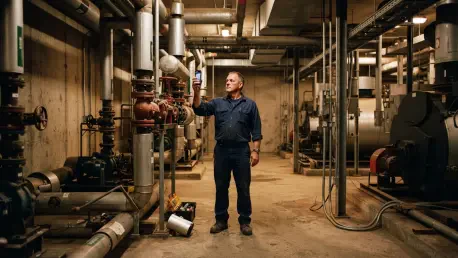

A maintenance engineer working alone in the depths of a sprawling commercial basement discovers that a minor equipment failure has led to a sudden medical emergency, yet their immediate attempt to call for help is met with a chilling “No Service” message on their cell phone screen. This scenario is increasingly common in modern urban environments where architectural choices prioritize aesthetics and energy efficiency over fundamental electromagnetic permeability. While building managers invest heavily in sophisticated fire suppression systems, high-definition surveillance, and biometric access controls, the most basic tool for survival—the cell phone—is frequently rendered useless by the very structures designed to protect occupants. As progress continues through 2026, the assumption that wireless connectivity is a universal constant continues to fail in the face of reinforced concrete and specialized glass. Addressing these dead zones is no longer a matter of convenience; it is a safety imperative that requires immediate attention from all stakeholders.
1. Safety Standards: Digital Connectivity in Modern Infrastructure
Cellular reception within commercial real estate is often relegated to the status of a secondary amenity, yet its role in modern emergency response is vital for anyone requiring immediate assistance. Safety protocols typically emphasize physical hardware like extinguishers or alarms, but the ability of a technician to communicate from a remote service tunnel is just as essential for their long-term well-being. When a building creates an environment where signals cannot penetrate, it effectively isolates individuals from the emergency services they might desperately need. This isolation introduces a significant liability for those who manage these assets, as a lack of communication can turn a manageable incident into a life-threatening crisis. In 2026, the definition of a safe building must expand to include the reliable transmission of radio frequencies across all levels of the structure. Relying on luck or proximity to a window is an unacceptable strategy for ensuring the safety of workers and visitors.
The duty to ensure connectivity is often lost in the gap between landlords, facility managers, and individual tenants. Because cellular networks are primarily designed to provide coverage across wide outdoor geographical areas, they cannot always deliver the penetration required for specialized or subterranean structures. Consequently, building owners must take the lead in installing dedicated indoor infrastructure rather than assuming external providers will solve the problem. A facility management company may operate the site, but the underlying structural limitations are the responsibility of the asset owner. Without a clear chain of accountability, technical gaps persist, leaving workers vulnerable. When every party assumes that another has checked the communications systems, the result is a fragmented safety net. Reliable indoor coverage should be treated as a core utility, similar to water or electricity, ensuring that the property remains a safe environment for all professional and private activities.
2. Structural Barriers: Identifying Common Signal Obstruction Risks
Critical infrastructure zones such as mechanical rooms, parking garages, and service hallways are frequently the most significant “dead zones” in modern developments. These areas are typically constructed with thick reinforced concrete and heavy steel frames that effectively act as shields, blocking external radio signals from reaching the interior. Furthermore, modern energy-efficient glazing and high-performance insulation, while excellent for thermal regulation, further hinder connectivity by reflecting or absorbing electromagnetic waves. For maintenance staff, cleaners, or security personnel who spend large portions of their shifts in these shielded environments, the inability to reach the outside world is a constant risk. If a building’s very structure prevents signals from entering, the cell phone becomes a useless piece of plastic during a medical or mechanical crisis. Identifying these high-risk areas is the first step in creating a comprehensive strategy to eliminate isolation for every person within the facility.
Employers are legally required to manage the risks faced by people working by themselves, and reliable communication is fundamental to those arrangements. Relying on the hope that an emergency call might eventually find a roaming signal on another operator’s network is an insufficient safety plan. Emergency calling functions depend entirely on the presence of a compatible network signal; if the architectural shell creates a total blackout, those functions fail. This reality is particularly dangerous for lone workers who may be unable to move toward a window or an exit after an accident. To mitigate this, managers must evaluate whether their safety procedures are actually effective in the physical reality of the building. If a worker cannot call for help, the employer has failed in their duty of care. As building technologies evolve, the industry must prioritize the removal of these digital barriers to ensure that no worker is left truly alone in a moment of extreme distress or physical danger.
3. Operational Strategy: Implementing Effective Coverage Solutions
Beyond professional safety, employees require reliable reception to remain reachable for personal emergencies, such as a call from a child’s school or a medical facility. When corporate security policies prevent employees from using private devices on secure office Wi-Fi networks, the cellular carrier network becomes the only viable link to their personal lives. This separation of personal and professional data is necessary for cybersecurity, but it should not result in the total isolation of the workforce. To ensure a building remains safely connected, facility managers should follow these steps:
- Evaluate existing signal strength: Audit the entire property, including remote areas like stairwells and basements, to find where calls drop.
- Perform technical assessments: Use professional surveys to check how different cellular providers perform across the site.
- Install necessary hardware: Based on the survey findings, set up internal signal boosters or infrastructure to fill the identified gaps.
- Conduct regular reviews: Monitor signal quality over time.
For new projects or major renovations, connectivity should be integrated during the architectural phase rather than addressed as an afterthought. Addressing signal issues after a building is finished is far more expensive and complex than including the necessary wiring and hardware during the initial construction process. Proactive design ensures that signal distribution systems are embedded within the walls, providing seamless coverage from the lobby to the deepest basement. This foresight prevents the need for disruptive retrofitting and ensures the property is fully equipped before it is occupied. For existing structures, managers often questioned whether Wi-Fi was a suitable replacement, but found that many companies blocked personal devices or that Wi-Fi calling was not always reliable in a crisis. Therefore, dedicated cellular infrastructure became the gold standard. By prioritizing these systems, stakeholders created environments that were not only technologically advanced but also fundamentally safer for every person inside.
4. Proactive Resilience: Enhancing Future Building Safety
Building owners and facility managers recognized that the physical environment played a decisive role in communication reliability and took direct action to bridge the gap. They implemented professional surveys that identified weak-signal areas and assessed performance across all major cellular networks to ensure universal accessibility. By installing in-building infrastructure, they successfully transformed former dead zones into connected spaces where emergency calls were guaranteed to go through. These improvements demonstrated a commitment to operational risk management that went beyond mere compliance. Professionals monitored signal quality regularly, adjusting for technological shifts and structural changes to maintain high standards of safety. This systematic approach ensured that the most vital tool for individual safety—the ability to call for help—remained functional in every corner of the property. Ultimately, the industry moved toward a model where digital connectivity was inseparable from the physical safety of the modern workplace, protecting lives through technological resilience and strategic planning.