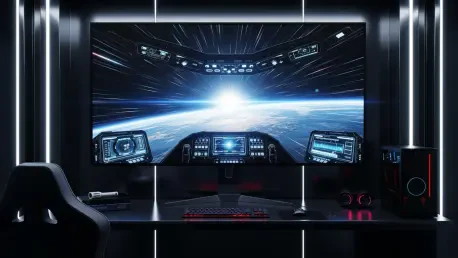

The relentless pursuit of higher frame rates often blinds PC gaming enthusiasts to the subtle yet profound impact that sophisticated light management has on their favorite virtual worlds. For a long time, the evolution of monitor technology focused heavily on pushing resolution and increasing Hertz, frequently leaving the critical role of illumination in the shadows. Display analysts now emphasize that while a high pixel count provides clarity, it is the management of light that truly brings a scene to life. Dynamic Contrast Ratio, or DCR, has emerged as the silent engine behind atmospheric immersion, allowing virtual environments to feel more tangible and grounded in reality. This technology moves beyond static numbers to create a sense of presence that simple frame rates cannot achieve.
Technological shifts suggest that depth is becoming the new frontier for gaming displays. Expert reviews frequently highlight how DCR works by actively responding to the shifting tones of a game, making the difference between a flat image and a cinematic experience. While hardware distinctions between traditional LCD panels and self-emissive OLEDs remain significant, DCR bridges that gap for many users. The following collection of perspectives explores the technical mechanics of real-time adjustment, the resilience of backlit hardware, and the practical choices facing enthusiasts in a crowded market.
Beyond Refresh Rates: How Depth Redefines the Gaming Experience
Modern monitor development has historically prioritized speed and sharpness, yet many specialists argue that these metrics alone do not define visual quality. As game engines become more complex, the ability of a monitor to interpret light and shadow has become a primary factor in player satisfaction. DCR acts as a bridge between the digital data of a game and the physical light emitted by the screen, ensuring that the intended mood of a developer is accurately conveyed to the player.
Industry leaders recognize that visual fidelity is a multi-dimensional pursuit where depth perception plays a vital role. Without dynamic lighting management, even the most expensive 4K panels can suffer from a washed-out appearance in dark scenes. By prioritizing the relationship between the brightest and darkest points of an image, DCR provides a level of clarity that helps players distinguish subtle details in complex environments, moving the focus toward a more holistic view of display performance.
The Mechanics of Light: How Dynamic Contrast Transforms Digital Worlds
The core of dynamic contrast lies in the ability of a monitor to adapt to changing visual data in real time. Unlike static contrast, which is a fixed hardware limitation, DCR utilizes active systems to modify the light output based on the content being displayed. This process ensures that the screen is not simply a passive window but an active participant in the rendering of the digital world.
Hardware enthusiasts often point out that this transformation is particularly visible in high-fidelity titles where lighting is a key gameplay element. When the monitor can shift its backlight intensity dynamically, the perceived depth of the image increases significantly. This mechanical flexibility allows older display technologies to maintain relevance by mimicking the high-contrast behaviors seen in much more expensive professional-grade equipment.
Algorithmic Precision: The Engineering Behind Real-Time Backlight Adjustment
Technical specialists note that DCR relies on a combination of sensors and software that work in tandem to analyze scene-specific metadata. In a horror title, for instance, the algorithm detects a dark corridor and instructs the backlight to dim, which deepens the black levels and heightens the tension. This real-time response prevents the “blooming” effect where light spills into dark areas, maintaining the integrity of the shadows.
The difference in performance is stark when comparing a standard 1000:1 static ratio to the multi-million-to-one figures found in DCR specifications. While those high numbers are partly for marketing, the actual visual impact remains substantial. However, some users report challenges such as “backlight bleeding” or perceived lag during rapid light transitions. Engineering improvements in 2026 have largely mitigated these issues, though the quality of the implementation still varies between manufacturers.
LCD Resilience in the OLED ErBridging the High-Contrast Performance Gap
In a market increasingly dominated by OLED technology, DCR has become an essential survival tool for LED-backlit panels. Because OLEDs are self-emissive and can achieve “perfect black” by turning off pixels, LCD manufacturers must use sophisticated dimming to stay competitive. DCR allows these panels to simulate that high-contrast look, providing a vibrant experience that rivals more expensive organic light-emitting diode displays.
For many gamers, this technology offers a cost-effective alternative that does not sacrifice visual fidelity. While OLEDs remain the gold standard for contrast, high-quality LCD panels with advanced DCR settings offer excellent performance without the premium price tag. Industry shifts show that even mid-range panels are increasingly adopting sophisticated dimming zones to simulate high-end performance, making deep blacks more accessible to the average consumer.
Navigating the Specification Maze: Marketing Labels and Regional Hardware Trends
Navigating the world of monitor specifications often requires decoding proprietary terminology. Samsung’s “Mega Contrast,” for example, is a marketing label for advanced DCR, yet it performs similarly to standard dynamic systems found in other brands. Understanding these labels is crucial for enthusiasts who want to ensure they are getting a monitor capable of true light modulation rather than just a high number on a box.
Global manufacturers prioritize DCR differently depending on the market segment and region. Budget-friendly FHD screens might use simpler algorithms, while high-end QHD workstations utilize complex multi-zone systems. Hardware reviewers urge consumers to look past the raw marketing figures and focus on the actual implementation of the technology, as a well-tuned lower ratio often outperforms a poorly optimized high one.
The Competitive Paradox: Prioritizing Visual Fidelity Versus Tactical Clarity
There is an ongoing debate among players regarding the use of DCR in different genres. In open-world games like “Elden Ring,” the cinematic immersion provided by deep shadows and piercing highlights is invaluable. However, professional esports players sometimes find fluctuating brightness distracting, as it may obscure a target in a dark corner if the screen dims too aggressively.
Expert perspectives suggest using On-Screen Display toggles to customize the visual output based on the specific game being played. This flexibility allows users to enjoy atmospheric depth during solo adventures while maintaining consistent visibility during competitive matches. Looking ahead, some researchers suggest that AI-driven contrast adjustments might soon replace current backlight modulation, providing even more granular control that satisfies both cinematic and tactical needs.
Implementation Roadmap: Maximizing Hardware Potential for Peak Performance
To truly benefit from DCR, users must understand how to pull detail out of both shadows and highlights through proper setup. Identifying true DCR capabilities requires looking beyond the bold headlines and checking the fine-print specifications on major retail platforms. A monitor with a wide range of dimming steps will always provide a smoother transition than one with a simple on-off toggle, making it a vital consideration for those seeking the best possible image.
Calibration remains a key step in finding the “sweet spot” between atmospheric depth and consistent screen visibility. Most modern displays offer several levels of dynamic contrast within their OSD menus, allowing for a tailored experience. By experimenting with these settings, gamers can ensure their hardware is working at its peak potential, effectively bridging the gap between raw power and visual artistry.
The Path Forward for High-Fidelity Gaming Display Standards
The industry established that visual quality was a multi-dimensional pursuit involving far more than just pixel counts. As game engines became more sophisticated, the ability of a monitor to interpret light through DCR remained a cornerstone of the PC gaming experience. The focus shifted away from raw speed toward a more balanced approach where lighting management was seen as essential for immersion.
Investing in intelligent lighting management proved to be one of the most effective ways to future-proof a gaming rig’s visual output. Players who prioritized these features found that their displays held their value longer as content became more visually demanding. Ultimately, the adoption of advanced contrast standards ensured that every digital environment was seen exactly as the creators intended, solidifying DCR as a critical component of the modern gaming landscape.