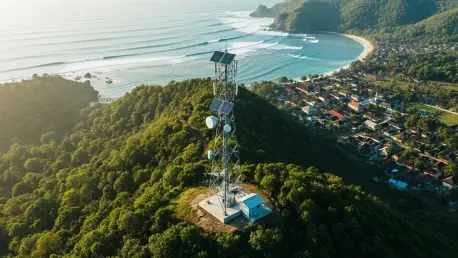

Across the vast Indonesian archipelago, where jagged mountain ranges and expansive seas once acted as insurmountable barriers to communication, a radical technological shift is currently rewriting the rules of connectivity. The central government is aggressively pursuing a mission to dismantle the digital wall that has historically separated urban centers from the most isolated territories. Through the Telecommunications and Information Accessibility Agency, better known as BAKTI Komdigi, the state is targeting areas classified as 3T—an acronym representing regions that are underdeveloped, frontier, and outermost. This initiative is no longer just a policy goal; it has become a fundamental pillar of national stability, ensuring that a citizen’s geographic location does not determine their level of opportunity in a globalized economy. By focusing on these high-priority zones, the administration is transforming high-speed internet from an exclusive luxury into a universal civil right, fostering a sense of national unity that transcends physical distance.
This massive undertaking involves a multi-layered strategy that addresses the unique logistical nightmares posed by Indonesia’s geography. It is a mission that seeks to build a holistic digital ecosystem in places where private sector providers have traditionally hesitated to invest due to high costs and low immediate returns. The collaboration between central authorities and local leaders forms the backbone of this transformation, turning once-silent islands into vibrant, connected hubs. By deploying a sophisticated mix of fiber optic cables, satellite links, and base transceiver stations, the government is effectively laying the groundwork for unprecedented social and economic equity. As these networks go live, they do more than just provide access to social media; they open doors to essential public services, modern education, and a marketplace that spans the entire globe.
Strengthening National Connectivity Through Strategic Infrastructure
Overcoming Geographical Barriers and Logistical Hurdles
The diverse physical landscape of the Indonesian archipelago presents a series of immense engineering challenges that would stall most conventional infrastructure projects. With thousands of islands scattered across the equator, laying traditional cables is often impossible or prohibitively expensive, necessitating a more versatile approach to telecommunications. BAKTI Komdigi serves as the primary engine for this expansion, utilizing a creative technological mix to reach the “last mile” of the nation’s frontier. This push is specifically engineered to bypass the economic hurdles that usually deter commercial investment, ensuring that even the most remote villages can participate in the digital economy. By deploying satellite-based solutions and microwave links in terrain where fiber cannot reach, the agency is effectively neutralizing the geographical lottery that once dictated a community’s technological fate.
Furthermore, the ultimate goal of these infrastructure projects is to create a seamless link between thriving urban centers and the remote frontier. By establishing these reliable network foundations, the government is enabling isolated residents to access critical services such as distance learning for students and telemedicine for those in areas without specialist doctors. This baseline of connectivity is the first vital step in a broader movement to modernize the nation’s most vulnerable regions and protect them from being left behind as the world advances. The presence of a stable signal in a 3T region acts as a catalyst for local governance, allowing for better coordination during emergencies and more efficient management of natural resources. This strategic deployment ensures that the digital bridge is not just a temporary fix but a permanent structure that supports the long-term aspirations of every Indonesian citizen.
Deploying Innovative Solutions for the Last Mile
To ensure that no village is left in a “blank spot,” the government has optimized the deployment of Base Transceiver Stations (BTS) that can operate in off-grid conditions. Many of these towers in remote areas are powered by renewable energy sources, such as solar panels, to ensure they remain operational even in regions where the national power grid has yet to reach. This commitment to sustainable and resilient infrastructure means that even during seasonal weather shifts or local power outages, the digital lifeline remains intact. Such innovations are critical for maintaining a consistent flow of information, which is necessary for the daily operations of local schools and clinics. Moreover, the integration of high-throughput satellites has bridged the gap for the most distant islands, providing bandwidth that was previously unthinkable in the middle of the ocean.
Beyond the hardware itself, the strategy involves a deep level of cooperation with local contractors and community leaders to ensure the longevity of the equipment. This localized approach helps mitigate the risks of vandalism or neglect, as the community recognizes the infrastructure as a vital asset for their own collective growth. By training local technicians to perform basic maintenance, the government is creating a sense of ownership while also generating technical employment within the 3T regions themselves. This strategy ensures that the technological expansion is not just a top-down mandate but a grassroots evolution that strengthens the social fabric of the territory. Consequently, the digital infrastructure becomes a permanent feature of the landscape, providing the necessary stability for private businesses to eventually consider these regions as viable markets for future expansion.
Success Stories in Regional Digital Transformation
Case Studies of Progress in West Halmahera and Morotai
The West Halmahera Regency provides a striking example of how rapid infrastructure development can fundamentally change the rhythm of daily life for thousands of people. Only a few years ago, residents in this area were frequently forced to climb tall trees or trek to high ridges just to catch a fleeting cellular signal for basic communication. Today, the landscape has changed significantly, with nearly every village in the district now covered by a robust network supported by over 70 new telecommunication towers. This transition has moved the community from being a disconnected “blank spot” to a functioning digital society where the conversation has shifted. Instead of struggling to find a signal, residents are now focused on how to best utilize high-speed data to improve their livelihoods, participate in online education, and engage in regional commerce.
Similarly, on Morotai Island, connectivity is being utilized to revolutionize public governance and provide a much-needed boost to the local small business sector. The local administration has prioritized internal digital systems, such as the “Satu Data” initiative, which aims to integrate various government databases into a single, transparent framework for better decision-making. This move toward digitalization has significantly reduced administrative bottlenecks and improved the speed of public service delivery for the island’s residents. Furthermore, the island is empowering its entrepreneurs by providing free internet access in public spaces, allowing local creators to market their unique handicrafts and tourism services to an international audience. These case studies prove that when the right infrastructure is paired with local initiative, the results are transformative and immediate.
Expanding the Digital Footprint in Outermost Islands
The success seen in Morotai is being replicated across other frontier islands, where the focus is now on creating specialized digital zones for economic activity. By providing dedicated high-speed hubs, the government is encouraging the growth of micro, small, and medium enterprises (MSMEs) that were previously limited to local village trade. These businesses can now utilize digital payment systems and e-commerce platforms to reach customers in Jakarta or even overseas, effectively bypassing the traditional logistical hurdles of island life. This shift is particularly important for the local fishing and agricultural sectors, as real-time price monitoring allows producers to negotiate better rates for their goods. The digital footprint is thus becoming an economic catalyst, turning traditional industries into tech-enabled powerhouses that can compete on a larger stage.
In addition to economic gains, the digital transformation in these regions has led to a significant improvement in the transparency of local government operations. Electronic budgeting and procurement systems have been implemented to ensure that public funds are used efficiently and that projects are completed as scheduled. This digital accountability has helped build trust between the citizens and their local leaders, fostering a more collaborative environment for regional development. As more villages come online, the data collected from these remote areas allows the central government to better understand the specific needs of 3T regions, leading to more targeted and effective policy interventions. The integration of these islands into the national digital network is not just about connectivity; it is about bringing them into the heart of the nation’s governance and economic planning.
Empowering Communities and Ensuring Future Sustainability
Transitioning from Physical Hardware to Digital Literacy
As the physical construction of towers nears completion in many 3T regions, the focus of the Indonesian government is shifting toward human-centric development and the cultivation of digital skills. Programs like “Halbar Berdering” emphasize the importance of teaching the youth to become active creators and innovators rather than just passive consumers of digital content. By providing training in coding, digital marketing, and content creation, these regions are ensuring that the new infrastructure leads to long-term economic diversification and the promotion of regional tourism. The goal is to produce a generation of digital ambassadors who can use their newfound skills to tell their community’s story to the world, attracting investment and visitors to areas that were once invisible on the global map.
The success of these digital initiatives relies heavily on the continued synergy between central government policy and local execution at the regency level. When local governments take full ownership of the digital tools provided by BAKTI Komdigi, they can effectively eliminate old-fashioned corruption through the use of transparent electronic financial systems and real-time data monitoring. This collaborative approach ensures that the digital bridge remains sturdy and that the benefits of connectivity are felt by everyone, not just a select few. By fostering a culture of digital literacy, the government is making a long-term investment in the country’s human capital, ensuring that the inhabitants of the 3T regions are ready to thrive in the global digital marketplace. This evolution from building hardware to building minds represents the final, most critical stage of the national connectivity mission.
Ensuring Long-Term Technical and Social Resilience
To maintain the momentum of these digital advancements, the government is implementing a series of sustainability measures designed to keep the 3T regions connected for decades to come. This involves the establishment of regional maintenance hubs that can quickly address technical failures without waiting for parts or experts to arrive from distant urban centers. By building this local technical capacity, the state is ensuring that the digital infrastructure is resilient against both environmental challenges and technical obsolescence. Furthermore, the focus on cybersecurity training for local officials ensures that the new digital governance systems are protected from emerging threats. This proactive stance on maintenance and security is essential for keeping the trust of the local population, who have come to rely on these networks for their daily survival and economic stability.
Looking ahead, the integration of 3T regions into the national digital fabric provides a clear path for sustainable development that respects local culture while embracing modern efficiency. Future considerations should focus on expanding the variety of localized digital content to include indigenous languages and traditional knowledge, ensuring that the digital world reflects the actual diversity of the Indonesian people. Actionable steps for the coming years include the further expansion of specialized training centers and the integration of digital skills into the standard rural school curriculum. By treating connectivity as a dynamic and evolving resource, Indonesia is positioning its most remote communities to be leaders in the digital age rather than mere spectators. This journey toward total inclusivity remains a top national priority, promising a future where every island is a hub of innovation and every citizen has a voice in the digital conversation.