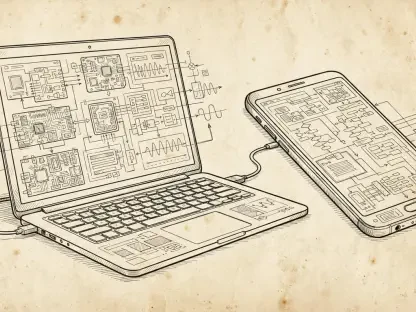

Visual receptionist menus and block-based routing interfaces now allow small businesses to project the stability and professional image of a much larger corporation. The traditional business phone system is undergoing a massive transformation, moving away from desktop hardware and complex server rooms toward integrated smartphone applications. Historically, professional communication required expensive on-premise equipment and dedicated IT staff to manage physical infrastructure. Today, this model is being replaced by a more democratic approach where enterprise-grade features are distilled into a single, mobile-centric layer. This shift represents a fundamental change in how we perceive telecommunications—moving from a physical utility to a flexible software service that any professional can access. The core of this evolution lies in treating the phone number as a sophisticated control layer rather than a mere digital address, ensuring that modern calls are handled with unprecedented precision.
The Strategic Role of AI: Enhancing Customer Interaction
Artificial Intelligence is no longer a luxury reserved for large-scale call centers; it has become a vital tool for small businesses and solo entrepreneurs. Most businesses now recognize the necessity of AI to manage customer interactions efficiently. By deploying AI-driven assistants, a professional can protect their time while ensuring that no potential lead is ignored. When a business owner is unavailable, the AI steps in to provide a professional greeting, collect essential information, and deliver a transcript, bridging the gap between high-value human interaction and routine inquiry management. The integration of voice AI acts as a protective buffer, allowing professionals to focus on their primary tasks without the constant distraction of a ringing phone. For consultants or contractors, every missed call often translates to a lost contract, as callers frequently move to the next available provider. This technology provides a system that filters out noise while prioritizing revenue-generating calls.
Modern telephony platforms now utilize programmable workflows that determine the best path for every interaction. A single incoming call can trigger a variety of automated outcomes, such as routing to a secondary device, opening a visual receptionist menu, or engaging an artificial intelligence assistant, ensuring that the communication process is dynamic and responsive to real-time needs. Between 2026 and 2029, the industry witnessed a significant pivot toward these automated intake systems as standard operating procedure. This shift effectively democratized professional representation, giving one-person operations the polished presence of a much larger corporation. By capturing opportunities that would otherwise be lost to a standard voicemail box, AI assistants transformed the landscape of customer acquisition. The ability to interpret caller intent and offer immediate feedback created a new baseline for customer service, where the delay of a return call no longer resulted in a missed business opportunity.
Consolidating the Stack: Streamlining Professional Identities
Fragmentation is one of the biggest hurdles for digital professionals, who often juggle different subscriptions for business numbers, international roaming, and video conferencing. The emerging trend in the industry is the consolidation of these disparate tools into a converged platform. By bringing local and global numbering, visual routing builders, and travel connectivity into one interface, these apps eliminate the phenomenon known as subscription fatigue. This consolidation allows users to manage their entire professional identity and global connectivity from a single point of entry, streamlining both their workflow and their overhead expenses. Instead of navigating multiple interfaces, professionals now utilize a unified dashboard that handles both domestic client calls and international data needs seamlessly. This integration ensures that the digital footprint of a business remains cohesive, regardless of where the operator is physically located. Such a streamlined approach reduces the cognitive load on small business owners.
This bundled approach also changes the economic relationship between service providers and users. Instead of selling data or minutes as a simple commodity, providers now offer a comprehensive infrastructure that grows alongside the user’s business. A freelancer might start with a simple travel eSIM or a second number for a side project, but as their needs expand, the app scales with them effortlessly. This flexibility allows for the seamless addition of features like call recording or automated routing logic without the need for additional hardware or complex installations. From 2026 to 2030, the market for these integrated communication suites is projected to expand significantly, as users prioritize versatility over brand name hardware. The scalability of software-defined telephony means that a business can add twenty new lines in minutes, whereas traditional systems would have required weeks of procurement and wiring. This agility has become a primary competitive advantage in the modern economy.
Network Interfacing: The Evolution of Mobile Connectivity
The relationship between mobile network operators and consumers is shifting as connectivity becomes increasingly embedded within applications. While physical networks remain the essential backbone of telecommunications, the app has become the primary interface for user interaction. This allows operators to move up the value chain by offering high-value services centered around identity and automation. The app serves as a gateway, helping providers understand nuanced customer needs—such as identifying when a traveler using an eSIM might also require a local business number or AI-driven call filtering. By analyzing usage patterns, these platforms offer tailored recommendations that enhance the professional’s ability to communicate across borders without incurring exorbitant fees. This shift represents a move away from passive connectivity toward active communication management, where the service provider acts as a strategic partner rather than just a utility company providing a pipe for data and voice.
For the small business sector, the ultimate benefit of this shift is the ability to maintain a professional image regardless of physical location. Because these systems are software-defined, they are inherently scalable and borderless. A professional can present a consistent corporate identity to clients worldwide, utilizing sophisticated tools that suggest stability and scale. As software continues to absorb traditional telecom functions, the smartphone becomes the only hardware necessary to manage a global enterprise, empowering individuals to stay reachable and productive in a complex digital economy. This evolution has rendered the traditional office desk phone obsolete for most modern workers. The ability to toggle between a local business line and an international roaming profile within seconds has redefined the concept of the global office. Professionals are no longer tethered to a specific geography, yet their clients experience a level of local presence and reliability that was previously impossible.
Strategic Implementation: Transitioning to Integrated Telephony
The transition toward unified telephony applications provided clear pathways for businesses to enhance their operational resilience. Organizations that adopted these integrated solutions successfully reduced their communication costs by consolidating multiple service contracts into a single manageable expenditure. It was essential to audit existing communication workflows to identify where AI-driven automation could most effectively replace manual call handling. These businesses moved toward platforms that offered granular control over call routing, ensuring that client inquiries reached the appropriate destination without delay. The implementation of digital receptionists and automated transcriptions allowed teams to maintain high standards of client engagement even during periods of rapid scaling. By prioritizing software-centric connectivity, firms secured a robust infrastructure that remained adaptable to changing market conditions. This strategic move ensured that their professional identity remained consistent and accessible, regardless of the evolving technological landscape.