
The landscape of domestic automation has shifted from simple voice-activated toggles to a sophisticated network of predictive environments where hardware must vanish into the background while performing complex computational tasks. By adopting the Thread wireless protocol, the next HomePod mini aims to become a more reliable central hub for managing a wide variety of third-party smart home accessories and sensors. This strategic pivot reflects a broader industry trend where the focus has moved beyond mere audio quality toward creating a cohesive digital foundation for the entire household. As Apple prepares to refresh its compact speaker for the first time in several years, the emphasis is clearly on closing the functional gap between mobile portability and stationary domestic intelligence. This evolution represents more than a hardware update; it is an attempt to redefine the role of the smart speaker as the primary gateway for a unified, secure, and highly responsive ecosystem that anticipates needs rather than just reacting to specific vocalized commands.
Technical Innovation: Advanced Processing and Networking
Performance Overhaul: The Impact of S10 Silicon
The transition to the S10 silicon marks a significant departure from previous generations, offering a level of processing power previously reserved for high-end wearables and mobile devices. This new internal architecture is designed to handle the increasing demands of localized artificial intelligence, ensuring that basic requests are processed with near-zero latency even when an internet connection is unstable. By moving away from a heavy reliance on external servers, the device can maintain its responsiveness, making the interaction feel more natural and less like a standard digital interface. Furthermore, the increased efficiency of the S10 chip allows for better thermal management within the compact spherical enclosure, preventing performance throttling during extended periods of high-intensity use. This hardware foundation is critical for supporting the next wave of smart home features, where the device must manage multiple data streams from sensors, cameras, and lighting systems simultaneously without any degradation in overall system speed.
Wireless Standards: Wi-Fi 7 and Thread Connectivity
Complementing the central processor is the inclusion of the N1 networking chip, which introduces support for the Wi-Fi 7 standard to the entry-level smart speaker category. This upgrade provides significantly higher bandwidth and lower latency, which is essential for modern homes filled with dozens of connected devices competing for airtime. The N1 chip specifically enhances the stability of the Thread mesh network, allowing the speaker to maintain a consistent connection with low-power battery-operated sensors that might be located in distant corners of a residence. By acting as a robust border router, the new model ensures that third-party accessories using the Matter protocol can communicate effectively, regardless of their manufacturer. This focus on interoperability positions the hardware as a necessary infrastructure component rather than just a luxury accessory. As more homeowners transition to comprehensive automation systems, the reliability of the underlying wireless fabric becomes the deciding factor in the success of the experience.
Aesthetic Continuity and Ecosystem Integration
Refined Visuals: Familiar Design with Modern Touches
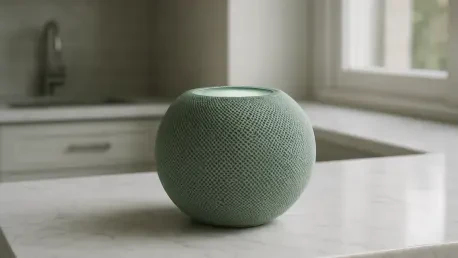
Despite the extensive technological improvements hidden beneath the surface, the external design of the speaker remains largely unchanged, retaining the popular spherical form factor and acoustic mesh fabric. This decision highlights a commitment to a design language that has successfully integrated into a wide variety of interior decors without being visually intrusive. To refresh the lineup for the current market, new color options such as sage green and deep red are expected to be introduced, offering consumers more ways to personalize their living spaces. This balance between internal innovation and external consistency suggests that the primary goal is to provide a seamless upgrade path for existing users while attracting new customers with an approachable and familiar aesthetic. By focusing on the “affordable luxury” segment, the company ensures that its entry-point hardware remains competitive against other market leaders while still maintaining the premium feel and build quality that users expect.
Ecosystem Expansion: Building a Unified Home Network
The refresh of this compact unit is only one component of a much larger strategy to establish a dominant presence within the home through a series of interconnected hardware releases. Current industry roadmaps indicate that a new seven-inch touchscreen device is in development, which will provide a dedicated interface for centralized control of security cameras, lighting, and climate systems. This broader plan demonstrates a shift away from fragmented smart home experiences toward a unified, AI-driven environment where every device works in concert to provide a secure and intuitive user journey. Building on the foundation of the updated speaker, these future releases aim to challenge existing market leaders by emphasizing deep integration with mobile services and a rigorous approach to data security. Consequently, the smart home is no longer treated as a collection of isolated gadgets but as a cohesive extension of the user’s digital life, where privacy and performance are prioritized to create a supportive living space.
Strategic Impact: Assessing the Global Market Shift
The successful rollout of this hardware demonstrated how a focused investment in networking protocols and localized processing could revitalize a product category that had previously reached a plateau. By prioritizing the Thread standard and Wi-Fi 7, the company successfully positioned its compact speaker as the essential anchor for a modern, interoperable household. This shift addressed long-standing concerns regarding the reliability of third-party accessory integration, proving that a unified ecosystem was achievable through hardware innovation. The introduction of the S10 chip and a more capable assistant also set a new benchmark for what consumers should expect from entry-level smart home devices, moving the conversation away from simple audio playback toward comprehensive domestic management. Ultimately, the refresh served as a vital transition point, encouraging consumers to adopt more complex sensor networks and automated routines, which paved the way for the next generation of visual hardware that prioritized user privacy alongside performance.