
The Apple Watch Ultra 4 standardizes cellular and satellite connectivity in every unit, effectively narrowing the price gap for users who were already considering a cellular-equipped Series 12. As Apple continues to push the boundaries of wearable technology in 2026, the distinction between the standard and professional models has shifted from raw capability to environmental suitability. The Series 12 offers a versatile entry point starting at $399 for aluminum, yet the potential for customization allows it to scale into the premium category. For example, selecting a 46mm titanium or the exclusive pearl white ceramic finish quickly elevates the cost to $899, surpassing the fixed $799 price tag of the Ultra 4. This overlap creates a unique purchasing scenario where the most expensive standard watch is actually more costly than the ruggedized professional version. Consequently, consumers are no longer choosing based on internal power alone, as both devices now share the core architecture required for the latest software innovations and health monitoring tools. The decision now rests on whether a user prioritizes the classic, lightweight elegance of the Series lineup or the uncompromising, industrial resilience that defines the Ultra series.
Physical Design and Durability Standards
The Aesthetic Choice: Sleekness Versus Presence
The visual and physical differences between these two models represent a fundamental choice between sleek sophistication and rugged utility. The Series 12 continues the long-standing tradition of a slim, lightweight profile that feels natural for all-day wear and formal occasions, measuring a mere 9.7mm in thickness. This refinement makes it an ideal companion for professional environments where a watch must fit comfortably under a shirt cuff without drawing unnecessary attention. Available in 42mm and 46mm sizes, the Series 12 utilizes the new Ceramic Shield 2 for its aluminum variants, providing a massive 60% improvement in scratch resistance over previous glass generations. For those seeking the ultimate in jewelry-like quality, the titanium and ceramic options offer a sapphire crystal finish that is almost impossible to mar during daily errands. The ergonomic design focuses on minimizing the presence of the device on the wrist, ensuring that the health sensors maintain constant contact with the skin without causing fatigue during extended use or sleep tracking sessions.
Ruggedness Standards: Built for the Elements
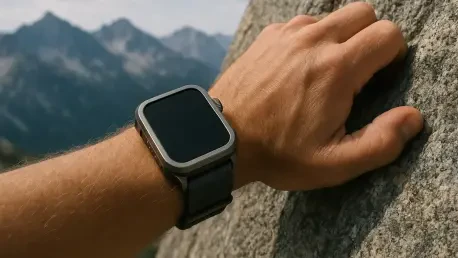
The Ultra 4 is built for those who prioritize resilience and functional presence over a slim fit, featuring a 49mm titanium chassis designed to withstand the most extreme environments on the planet. Its substantial 12mm thickness and 63-gram weight reflect its status as a specialized tool rather than a mere accessory, meeting the MIL-STD 810H military standards for shock, vibration, and extreme temperature fluctuations. Unlike the curved edges of the Series 12, the Ultra 4 features a flat sapphire crystal display protected by raised titanium edges, which prevents side impacts from shattering the screen during rock climbing or heavy labor. The device is EN13319 certified for recreational scuba diving up to 40 meters and includes a specialized depth gauge and a loud 86-decibel emergency siren for wilderness survival. This model is not just a watch; it is a piece of mission-critical hardware that remains legible in blinding sunlight thanks to its 3,000-nit peak brightness. For the user whose daily life involves unpredictable physical challenges, the added bulk of the Ultra 4 is a necessary trade-off for the peace of mind that comes with near-indestructibility.
Internal Hardware and Health Tracking
Shared Foundations: The S11 Processor
Under the hood, both watches are powered by the same S11 processor, ensuring that performance remains fluid and responsive across both devices regardless of their external differences. This shared architecture means that users do not have to pay a premium for speed, as the Series 12 navigates menus and launches applications with the same lightning-fast cadence as the flagship Ultra 4. The introduction of the new Health Sensing System is a major milestone for the 2026 lineup, allowing for high-frequency background tracking that feeds directly into the native Readiness app. This application provides a daily recovery score by analyzing heart rate variability and sleep quality, a feature that aligns Apple’s ecosystem with specialized fitness trackers. Both models also feature a redesigned pedometer and a dedicated step-count complication, addressing a decade of user requests for more direct activity tracking. Because the biometric sensors are identical, a user interested primarily in cardiovascular monitoring, sleep apnea detection, or temperature-based wellness tracking will receive the exact same level of data accuracy from the affordable Series 12 as they would from the most expensive Ultra configuration.
Specialized Functions: Navigation and AI
While the core health sensors are identical, the navigation and intelligence features provide a clear separation between the two models for specific high-performance use cases. Both watches leverage the new Apple Intelligence capabilities, including Siri Recap for summarizing missed notifications and Live Rewind for transcribing recent conversations directly on the wrist. However, the Ultra 4 offers superior GPS accuracy through its precision dual-frequency L1 and L5 system, which is essential for runners or hikers who operate in dense urban canyons or thick forest canopies where standard signals often fail. The Ultra 4 also includes advanced satellite connectivity as a standard feature, allowing for Emergency SOS and Find My services in remote areas without any cellular coverage. Furthermore, its altimeter is designed for a wider operational range, functioning from 500 meters below sea level to the 9,000-meter peaks of the Himalayas. While the Series 12 is perfectly adequate for suburban jogging and city navigation, the Ultra 4 is the definitive choice for those who venture off the beaten path and require a device that can guide them home when all other technology fails.
Power Management and Battery Endurance
Daily Usage: The Charging Cadence
Battery life remains one of the most practical factors in choosing a wearable, and the Series 12 is explicitly optimized for a 24-hour cycle of activity and recovery. This model comfortably covers a full day of notifications, fitness tracking, and a full night of sleep monitoring, but it generally requires a daily visit to the charging puck to maintain this routine. To offset the need for frequent charging, the Series 12 features impressive rapid-charging technology that can bring the battery from zero to 80% in approximately 30 minutes. This makes it easy to top up the device while getting ready in the morning or during a short break at the office. For the majority of users who have easy access to power outlets and follow a consistent daily schedule, the Series 12 provides a balanced experience where the slim design outweighs the need for multi-day endurance. The inclusion of an improved Low Power Mode also allows the watch to stretch its life to 38 hours when necessary, providing a safety net for those long days when a charger is not immediately available.
Endurance Performance: The Ultra Advantage
The Ultra 4 is the clear winner for anyone who finds daily charging inconvenient or physically impossible during their adventures. With a quoted 50 hours of normal use and an impressive 84 hours in Low Power Mode, the Ultra 4 effectively removes battery anxiety from the user experience. For endurance athletes, the difference is even more pronounced; the Ultra 4 can track an outdoor workout with continuous GPS and heart rate monitoring for up to 18 hours, whereas the Series 12 would likely deplete its reserves in nearly half that time. This longevity is supported by a larger internal battery that, while requiring 45 minutes to reach 80% capacity, can provide a full 18 hours of use with just a quick 15-minute top-up. This performance level makes the Ultra 4 the only viable choice for ultra-marathoners, weekend campers, or international travelers who may go several days without a reliable power source. The hardware is designed to outlast the user during the most grueling physical events, ensuring that the watch is still recording data long after a standard wearable would have powered down.
Final Selection Strategies: Matching Tech to Lifestyle
Value Assessment: Pricing and Materials
The financial value of each model is heavily influenced by the user’s preference for materials and the necessity of independent connectivity. For the budget-conscious consumer, the $399 aluminum Series 12 remains the gold standard for value, providing the world’s most advanced health sensors at a fraction of the flagship price. However, as one moves into the premium materials like titanium or ceramic, the value proposition shifts toward the Ultra 4. Because the Ultra 4 includes cellular and satellite features at no extra cost, a cellular-enabled titanium Series 12 at $699 is only a $100 step away from the significantly more durable and long-lasting Ultra. Users must decide if the lightweight comfort and classic aesthetic of the Series 12 are worth a price that approaches or exceeds the professional model. In the current market, the Series 12 is best viewed as a customizable fashion and health tool, while the Ultra 4 is a fixed-price, all-inclusive utility package. The secondary market also reflects this, as the titanium build of the Ultra generally holds its resale value better than the aluminum variants of the standard series over a multi-year ownership cycle.
Future Insights: Selecting the Optimal Path
The 2026 lineup offered a clear roadmap for users looking to optimize their health and productivity through wearable technology. It became evident that the Series 12 functioned best as a high-performance daily companion, while the Ultra 4 served as a critical piece of equipment for specialized environmental demands. To move forward effectively, consumers should first audit their daily charging habits and environmental risks to determine if the bulk of the Ultra is a necessary trade-off for its superior battery and screen protection. For those invested in the titanium or ceramic aesthetics of the Series 12, it was important to acknowledge that they were paying for style and comfort rather than the functional utility found in the Ultra. Moving into the next development cycle, it would be wise to utilize official trade-in programs to mitigate the cost of these premium sensors and ensure access to the latest Apple Intelligence features. Ultimately, the market showed that while the internal components were synchronized, the external form factor remained the primary driver of the long-term user experience. Individuals seeking to maximize their investment looked toward the Ultra 4 for its longevity and satellite safety, whereas those valuing ergonomic comfort chose the refined Series 12.