
Nia Christair is a powerhouse in the mobile electronics sector, bringing a wealth of experience that spans the technical grit of hardware design to the strategic nuances of enterprise mobile solutions. As a veteran of both the gaming and app development worlds, she has watched the smartphone evolve from a basic communication tool into the central hub of our digital lives. Today, we sit down with her to discuss the seismic shift occurring in the premium smartphone market as Apple, Samsung, and Google prepare to launch their most expensive and ambitious devices yet.
The following conversation explores the high-stakes world of $2,000 foldable smartphones, focusing on how these tech giants are resetting consumer price expectations through cutting-edge engineering and artificial intelligence. We dive into the strategic timing of Samsung’s and Google’s upcoming summer events, which aim to preempt the massive cultural “oxygen” Apple typically commands in September. Nia provides her insights on the engineering of near-invisible hinges, the hardware requirements for the next generation of AI, and whether these devices can truly replace our tablets and laptops in a professional setting.
The $2,000 price point represents a massive leap for the average consumer. How are Apple, Samsung, and Google attempting to justify this cost, and what does it say about the future of the premium smartphone market?
We are witnessing a very calculated attempt by the industry leaders to reset consumer expectations for what a flagship device should cost. By pricing these upcoming foldables at $1,999 for the 256GB models, companies like Samsung and Google are signaling that the traditional smartphone is no longer the ceiling; instead, they are creating a new “Ultra” tier of luxury electronics. This isn’t just about a bigger screen; it’s about a luxury finish and a device that promises to do the work of two or even three separate gadgets. These manufacturers have a deep vested interest in driving shoppers toward higher spending zones, and they are betting that the combination of status and utility will make that $2,000 pill easier to swallow. It feels like a pivotal moment where the smartphone is being rebranded as a high-end productivity tool rather than just a handheld communication device.
Samsung and Google are both moving their launch dates up to July and August. What does this tell us about the pressure Apple is putting on the market with its long-rumored foldable?
The timing is incredibly strategic, almost like a defensive formation ahead of a major storm. Samsung’s Galaxy Unpacked event in London on July 22 is a clear attempt to claim the narrative early with the Galaxy Z Fold 8, which interestingly is rumored to have a short, wide design that mimics Apple’s planned layout. Google follows closely with its “Made by Google” event on August 12, likely showcasing the successor to the Pixel Fold with increased storage and RAM to handle heavy AI loads. They both know that once September arrives, Apple tends to suck all the oxygen out of the room, so they are trying to capture the early adopters before the “iPhone Ultra” officially enters the fray. It’s a race to establish their foldable identity before Apple’s decade-long development process finally culminates in a retail product.
Apple has reportedly been developing its folding technology for ten years. Based on current production reports, what kind of hardware and software synergy can we expect from the “iPhone Ultra”?
The sheer scale of Apple’s entry is daunting, with reports suggesting they have increased initial manufacturing orders to 10 million units, signaling huge confidence in the device. This book-style foldable is expected to feature a massive 7.8-inch inner display and a 5.5-inch cover display, powered by the new A20 processor and an Apple C2 modem. What’s most exciting to me is the role of iOS 27, which is designed to handle seamless transitions between the two screens, changing display layouts and resolutions almost instantaneously. It needs to feel like a sensory, fluid experience where the software “flows” from the small screen to the large one without any stutter or visual artifacts. This level of refinement is exactly what Apple has been polishing for that decade in development, aiming to make the hardware and software feel like a single, living organism.
The hinge is the most critical mechanical point of any foldable device. How are these companies addressing durability and design to satisfy users who are spending $2,000 on a single piece of hardware?
The hinge is truly where these devices will live or die in the eyes of the public, and Apple in particular has focused on a design that is intended to be near invisible to the eye while remaining incredibly robust. It has to be sturdy enough to survive the brutal “durability tests” that tech influencers and vloggers will put it through the moment it hits the streets. When you are spending two thousand dollars, you expect a certain mechanical perfection—a silent, smooth action that feels more like a piece of high-end jewelry than a plastic toy. If the hinge feels fragile or creates a prominent, distracting crease in the display resolution, the premium illusion is lost. The goal for all three players—Samsung, Google, and Apple—is a hinge that disappears when the screen is open, providing a flat, uninterrupted canvas for content.
There is a lot of talk about these foldables replacing iPads or Macs. In a professional or enterprise environment, how viable is a folding phone as a primary productivity tool?
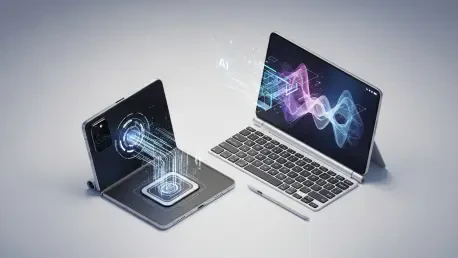
The real test for these $2,000 devices is whether they can tick more boxes than a standard smartphone, specifically in terms of multitasking and media consumption. We see Samsung already leading here with DeX, which allows the Fold to connect to a monitor, mouse, and keyboard to act as a PC replacement. People are now looking to see if “Apple Intelligence” and the increased RAM in the new Pixel devices can offer a similar level of utility for serious work. Imagine being able to use your iPhone Ultra with an external keyboard and mouse to edit documents or manage complex spreadsheets on a 7.8-inch screen that fits in your pocket. If these devices can genuinely bridge the gap between a phone and a laptop, they become a much more compelling investment for enterprise users who want to carry less gear without sacrificing power.
What is your forecast for the foldable smartphone market over the next two years?
I expect that by 2028, the “Ultra” foldable category will become the definitive standard for the high-end mobile market, effectively merging the phone and tablet into a single, indispensable device. As manufacturing scales and we see the results of Apple’s 10-million-unit launch, the technology will become more refined and the “invisible hinge” will move from a luxury feature to a baseline requirement. We will also see a massive push in specialized software that takes advantage of these unique resolutions, making traditional “flat” phones feel somewhat limited by comparison. Eventually, the success of these $2,000 devices will depend on whether they can prove to be more useful than the smartphones we already know, turning the act of unfolding a screen into a seamless, everyday necessity for productivity and entertainment.