
Nia Christair brings a wealth of knowledge from the front lines of mobile gaming and device design, offering a unique perspective on how hardware and software must coexist in the modern wearable market. Today, we delve into the technical shift regarding Apple’s latest move to empower retail technicians with specialized tools for Apple Watch restoration. Our conversation covers the transition from centralized repair hubs to local service models, the technical hurdles of servicing portless devices, and the impact this has on the overall customer experience during a system failure.
How does moving to an in-store restoration model change the standard service workflow for technicians, and what specific metrics are being used to track the improvement in customer downtime?
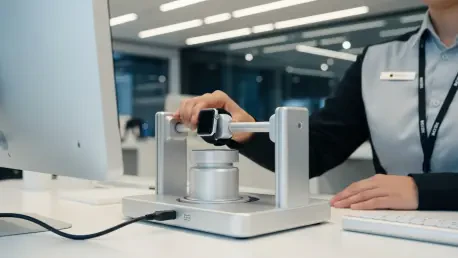
The shift to an in-store restoration model completely flips the technician’s script from being a logistics coordinator to an active troubleshooter. Previously, a technician’s primary role for serious software failures was to facilitate a shipment to a centralized hub, which inevitably triggered a week-long delay for the user. Now, with the introduction of specialized repair docks, that same technician can initiate a full software restoration right on the Mac at their workstation. The primary metric for success here is the reduction of “device-away” time, aiming to move from a standard 5-to-7-day shipping cycle to a same-day resolution. By keeping the device in-store, we are eliminating the physical transit hours and the administrative processing time that traditionally kept a customer’s health tracking data in limbo.
What are the step-by-step technical advantages of using a specialized hardware dock over wireless tools, and how does this new equipment interface with the Mac to bypass system freezes?
Wireless recovery methods introduced in watchOS 8.5 were a significant milestone, but they relied heavily on the watch being functional enough to display a restore prompt and maintain a stable connection to an iPhone. The new hardware dock provides a direct, stable interface that allows a Mac to communicate with the Watch’s internal firmware even when the operating system is completely unresponsive. When a device is stuck in a persistent boot loop, the wireless radios often fail to initialize, making a specialized physical connection the only way to “force-feed” a clean system image. This hardware-to-hardware handshake bypasses the corrupted software layers that cause screen freezes, ensuring that the restoration process isn’t interrupted by the same glitches that crashed the device in the first place.
How do technicians now address hardware communication challenges in a portless environment, and what are the long-term trade-offs between device aesthetics and ease of service?
Removing the diagnostic port starting with the Apple Watch Series 7 was a bold design choice that prioritized a more durable, water-resistant chassis, but it initially complicated the lives of service providers. To address this in a portless environment, technicians now utilize a specialized dock that uses proprietary connection points to establish data transfer without needing a visible, open hole in the casing. This design philosophy favors the long-term longevity of the device’s exterior, protecting sensitive internals from dust and high-pressure water. While the trade-off means that advanced repairs can no longer be done with a simple cable, the creation of this new diagnostic hardware ensures that we don’t have to sacrifice the sleek, sealed aesthetic for the sake of serviceability.
Beyond just speed, how does this shift affect the overall cost-efficiency of the repair ecosystem, and what challenges arise when deploying specialized diagnostic hardware across thousands of global storefronts?
Transitioning repair capabilities to retail locations is a massive logistical undertaking that significantly lowers the long-term overhead of the repair ecosystem by reducing the volume of shipping and centralized labor. Each device that stays in a local store represents a saved cost in specialized packaging, courier fees, and the carbon footprint associated with cross-country transit. However, deploying this specialized diagnostic hardware across thousands of global storefronts requires meticulous staff training to ensure every technician can handle the sensitive docking process without damaging the device. The challenge lies in maintaining a consistent quality of service so that a software restoration in Tokyo is just as reliable and fast as one performed in New York or London.
What is your forecast for the future of Apple Watch repairs and device longevity?
I forecast a future where “zero-day downtime” becomes the standard, as Apple continues to bridge the gap between industrial-grade durability and user-accessible recovery. We are likely to see these in-store docks become more automated, eventually allowing for a “plug-and-play” repair experience that takes only minutes to refresh a corrupted operating system. As these watches become more integral to personal health and medical monitoring, the ability to resurrect a device on the spot will be as critical as the hardware’s actual battery life. This localized approach to software restoration is just the first step toward a broader goal of making wearable technology virtually indestructible from a software perspective.