
Nia Christair is a leading voice in the evolution of mobile technology, possessing a deep well of knowledge that spans from high-stakes enterprise mobile solutions to the intricate hardware design of consumer wearables. With years of experience navigating the intersection of app development and device engineering, she has witnessed firsthand how form factor constraints dictate the boundaries of what our gadgets can achieve. Her expertise is particularly relevant now as the industry pushes toward hyper-minimalism, attempting to pack the power of a desktop or a high-end sports watch into a discreet band of metal on a finger. Today, we sit down with her to dissect the engineering trade-offs and the shifting landscape of health tech following the release of a major update in the smart ring sector.
Our discussion delves into the technical limitations of miniature hardware, specifically exploring why the dream of a completely independent smart ring remains out of reach due to power consumption and thermal hurdles. We explore the recent real-world performance benchmarks of the latest ring hardware against established GPS-heavy watches, focusing on the nuances of data accuracy during high-intensity physical activity. Nia provides her perspective on the financial and functional value of these devices, comparing the cost of luxury wellness gadgets against dedicated fitness tools. Finally, we look at the user experience of “tethered” technology and whether the convenience of a single, non-intrusive wearable can truly outweigh the data-rich environment of a traditional screen-based fitness ecosystem.
The Oura Ring 5 has finally introduced live workout tracking, yet it notably lacks an onboard GPS module. From a hardware design perspective, why is it so difficult to integrate satellite tracking directly into such a small form factor?
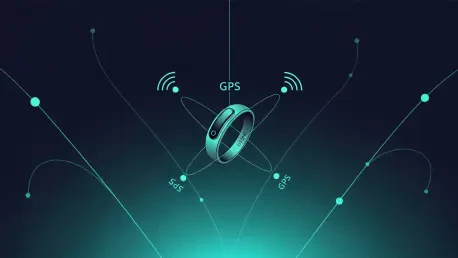
The primary obstacle is what we call the architectural ceiling of the ring form factor, where physics simply refuses to cooperate with our desire for miniaturization. If we were to embed a dedicated GPS chip into a device as small as the Oura Ring 5, the power draw would be catastrophic for the user experience. Currently, these rings enjoy a battery life spanning six to nine days, which is their strongest selling point for 24/7 health monitoring. Activating a GPS receiver within that tiny circumference would likely drain the entire battery in a matter of hours, forcing the user to charge the device daily or even mid-workout. By routing location computation through the smartphone’s internal GPS module, the ring can maintain its slim profile and long-lasting charge while still providing data on altitude and velocity. It is a necessary compromise to ensure the ring remains a passive, set-it-and-forget-it device rather than another piece of hardware that requires a constant eye on the battery percentage.
In recent head-to-head testing against a dedicated GPS watch, a 30-second-per-mile pace gap emerged during a 5K run. What are the specific technical factors that cause a smart ring to deviate so significantly from a watch’s metrics?
The discrepancy we see—where the Oura Ring recorded a 9:02 per mile pace compared to the Garmin Forerunner 170’s 8:32—is not necessarily a failure of the sensors, but a lack of specific software logic like auto-pause. When a runner stops at a traffic light or a crossing in a busy area like central London, a dedicated running watch detects the lack of movement and halts the timer instantly. The Oura Ring, however, does not currently support this auto-pause feature, meaning every second spent waiting for a light to change is factored into the final pace calculation as “dead time.” While the distance accuracy itself tracks very closely because both are essentially leaning on high-quality GPS signals, the inability to filter out stationary moments creates a skewed perspective of the runner’s actual effort. For an athlete managing split-by-split precision, those accumulated seconds are the difference between a successful training session and a frustrated one. It highlights that while the hardware is catching up, the fitness-specific software ecosystem is still very much in its infancy for rings.
Heart rate monitoring is a cornerstone of the Oura experience, but the live tracking feature seems to have some hurdles regarding real-time display. How does the device handle biometric data during a workout, and why is an external monitor often required?
During a workout, the Oura Ring 5 shifts its optical sensors from their usual interval-sampling mode to a continuous, second-by-second recording state to capture every spike and recovery in the wearer’s pulse. While this data is being meticulously gathered—recording an average of 145 beats per minute in recent tests compared to a Garmin’s 151—the ring’s architecture prevents this heart rate from appearing on the phone’s live lock screen widget in real time. To see your heart rate as you run, the system requires you to pair a separate Bluetooth monitor, such as a Polar chest strap, a Garmin watch, or even Apple AirPods Pro 3. This creates a strange paradox where you are wearing a high-tech biometric sensor on your finger, yet you might need to wear headphones or a chest strap just to see what that sensor is feeling. Without that secondary hardware, your heart rate data remains a post-workout revelation rather than a live coaching tool, which can be a letdown for those trying to stay strictly within Zone 4 or their anaerobic-threshold range.
The Oura Ring 5 enters the market at $399, which is $100 more than the entry-level Garmin Forerunner 170. When you add the $5.99 monthly subscription fee, how do you justify the cost to a consumer who could get more features for less money?
The value proposition of the Oura Ring 5 isn’t about being the most powerful tool for a single hour of exercise; it’s about the other twenty-three hours of the day. While the Garmin Forerunner 170, priced at $299.99, offers a standalone AMOLED display and independent GPS, it is a device many people take off when they get home or go to bed because of its bulk. The Oura Ring’s advantage is its seamless integration into a user’s life, combining sleep tracking, readiness scoring, and recovery metrics into a single piece of jewelry that never comes off your finger. For the user who is training for their seventh marathon but only wants to track easy, unstructured runs without the aesthetic of a “techy” watch, the $399 price tag is an investment in a comprehensive lifestyle picture. The recurring $5.99 monthly or $69.99 annual membership is the cost of maintaining a sophisticated data analysis engine that interprets how your Tuesday run affected your Wednesday morning recovery. It is a premium for a specific type of friction-free health management that a bulky watch simply cannot replicate.
The requirement to carry a smartphone to enable GPS functionality feels like a step backward for some athletes. In your view, how does this “tethered” relationship change the way a person interacts with their fitness data?
It definitely shifts the “freedom” of the run back toward the pocket or the armband, which is a significant pivot point for those who prefer to leave the world behind when they hit the pavement. Because the Oura Ring 5 must route its location data through the phone, the smartphone becomes the brain of the operation, displaying altitude and distance on a lock screen widget. This means you aren’t looking at your wrist for a quick check; you are pulling out a phone or glancing at a mounted screen, which feels less organic during a high-speed sprint. However, for a huge segment of the population, running with a phone is already the norm for music or safety, so the tethering isn’t a new burden—it’s just a new way to utilize an existing habit. The ring effectively fills the gap for users who want their workouts logged in the same place as their sleep data without needing to manage two different fitness ecosystems, even if it means they can’t go “phone-free” just yet.
This live tracking update isn’t just for new buyers; it’s also rolling out to existing Gen 3 and Gen 4 users. How important is this software-first approach in the current wearable market?
It is a brilliant move for brand loyalty and product longevity, essentially providing a hardware-level milestone through a simple app and firmware update on June 4. By allowing existing users to access pace, distance, and altitude tracking without purchasing the newest $399 model, the company is signaling that the data platform is just as valuable as the physical ring. This approach mitigates the frustration of rapid hardware cycles and makes the $5.99 monthly subscription fee more palatable, as users see their “old” hardware gaining new, modern capabilities. In a world where electronic waste is a growing concern, seeing a Gen 3 ring suddenly perform like a much newer device is refreshing. It proves that in the mobile and wearable space, the magic often happens in how the data is processed and presented on the smartphone screen, rather than just the number of sensors on the finger.
What is your forecast for the future of smart ring hardware?
I believe we are approaching a major breakthrough in power density that will eventually shatter the current “architectural ceiling” we see today. Within the next three to five years, we will likely see the first consumer smart ring that successfully integrates a low-power GPS chip without sacrificing that crucial six-to-nine-day battery life, possibly through the use of solid-state battery technology or more efficient satellite handshakes. Once the ring becomes truly independent of the smartphone, it will move from being a “wellness companion” to a “primary fitness device,” potentially challenging the dominance of the smartwatch for everyone but the most data-obsessed elite athletes. We will also see more sophisticated haptic feedback within the ring itself, allowing it to communicate pace or heart rate zones through subtle vibrations, finally removing the need for a secondary screen or a paired Bluetooth device during a workout.