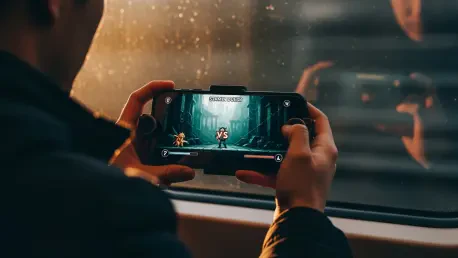

Premium role-playing games have long been treated as delicate transplants on mobile, often pared back into tepid ports that trade dense systems for blunt taps and sprawling maps for corridor strolls, yet a new launch challenges that assumption by bringing a full, exploration-first RPG—with no quest markers and a high-stakes combat model—straight to phones and tablets. Drova – Forsaken Kin arrives on iOS and Android as a complete package, resisting the common compromises that usually define mobile conversions. It leans into a Celtic-inspired, grim world built from handcrafted pixel art, and its structure favors curiosity over waypoints. The experience is sold as a single premium purchase, backed by a playable first area that functions as a substantive demo. The proposition is clear: old-school design, modern platforms, and none of the usual baggage.
Mobile Delivery Without Dilution
Full Scope, Familiar Demands
Drova’s mobile edition mirrors its PC and console versions beat for beat, keeping a ~40-hour story arc intact and a world that refuses to hold the player’s hand. There are no quest markers, only leads gleaned from conversations with more than 250 NPCs whose motives rarely align. Two opposing factions complicate progress, pushing alignment choices that influence access, hostility, and the broader tone of a region. Combat punishes impatience; multiple weapon classes and magic schools create distinct builds, but stamina and timing shape every encounter. That friction is deliberate. It asks for observation, not button mashing. By anchoring on exploration rather than guidance, the game turns phones and tablets into venues for slow-burn discovery, undercutting the trope that mobile must mean abbreviated design.
Controls, Parity, and Price
Control fidelity can sink even the best mobile conversions, so Drova’s team treated input as a design pillar rather than an afterthought. Full controller support meets deeply configurable touch controls: movable and resizable buttons, sensitivity sliders, and a left-handed mode that remaps the entire layout. With those tools, a boss fight that hinges on animation cues becomes practical on a commute. Feature parity stretches beyond mechanics. Newly added Polish and Spanish localizations ship across every platform, signaling an accessibility cadence that treats mobile as a peer, not a feeder lane. Monetization follows the same premium logic: a one-time €9.99 purchase with the opening area free to try, no microtransactions or loot boxes, no day-one DLC, and no AI-generated assets. The message is less marketing line than product posture—pay once, get the whole game.
The Stakes for Premium RPGs on Mobile
Industry Context and Competitive Positioning
This launch lands in a market where premium, complete products on mobile are gaining a foothold alongside service-driven juggernauts. PC storefronts are marking the moment with a limited-time 34% discount, anchoring a cross-platform push that keeps pricing coherent and timing coordinated. Availability spans PC, PlayStation 4/5, Xbox One/Series X|S, Nintendo Switch, and now iOS/Android, creating a stable loop for players who bounce between couch and pocket. That ubiquity matters because skepticism about mobile depth tends to collapse when the same saves, inputs, and content meet the same expectations. Just2D, a Magdeburg-based studio with public funding history, and Deck13 Spotlight as publisher, add a layer of operational credibility that counters fears of a one-and-done port. In this corner of the market, trust compounds by hitting schedules, languages, and parity promises.
What Success Will Require Next
If premium RPGs are to hold ground on mobile, two levers will matter most: frictionless onboarding and sustained care-and-feeding. Drova addresses the first with a substantive free first area that lets players test difficulty, performance, and controls before paying. The second leans on clear post-launch support signals—fresh localizations across platforms, synchronized patches, and transparent balance tweaks that don’t fracture builds between devices. Accessibility can expand further through optional difficulty modifiers that preserve combat intent while easing reaction windows on touch; performance presets and battery-conscious frame caps would serve long sessions. Building on this foundation, seasonal community events that celebrate exploration—photo hunts, lore clues surfaced in-app, opt-in challenge seeds—could sustain engagement without gunning for live-service grind. The path forward favored specific, durable updates over superficial app-store churn, and it set a realistic blueprint for premium RPGs to follow.