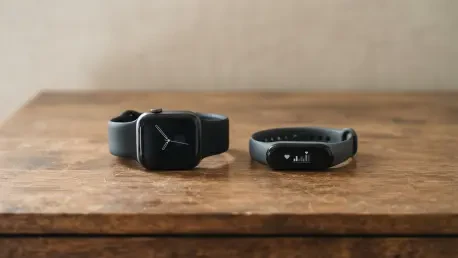

While both the Google Pixel Watch 5 and the Fitbit Edge operate under the Google Health ecosystem, they cater to fundamentally different consumer segments with unique priorities. The wearable technology landscape has shifted significantly, moving away from simple step counting toward a holistic approach to physiological monitoring and digital productivity. This evolution has created a clear divide between the “wrist computer” and the “invisible tracker.” The Pixel Watch 5 is the embodiment of the former, offering a rich, interactive experience that mirrors the capabilities of a smartphone, while the Fitbit Edge represents the latter, providing a streamlined and unobtrusive way to monitor health without constant digital interruption. As Google has unified its software under the Google Health banner, the user experience has become increasingly seamless, but the hardware choices remain as distinct as ever. For consumers navigating this choice, the decision is no longer about which brand offers better data, but about how much of their digital life they want to carry on their arm. This tension between total connectivity and focused health tracking defines the current market, making it essential to weigh the benefits of a brilliant display against the practicality of extreme battery life. Both devices are designed to empower the user with actionable insights, yet they do so through entirely different ergonomic and functional philosophies. Understanding these nuances is critical for anyone looking to optimize their personal health metrics while navigating the demands of a modern, hyper-connected environment.
Hardware and Design Specifications
The hardware design of these two devices highlights the contrasting goals of their respective engineering teams. The Google Pixel Watch 5 features a premium aluminum casing available in two sizes, including a new 45mm variant that caters to those who prefer a more substantial presence on the wrist. Its standout feature is undoubtedly the round, custom-developed display that reaches an industry-leading 3,000 nits of peak brightness. This ensures that even under the most intense midday sun, every notification and data point remains perfectly legible, a critical factor for outdoor enthusiasts and urban commuters alike. The use of reinforced sapphire glass provides a high degree of durability against the inevitable bumps and scratches of daily life. In contrast, the Fitbit Edge adopts a more minimalist aesthetic, utilizing a slender oval frame that is significantly lighter and less bulky. With a maximum brightness of 1,000 nits, the Fitbit screen is functional and clear for indoor and moderate light conditions but lacks the sheer brilliance of its sibling. The Edge is built for those who find traditional smartwatches cumbersome, offering an “invisible” feel that disappears during strenuous activity or sleep cycles.
Battery performance and physical dimensions further separate these two wearables, creating distinct usage patterns for different lifestyles. The Google Pixel Watch 5, with its high-resolution screen and powerful internal processor, requires a more frequent charging cadence, typically lasting between 30 and 40 hours on a single charge. This necessity for daily or near-daily charging is a trade-off for the vast array of smart features and cellular independence it offers. Conversely, the Fitbit Edge is a master of endurance, capable of operating for up to seven full days without needing a power outlet. This longevity is achieved through a combination of a more efficient, less power-hungry display and a focus on essential background tracking rather than interactive applications. For the user who prioritizes consistent, uninterrupted data collection over a week-long period, the Edge is the clear choice. The Pixel Watch 5, while slightly heavier and larger, compensates with superior internal storage and faster processing speeds, making it better suited for users who want to store music locally or run complex third-party applications without lag. The physical footprint of the Edge remains its greatest advantage for those with smaller wrists or a preference for lightweight gear.
Accuracy and Field Performance
In a series of rigorous field tests, including a controlled 5km walk totaling 6,305 steps, both devices demonstrated exceptional accuracy and a high level of data consensus. The results for step counts, distance, and pace were remarkably similar, with differences amounting to less than one percent between the two models. This suggests that Google has successfully standardized its motion-sensing algorithms across both the high-end Pixel and the budget-friendly Fitbit. During these tests, the GPS locking speed on the Pixel Watch 5 was slightly faster, likely due to its more powerful antenna array, but the Fitbit Edge maintained a steady signal even in areas with moderate tree cover. For the average user walking for fitness or commuting, both devices provide a reliable record of physical activity that can be trusted for long-term progress tracking. However, the ergonomic experience of wearing the Fitbit Edge during high-intensity movement was often rated higher because its lighter weight reduced the “bounce” factor on the wrist, leading to more consistent skin contact for the optical sensors.
Heart rate monitoring was another area where both devices performed admirably, though the Pixel Watch 5 displayed a slight edge in precision during rapid transitions in intensity. By aligning closely with professional-grade chest straps, the Pixel Watch 5 proved itself as a viable tool for serious athletes who need second-by-second accuracy during interval training. The Fitbit Edge, while slightly slower to react to sudden heart rate spikes, provided very consistent average readings that are more than sufficient for the majority of fitness enthusiasts. The divergence in the user experience was most apparent when interacting with the data mid-workout. The Pixel’s larger, brighter screen allowed for multiple data fields to be viewed simultaneously with a quick glance, whereas the Fitbit Edge required more deliberate interaction to scroll through metrics. While the Pixel offers specialized modes for activities like track running and trail navigation, the Fitbit Edge provides a simpler, more focused set of 40 workout modes that cover the essentials. This makes the Pixel the better tool for data-hungry athletes, while the Fitbit serves those who want a set-it-and-forget-it approach to exercise tracking.
Health Monitoring and Sleep Dynamics
Both wearables are equipped with a sophisticated suite of health sensors that provide a comprehensive overview of the user’s physiological state. This includes electrocardiogram sensors for detecting heartbeat irregularities, blood oxygen saturation monitoring, and advanced skin temperature sensors that can flag potential changes in health status. When comparing the two strictly as medical-grade health monitors, the Fitbit Edge offers extraordinary value. It provides nearly identical biological monitoring capabilities as the Pixel Watch 5 but at a significantly lower entry price. For individuals whose primary concern is monitoring vitals such as heart rate variability or resting heart rate without the need for complex smartwatch applications, the Fitbit Edge provides a more cost-effective and efficient solution. Both devices feed into the same Google Health dashboard, ensuring that the presentation of data and the quality of health insights remain consistent regardless of the hardware used. This democratization of health technology allows users to choose the form factor they prefer without sacrificing the quality of their biological data.
Regarding sleep tracking, the Fitbit Edge emerged as a favorite for many due to its compact profile and long-lasting battery. Monitoring sleep requires a device to be worn consistently throughout the night, and the slim design of the Fitbit Edge makes it far less intrusive than the circular, more prominent Pixel Watch 5. Because the Edge does not require daily charging, users were less likely to miss a night of data collection, leading to a more complete long-term picture of their sleep hygiene. Both devices accurately track sleep duration, quality, and stages, providing a detailed “Sleep Score” that factors into the broader “Readiness Insights.” These insights help users understand when their bodies have fully recovered and are ready for high-intensity activity. However, the Pixel Watch 5 offers a more interactive sleep coaching experience through its larger screen, providing actionable tips directly on the wrist. For those who prioritize comfort and continuous data streams over several nights, the Fitbit Edge remains the superior choice for overnight wear, whereas the Pixel Watch 5 is better for users who want to analyze their sleep metrics immediately upon waking through a high-definition interface.
Smart Functionality and Connectivity
The Google Pixel Watch 5 justifies its premium positioning through its extensive suite of smartwatch features and deep integration with the Wear OS ecosystem. It offers an LTE option that provides cellular independence, allowing users to make phone calls, send text messages, and access Google Assistant without having their smartphone nearby. This capability is a game-changer for runners or individuals who want to stay connected while leaving their primary device at home. The inclusion of Google Wallet for contactless payments and a vast library of third-party apps—ranging from Spotify to specialized productivity tools—makes the Pixel Watch 5 a powerful extension of a digital life. Its physical scrolling crown and responsive touch interface provide a level of interaction that is simply not possible on a more restricted fitness tracker. For the power user who requires a device that can manage their schedule, control smart home devices, and provide turn-by-turn navigation on a brilliant screen, the Pixel Watch 5 is the clear leader.
The Fitbit Edge is significantly more limited in its “smart” capabilities, functioning primarily as a companion device rather than an independent tool. While it provides basic notifications for calls and texts, it lacks the ability to respond or interact with apps in a meaningful way. There is no LTE option, meaning it must stay within Bluetooth range of a smartphone to receive updates or sync data. It also lacks support for third-party apps and contactless payments, focusing instead on a minimalist user interface that prioritizes simplicity. This lack of distraction is actually a selling point for a specific subset of users who find the constant barrage of notifications on a smartwatch to be overwhelming. The Fitbit Edge is designed for the individual who wants to remain connected to their health data while disconnecting from the digital noise of the modern world. While it cannot replace a phone, it provides the essential “smart” bridge—such as weather updates and timers—that most users need during their daily routine. This makes it a focused, distraction-free alternative to the more complex and demanding Pixel Watch 5.
Final Considerations: Choosing the Right Wearable
The evaluation demonstrated that the choice between the Google Pixel Watch 5 and the Fitbit Edge depended largely on the individual user’s tolerance for daily charging and their specific need for cellular independence. Those who prioritized a comprehensive digital experience found the Pixel Watch 5 to be an indispensable productivity tool, while those who valued simplicity and long-term data consistency gravitated toward the Fitbit Edge. It was observed that the Pixel Watch 5 excelled in high-intensity training environments where immediate feedback and app variety were paramount. Conversely, the Fitbit Edge proved more effective for continuous, passive health monitoring over several days. Ultimately, the market segmentation became clear: the Pixel was for the connected athlete who demanded a high-performance “wrist computer,” and the Edge was for the health-conscious minimalist who wanted a reliable, long-lasting tracker. The data indicated that neither device was objectively superior in all categories, as their strengths were intentionally designed to address divergent lifestyle requirements.
Moving forward, potential buyers should first assess their daily routine and determine how often they were willing to charge their device, as this remained the single most significant practical difference. If the goal involved leaving the smartphone at home during runs or having access to a full suite of apps, the investment in the Pixel Watch 5 was justified. However, for those who primarily sought to monitor their sleep, heart rate, and steps with minimal fuss, the Fitbit Edge offered a more practical and cost-effective solution. It was also recommended that users verify their need for LTE connectivity, as this feature significantly impacted both the initial price and the ongoing battery performance of the Pixel model. By aligning the choice of hardware with specific fitness goals and digital habits, users ensured they received the maximum benefit from the Google Health ecosystem. The final decision rested on whether one preferred the brilliance of a high-end smartwatch or the quiet endurance of a refined fitness tracker, both of which provided world-class health insights.