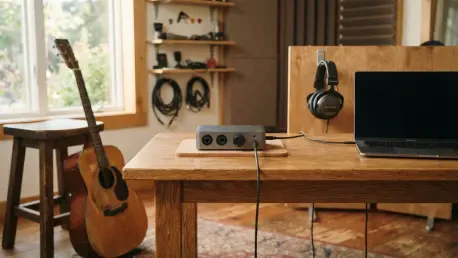

The Synido Live Dock A20 Pro enters a competitive market by targeting the specific technical needs of mobile musicians and live streamers through a 24-bit/96kHz high-resolution audio architecture. For modern content creators who operate outside traditional studio environments, the challenge has always been finding hardware that balances portability with uncompromising sound quality. In 2026, the demand for high-fidelity mobile recording has skyrocketed as social media platforms prioritize high-definition audio for live performances and podcasts. This device attempts to bridge that gap by offering a specialized solution for those who require more than what a basic smartphone adapter can provide but cannot justify the bulk of a full-sized desktop interface. By integrating professional-grade internal components into a form factor that fits into a jacket pocket, the A20 Pro signals a shift in how remote production is handled. It specifically addresses the ergonomic hurdles faced by solo artists who must manage their own engineering.
High-Resolution Performance and Small Package
Technical Specifications: Audio Fidelity Standards
At its core, the audio interface is defined by its ability to deliver crystal-clear recording quality that rivals much larger stationary units. By utilizing a 24-bit/96kHz technical baseline coupled with 32-bit internal processing, the hardware ensures that every nuance of a vocal performance or instrumental track is preserved with high precision. This level of resolution is particularly important for creators who intend to post-process their audio in a digital audio workstation, as it provides the necessary headroom to apply equalization and compression without introducing digital artifacts. The internal circuitry is designed to minimize the noise floor, which is a frequent issue with budget-oriented mobile gear. Consequently, the output remains professional and polished, making it suitable for high-quality music production and professional voice-over work. This focus on raw technical performance allows the device to hold its own against more expensive gear, proving that professional sound is no longer tethered to a desk.
System Integration: Digital Architecture and Compatibility
Building upon its internal audio processing capabilities, the device utilizes a modern USB-C architecture to ensure seamless integration across a wide range of hardware platforms. In the current landscape of 2026, where creators frequently switch between smartphones, tablets, and laptops, having a truly plug-and-play interface is essential for maintaining a productive workflow. The A20 Pro is engineered to be recognized instantly by major operating systems, including iOS, Android, and Windows, without the need for complex driver installations. This universal compatibility is a significant advantage for live streamers who might use a smartphone for mobile broadcasts but require a laptop for more intensive editing sessions later. Furthermore, the digital architecture is optimized for low-latency performance, which is a critical factor when monitoring live audio. By reducing the delay between the physical performance and the digital output, the interface provides a more natural experience for musicians who rely on real-time feedback.
Physical Design: Portability and Hardware Utility
The physical construction of the interface emphasizes utility through a minimalist footprint that fits easily into a standard laptop bag or even a large pocket. This compact design does not come at the expense of connectivity, as it features a 1/4-inch input for instruments like guitars or keyboards alongside a 3.5mm input for microphones. Such a dual-input configuration allows for simultaneous vocal and instrumental tracking, which is the preferred setup for singer-songwriters who need to capture a performance in a single take. One notable design choice is the inclusion of a built-in USB-C cable, which simplifies the setup process by eliminating the need to carry extra wires. While this integrated cable adds to the overall convenience and reduces the chance of forgetting a vital component, users should handle the connection with care to ensure long-term durability. The side-mounted gain controls further contribute to the slim profile, allowing the interface to remain unobtrusive during active use.
Practical Features and Strategic Trade-offs
Power Efficiency: Pass-Through Charging Solutions
One of the most practical innovations found in this model is the pass-through charging capability, which directly solves the common problem of battery depletion during long sessions. For mobile musicians, the single-port limitation on many modern smartphones often forces a choice between using an interface or charging the device. The A20 Pro addresses this by including a dedicated USB-C power input that allows the interface to deliver power to the host smartphone while it is actively recording or streaming. This feature is a game-changer for live performers who engage in multi-hour sessions on platforms like Twitch or YouTube, as it provides peace of mind that the broadcast will not be cut short by a dead battery. Additionally, the inclusion of LED level indicators provides essential visual feedback, helping users manage their signal strength in real-time. These visual cues are vital for preventing digital clipping, especially in unpredictable environments where ambient noise levels can fluctuate.
Performance Versatility: Integrated Signal Management
For solo artists and streamers, the ability to layer multiple audio sources is a primary selling point that enhances the professional quality of a live broadcast. The interface supports a triple-input configuration by combining a physical microphone, a physical instrument, and a wireless Bluetooth channel for accompaniment. This setup simplifies the process of performing live on social media, as it eliminates the need for external mixers or a tangled mess of cables when trying to balance backing tracks with live vocals. The Bluetooth integration is particularly useful for incorporating music from a secondary phone or tablet, allowing the performer to focus on their music rather than technical troubleshooting. This versatility extends to the monitoring system, where a dedicated toggle allows users to switch between hearing the raw input or the processed software signal. Such flexibility ensures that the performer can tailor their monitoring environment to suit their specific needs, whether they are tracking a song or engaging with a live audience.
Operational Constraints: Navigating Hardware Limitations
Despite its many strengths, the device has clear limitations that potential buyers must consider, most notably the absence of a standard XLR input and 48V phantom power. Professional studio microphones that require phantom power will need external preamps or third-party adapters to function with this unit, which might complicate the otherwise simple mobile setup. Additionally, the side-mounted gain buttons provide a different tactile experience than traditional knobs, which some users might find less intuitive for making rapid, fine-tuned adjustments during a performance. These design choices reflect the device’s focus on portability and cost-effectiveness rather than replacing a high-end stationary studio setup. For creators who primarily use dynamic microphones or record instruments directly, these trade-offs are often acceptable. However, vocalists who rely exclusively on high-end condenser mics should be aware of these connectivity requirements before integrating the unit into their workflow.
Strategic Recommendations: Summary of Practical Value
Ultimately, the Synido Live Dock A20 Pro demonstrates that a high-performance audio interface does not require a bulky frame or a high price tag. Creators who prioritize mobility and high-resolution output will find the device to be an essential part of their remote workflow, especially when utilizing dynamic microphones for vocal clarity. While the absence of professional XLR inputs remains a consideration for studio purists, the tactical advantages of pass-through charging and Bluetooth integration outweigh these limitations for the mobile-first generation. Moving forward, users should evaluate their specific microphone needs and consider investing in quality adapters if they intend to use high-end condenser mics. The A20 Pro proves to be a versatile tool that simplifies the complex requirements of modern live streaming, effectively lowering the barrier to entry for professional-sounding content. By focusing on the essential needs of instrumentalists and solo performers, the device establishes itself as a reliable and cost-effective solution for audio production in diverse environments.