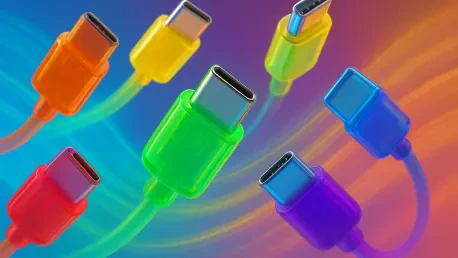

The USB Power Delivery 3.1 update in 2021 increased charging capacity to 240W, effectively making proprietary barrel-jack power bricks obsolete for laptops. This milestone represents the culmination of a decade-long journey that began in August 2014, when the USB Implementers Forum officially published the USB-C specification. Before this release, the technology industry was plagued by a frustrating array of connector types, including USB-A, USB-B, and various Micro-USB designs, each with different capabilities and orientations. The primary objective of the new specification was to introduce a universal, reversible connector that could consolidate data transfer, power delivery, and video output into a single, compact form factor. Perhaps the most celebrated attribute of the connector is its physical design, which functions regardless of which side is up. This reversible nature eliminated the mechanical wear and frustration common with older ports.
Technical Versatility and Power
The evolution of the USB-C port is fundamentally linked to the industry’s desire for a converged hardware interface that simplifies the user experience while maximizing internal device efficiency. As laptops became thinner and more portable, the traditional arrangement of multiple, bulky ports became a design bottleneck that limited battery size and cooling solutions. Engineers recognized that a single, high-bandwidth port could replace the specialized connectors previously required for data, video, and power. This led to the development of a sophisticated pin configuration within the USB-C connector that can dynamically reconfigure its lanes based on the connected device’s requirements. By allowing the port to negotiate its role—whether it is receiving power, transmitting a 4K video stream, or syncing high-speed data—the standard provided a level of flexibility that was previously impossible. This architecture ensured that the physical port remained relevant even as the underlying protocols advanced.
High-Speed DatVideo Integration
As the standard matured over the last several years, it became synonymous with high-speed data transfer, culminating in the USB4 specification which offers performance speeds of up to 40Gbps. This development was built heavily upon the foundation laid by Intel’s Thunderbolt 3 protocol, highlighting a recurring theme in hardware evolution: while the physical connector remains the same, the underlying data standards continue to advance. This architecture allows the interface to handle increasingly demanding workloads, such as external graphics cards and high-speed storage arrays, without requiring specialized or oversized ports. For professional users, this means that a single cable can manage massive file transfers while simultaneously powering the device. The synergy between different protocols like Thunderbolt and USB4 has ensured that high-end performance is accessible through a mainstream interface, effectively expanding professional-grade connectivity.
Revolutionary Changes: Power Delivery Upgrades
The integration of DisplayPort Alt Mode further enhanced the versatility of the interface by allowing a single USB-C cable to carry native video signals alongside standard data and power. This capability effectively transformed the port into a comprehensive docking solution for modern monitors and specialized workstations. For laptop owners, this means that a single connection can link a computer to a high-resolution display while simultaneously charging the device and connecting to peripherals built into the screen. This integration was essential in the industry-wide trend toward thinner laptop designs that no longer possess the vertical clearance required for dedicated HDMI or legacy VGA ports. By consolidating these functions, manufacturers were able to streamline internal hardware layouts and reduce the physical complexity of mobile devices. Consequently, the workspace of a typical professional relied on this single-cable paradigm to minimize cable clutter.
Market Shift and Global Regulation
Charging technology underwent a radical transformation with the introduction of USB Power Delivery 3.1, which dramatically raised the power ceiling from the previous 100W limit to 240W. Prior to this update, USB-C was sufficient for basic ultrabooks and mobile devices but remained inadequate for high-performance gaming laptops or mobile workstations that required significant energy input. This advancement allowed the interface to finally replace the proprietary barrel-jack chargers that had been a staple of the PC industry for decades, solidifying its status as the one-port-fits-all solution for mobile power. The implementation of Extended Power Range cables ensured that this high-wattage delivery remained safe and efficient through advanced handshake protocols between the charger and the device. This standardized power delivery has simplified the consumer experience by allowing users to share high-capacity chargers across a variety of electronics, regardless of the brand or hardware class.
Strategic Adoption: Professional Validation
The move toward higher wattage not only benefited the end-user through convenience but also encouraged innovation in internal battery management systems. Modern laptops now utilize sophisticated power delivery circuits that can negotiate precise voltage and current levels, optimizing the charging curve to preserve battery health over long-term use. This bidirectional nature of the USB-C standard also enables features like reverse charging, where a laptop can act as a high-capacity power bank for smartphones or accessories during travel. As we look ahead from 2026 to 2028, the integration of these power standards into even larger devices, such as printers and small desktop units, is expected to continue. This will further reduce the variety of power bricks required for a functional office setup, moving the industry closer to a truly unified power ecosystem. The reliability of these power protocols was proven through rigorous testing to ensure the 240W standard met all safety requirements.
Regulatory Mandates: Environmental Standardization
The transition to USB-C ultimately moved beyond technical preference and into the realm of international law through the European Union’s Common Charger Directive. This landmark legislation mandated the use of the port for most consumer electronics, which effectively forced global manufacturers to abandon proprietary charging standards. By standardizing the interface, the mandate sought to reduce the massive environmental footprint caused by discarded electronic waste. Industry leaders shifted their focus toward sustainable product design and standardized component lifecycles to align with these regulatory goals. It was essential that users verified the power ratings of their existing cables to ensure compatibility with high-performance devices. This unified approach created a more efficient, less wasteful, and far more capable ecosystem. The focus remained on maintaining backward compatibility while ensuring that future protocols did not compromise physical universality. This shift provided a clear roadmap for long-term hardware reliability.