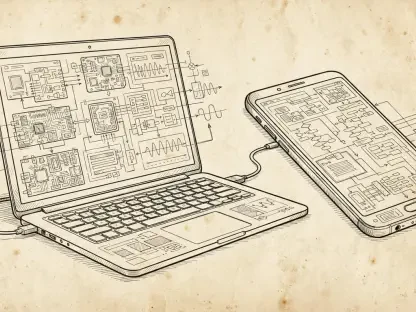

The updated Home tab utilizes real-time events to offer proactive suggestions, such as opening a garage door precisely when the user arrives at their residence. This shift represents a fundamental realignment of the platform’s priorities, moving beyond simple connectivity toward a deeply intuitive and contextually aware digital environment. As the ecosystem expands to support 470 million registered users and over 430 certified brands, the technical framework is pivoting away from the traditional cloud-dependent model. In its place, a sophisticated architecture emphasizes local processing and immediate response times to create a more resilient household infrastructure. This evolution suggests that the modern smart home is no longer a collection of isolated gadgets but a unified entity capable of understanding the nuances of daily life. By reducing the reliance on distant servers, the platform addresses long-standing concerns regarding latency and connection stability. The goal is to make digital interaction feel as natural as physical movement.
Enhancing Speed and Reliability Through Local Control
Technological advancements in local network control have fundamentally changed how commands are processed within the household environment. In previous iterations, a simple request to toggle a light switch often required a round-trip journey to a remote cloud server, which introduced noticeable delays and dependency on an active internet connection. The current architecture allows smartphones and SmartThings Hubs to communicate directly when sharing the same Wi-Fi network, effectively bypassing external servers for a vast majority of supported tasks. This localized approach has yielded a 30% improvement in responsiveness, making the interaction with smart devices feel nearly instantaneous. By prioritizing these direct connections, the system ensures that the primary control plane remains within the four walls of the home. This shift not only enhances the speed of individual actions but also optimizes the overall bandwidth usage for the household, as fewer packets need to leave the local network.
Reliability remains a cornerstone of this new infrastructure, particularly through the expanded hardware compatibility that supports local processing. Devices such as the SmartThings Station, Hub versions V2 through V4, and even high-end Samsung Smart TVs and Family Hub refrigerators now function as local command centers. This hardware diversity ensures that the smart home remains operational even during significant internet service disruptions, as the local network maintains the link between the controller and the devices. The system is designed to intelligently toggle between local and cloud-based control based on the user’s current network status and geographic location. For homeowners, this means that mission-critical automations, such as security alerts or scheduled lighting, continue to function without interruption. By embedding hub functionality into everyday appliances like refrigerators and televisions, the ecosystem has become more accessible, reducing the need for standalone hardware.
A Proactive Experience with Contextual Intelligence
The introduction of SmartThings Now has transformed the application interface from a static directory into a dynamic, event-driven dashboard. This new experience centers on contextual cards that appear at the top of the interface, providing users with the most relevant controls based on their current circumstances. For instance, if a family member who is part of the Family Care network exhibits an unusual change in their daily activity patterns, the system generates a notification to prompt a status check. This proactive approach eliminates the need for users to manually navigate through layers of menus to find specific sensors or history logs. Instead, the most pressing information is surfaced automatically, allowing for quicker decision-making and improved peace of mind. By leveraging real-time data from various sensors throughout the home, the platform creates a narrative of the household’s health and safety, making the technology feel less like a tool and more like an assistant.
Routine Insight serves as a bridge between manual device management and fully autonomous living by analyzing recurring usage patterns over time. Many users find the initial setup of complex automations to be a daunting task, but this feature simplifies the process by identifying behaviors that could benefit from automation. If a user consistently adjusts the thermostat and dims the living room lights at a specific hour, the platform offers a suggestion to turn these actions into a permanent routine. This transition toward ambient computing signifies a future where technology works silently in the background, minimizing the cognitive load on the residents. By observing how people naturally interact with their living spaces, the system can refine its suggestions to better match individual preferences. This data-driven strategy ensures that the smart home evolves alongside its inhabitants, becoming more efficient as it gathers more information about the specific needs and habits of the household.
Expanding the Ecosystem with Matter 1.6 and Better Design
Support for the Matter 1.6 protocol marks a significant milestone in achieving true interoperability across diverse manufacturer brands. This universal standard allows the SmartThings ecosystem to integrate specialized device categories that were previously difficult to synchronize, such as energy meters and smart irrigation controllers. Users can now monitor their granular power consumption in real-time or manage precision gardening through soil sensors that track moisture and nutrient levels directly within the app. These additions expand the utility of the smart home beyond the interior living space and into the surrounding property, creating a more comprehensive management system. Furthermore, Matter 1.6 has introduced improved group control performance, which ensures that commands sent to multiple devices simultaneously are executed with stability and perfect synchronization. This technical harmony reduces the friction often associated with mixing different hardware brands, providing a more cohesive experience.
The aesthetic and functional redesign of the user interface complements the underlying technical changes by focusing on efficiency and ease of access. New service cards have been engineered to be more space-efficient, allowing a greater volume of information to be displayed on a single screen without creating visual clutter. A prominent feature of this redesign is the floating bar, a new UI element that keeps frequently used features and navigation shortcuts within reach at all times. This consistent design language extends across the entire Samsung device ecosystem, ensuring that the experience of managing a home from a smartphone is mirrored on a Smart TV or a Windows-based PC. By providing a unified look and feel, the platform reduces the learning curve for new users and streamlines the workflow for power users. The goal is to provide a seamless transition between different screens, allowing the resident to maintain control of their environment from whichever device is most convenient.
Navigating the Future of Smart Home Integration
The evolution of the SmartThings platform provided a clear roadmap for the future of domestic technology by emphasizing resilience and intelligence. It demonstrated that moving away from cloud-centric models was essential for creating a reliable infrastructure that could withstand internet outages while delivering faster response times. To maximize these benefits, homeowners should have prioritized the installation of compatible hub devices, such as modern smart televisions or dedicated stations, to ensure local control was fully utilized. Professionals in the field noted that the transition to Matter 1.6 required a thoughtful evaluation of existing hardware to identify which devices would benefit most from the new interoperability standards. By adopting a proactive stance toward automation, users successfully turned their residences into environments that anticipated their needs rather than just responding to manual inputs. This period of growth established that the most effective smart home was one that operated.