
Navigating the crowded landscape of portable electronics often feels like a choice between overpriced status symbols and unreliable hardware that fails within a few months of purchase. The Amazon Fire HD 8 has successfully navigated this divide for over a decade, carving out a specific niche as the dependable middle child of the company’s tablet family. While the Fire 7 remains the ultra-low-cost option and the Fire HD 10 targets those seeking a larger screen for productivity, the eight-inch model offers a form factor that is arguably the most versatile for the average consumer. In the current market, where inflation has driven up the cost of premium tech, the 2024 refresh of the Fire HD 8 arrives with a clear mission: to provide enough internal improvement to stay modern without losing the affordability that made it a household name. This version does not seek to compete with professional-grade tablets used for digital illustration or high-end video editing; instead, it doubles down on being the ultimate consumption device for those who prioritize value over raw technical specifications. By focusing on essential upgrades like increased memory and refined build quality, the tablet remains a formidable opponent for any off-brand competitor trying to steal its crown in the budget-friendly arena.
Exceptional Value: The Strategic Pricing Model
Amazon uses a unique financial strategy that allows the Fire HD 8 to remain the most accessible tablet for the general public. By integrating advertisements onto the lock screen, the company effectively subsidizes the cost of the hardware, passing those savings directly to the consumer. This ad-supported model has become a staple of the Fire lineup, though users always have the option to pay a small premium to remove these interruptions. Even with that extra cost, the device frequently sells for less than half the price of its nearest competitors, especially during seasonal promotional events where the price can drop to nearly impulse-buy levels. This aggressive pricing strategy is not just about selling a piece of plastic and glass; it is a calculated move to bring more users into the Amazon ecosystem, where they will spend money on digital books and streaming rentals. For many families, this financial trade-off is entirely worth it, as it allows them to acquire a reliable device for casual browsing without the high-stakes investment typically associated with modern mobile technology.
When comparing this tablet to premium alternatives such as the iPad Mini or the high-end Samsung Galaxy Tab series, the value proposition becomes even more starkly defined. The price difference between a Fire HD 8 and a top-tier small tablet is often enough to cover several years of high-speed internet or multiple streaming service subscriptions. This massive cost gap forces a shift in consumer expectations; rather than demanding perfection in every pixel or millisecond of response time, users are looking for a performance that reliably handles daily tasks. For a child’s first device, a secondary screen for the kitchen, or a dedicated reading tablet, the Fire HD 8 occupies a space where few other manufacturers can realistically compete. It thrives on the idea that high-quality digital entertainment should not be a luxury reserved for those willing to spend hundreds of dollars. By maintaining this low barrier to entry, Amazon ensures that their tablet remains a dominant force in the budget market, catering to a demographic that values practicality and cost-effectiveness over brand prestige or cutting-edge technical benchmarks.
Practical Design: A Focus on Durability and Utility
The physical design of the Fire HD 8 reflects a philosophy of pragmatism that stands in direct opposition to the fragile, glass-heavy trends of the premium market. Instead of thin aluminum frames that can bend or glass backs that shatter upon the first impact, this tablet utilizes a reinforced polycarbonate shell that is specifically engineered to survive the rigors of daily life. The 2024 model introduced a subtle but effective change in texture on the rear panel, offering a more tactile grip that significantly reduces the likelihood of accidental drops. This durability is one of its greatest assets, making it the default choice for parents who need a device capable of surviving life in a household with young children. It feels substantial and sturdy in the hand, giving the impression of a tool that was built to be used rather than a delicate jewelry piece to be protected in a thick case. The rounded corners and balanced weight distribution also contribute to an ergonomic experience that remains comfortable during long reading sessions or movie marathons, proving that budget materials do not have to result in a cheap feel.
Beyond its physical resilience, the Fire HD 8 retains several legacy hardware features that have been largely abandoned by more expensive devices in the pursuit of minimalism. The inclusion of a 3.5mm headphone jack is a significant benefit for users who prefer the reliability of wired audio or for parents who want to use inexpensive headphones for their children without worrying about Bluetooth pairing or battery levels. Furthermore, the presence of a dedicated microSD card slot allows for storage expansion that is both affordable and necessary. While the internal storage options may seem modest compared to high-end laptops, the ability to add up to a terabyte of extra space via a cheap memory card transforms the tablet into a massive portable media library. This feature is particularly vital for travelers or people with limited internet access, as it enables the offline storage of thousands of Kindle books, hundreds of hours of video content, and extensive music playlists. By keeping these user-friendly ports and expansion options, Amazon has maintained a level of utility that many modern flagship devices have sacrificed, much to the frustration of many consumers.
Internal Performance: Balancing Power and Efficiency
The internal architecture of the 2024 refresh received a much-needed boost in the form of increased memory, which serves as the primary driver for a smoother user experience compared to its predecessors. While the processor itself remained relatively modest, the jump to a higher memory capacity provided the necessary breathing room for the operating system to function without the constant stuttering that plagued older budget tablets. This upgrade is particularly noticeable when switching between multiple open applications or when navigating heavy websites that are laden with high-resolution images and advertisements. It is important to temper expectations, however, as this tablet is not designed for heavy multitasking or intensive gaming applications like high-fidelity open-world titles. Instead, it excels at providing a consistent and stable platform for the apps that people use most often, such as social media, email, and streaming video players. The optimization of the software to work in tandem with the improved memory ensures that the device feels responsive enough for everyday needs, successfully avoiding the obsolescence lag that often hits lower-end electronics shortly after release.
When it comes to visual performance, the eight-inch high-definition display provides a competent viewing experience that prioritizes color accuracy and battery efficiency over raw pixel density. The 1280×800 resolution is perfectly adequate for a screen of this size, offering clear text for reading and sharp enough images for standard high-definition video streaming. While it lacks the vibrant punch and deep blacks of an OLED panel, the LCD screen used here has been tuned to provide more natural skin tones and a decent level of contrast. One recurring challenge for this hardware is its high level of screen reflectivity, which can make it difficult to use in direct sunlight or under bright overhead office lights. Consequently, the Fire HD 8 is most effective when used in controlled indoor environments where the backlighting can easily overcome ambient glare. Despite this limitation, the screen remains a highlight of the package for its intended audience, providing a window into the digital media library that is easy on the eyes during extended use. It represents a balanced compromise that keeps the price low while still delivering a visual experience that surpasses the washed-out displays found on many generic tablets.
Software Ecosystem: Navigating the Amazon Walled Garden
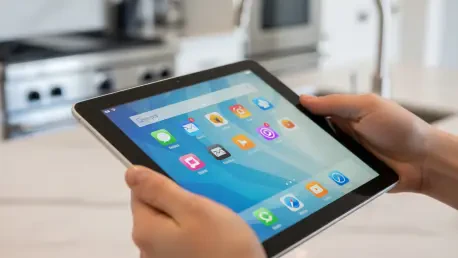
The software experience on the Fire HD 8 is defined by its deep integration with Amazon’s proprietary Fire OS, which is a heavily modified version of the Android operating system. This environment is designed to be as user-friendly as possible, featuring a home screen that places a heavy emphasis on content discovery and quick access to Prime services. For individuals who are already deep within the Amazon ecosystem—those who use Audible for audiobooks, Kindle for reading, and Prime Video for entertainment—the interface is incredibly intuitive and convenient. However, this convenience comes at the cost of the broader Android experience, as the tablet does not officially support the Google Play Store. Users looking for native Google apps like YouTube, Gmail, or Google Maps will find them absent, replaced instead by Amazon’s own Appstore or web-based alternatives. While it is technically possible for more tech-savvy users to sideload additional services and expand their horizons, the out-of-the-box experience remains firmly tethered to Amazon’s digital storefront. This specialized focus makes it an excellent entertainment hub but a more challenging choice for those who need a device for a diverse range of third-party productivity apps.
Logistics and battery performance remained strong points for the 2024 model, ensuring that the tablet was ready to go whenever it was needed for travel or leisure. With an estimated battery life of up to thirteen hours on a single charge, the Fire HD 8 easily handled a full day of mixed usage, including several hours of video playback and intermittent web browsing. This longevity made it a reliable companion for long-distance travel, where access to power outlets was often limited. The transition to USB-C for charging was a welcome modernization, though the charging speeds themselves remained relatively conservative. It took several hours to bring a depleted battery back to full capacity, which meant most users found it best to charge the device overnight. Despite the lack of fast-charging capabilities common in high-end smartphones, the sheer endurance of the battery meant that the tablet rarely required mid-day top-ups. This reliability, combined with solid wireless connectivity and improved Bluetooth performance, ensured that the device functioned as a dependable piece of technology that required very little maintenance from the end-user, further cementing its status as a definitive choice for an affordable entertainment hub.
Market Evolution: Final Assessment and Future Directions
The evaluation of the Amazon Fire HD 8 (2024) revealed a device that successfully navigated the difficult balance between extreme affordability and functional longevity. It demonstrated that a tablet did not need top-tier specifications to provide significant value to its users, provided that the core experience remained stable and the build quality was resilient enough for daily wear. The modest improvements in internal memory and the refined exterior design addressed the primary complaints of previous generations, allowing the tablet to maintain its relevance in a market that was increasingly dominated by expensive flagships. Consumers who sought a dedicated device for media consumption or a durable option for family members found exactly what they needed without overextending their budgets. This release confirmed that Amazon’s strategy of focusing on the essentials—battery life, durability, and ecosystem integration—was the correct approach for the budget sector. Consumers who prioritized high-value, durable, and user-friendly experiences found that the Fire HD 8 remained the benchmark against which all other budget tablets were measured.
Looking toward the future of the budget tablet segment, the path forward involved a greater emphasis on artificial intelligence integration and cross-device connectivity within the smart home. To maximize the utility of the hardware, users explored its potential as a central hub for controlling connected lights, cameras, and thermostats, utilizing the tablet’s specialized display modes to mimic a dedicated smart display. This multi-purpose functionality added a layer of value that extended far beyond simple video playback or reading. For those considering an upgrade or a first-time purchase, the recommendation centered on timing the acquisition with major sales events to maximize the return on investment. Ultimately, the Fire HD 8 proved that the budget market did not require revolutionary changes to stay healthy; it simply needed to remain honest about its purpose. By focusing on an accessible and reliable experience, the device provided a blueprint for how technology could remain available to everyone, regardless of their financial constraints or technical expertise. Future developments in the lineup likely focused on further streamlining the software to allow for even more efficient content delivery and home automation control.