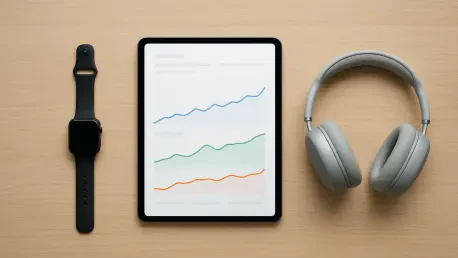

The glowing glass rectangles strapped to millions of wrists worldwide represent a staggering leap in personal computing, yet they simultaneously foster a growing gap between perceived accuracy and biological reality. As these wearables have evolved from basic pedometers into sophisticated health hubs, users have become increasingly reliant on the digital readouts of blood oxygen, heart rate variability, and stress scores. However, a significant portion of the general public currently operates under the misconception that these sleek devices function with the same clinical precision as the medical equipment found in hospitals or specialty clinics. The crisp, colorful interfaces often mask the fundamental truth that the data presented is not a direct measurement of internal physiology but rather a highly complex mathematical estimation. While the convenience of continuous monitoring is undeniable, the transition from lifestyle tracking to medical reliance requires a critical understanding of how these metrics are generated.
Photoplethysmography: The Foundation of Optical Sensing
The foundational technology enabling most wrist-based health monitoring is photoplethysmography, an optical technique that involves illuminating the skin and measuring changes in light absorption. By using green light-emitting diodes paired with light-sensitive photodiodes, these devices can detect the volume of blood passing through the wrist with each individual heartbeat. While this method is highly effective for calculating a basic pulse during periods of rest, it is inherently limited by its reliance on surface-level data. Factors such as skin temperature, the tightness of the watch band, and even the ambient light in a room can introduce significant noise into the signal. Furthermore, because the sensor is located on the wrist—an area with thinner vasculature than the fingertip or chest—the signal-to-noise ratio is naturally lower. Consequently, the device must rely on sophisticated filtering to separate actual biological signals from motion artifacts, meaning the resulting data is a filtered interpretation rather than a raw, direct observation.
To overcome the limitations of optical sensors, modern wearables utilize a process known as sensor fusion, which integrates inputs from accelerometers, gyroscopes, and thermal sensors into a single data stream. This multidimensional approach allows the device to guess what the body is doing by correlating heart rate spikes with physical movement or changes in skin temperature. For example, a high heart rate detected while the accelerometer remains still might be interpreted by the software as physiological stress or a caffeine response. However, this process remains fundamentally inferential; the software is making a calculated judgment based on pre-programmed models rather than conducting a definitive medical test. This is particularly evident in the estimation of metrics like VO2 Max or recovery scores, which are often based on population averages rather than an individual’s unique genetic makeup. While these mathematical models are becoming increasingly sophisticated, they cannot replace the specialized diagnostics provided by laboratory-grade equipment.
Actigraphy and Motion: The Ambiguity of Sleep Architecture
Sleep tracking represents another significant area where the gap between algorithmic estimation and clinical reality becomes strikingly apparent to the average consumer. In a clinical setting, sleep architecture is measured via polysomnography, which requires monitoring brain waves, eye movements, and muscle activity to accurately identify sleep stages. Smartwatches, conversely, rely almost entirely on actigraphy—the measurement of body movement—combined with heart rate variability to estimate when a user has entered REM or deep sleep. This method frequently leads to a phenomenon known as immobile wakefulness, where an individual who is awake but lying perfectly still is incorrectly categorized as being in a light or deep sleep stage. Because the watch cannot “see” brain activity, it must assume that a lack of movement equals restorative rest, often leading to inflated sleep scores. These discrepancies can be frustrating for users who feel exhausted despite their device providing a glowing report of their previous night’s rest.
Furthermore, the accuracy of these estimations is often plagued by demographic inconsistencies and a lack of transparency in proprietary algorithmic development. Most health-tracking algorithms are trained on data sets that over-represent young, healthy populations, which can lead to significant errors when applied to older adults or individuals with chronic conditions. Research has shown that physiological signals, such as heart rate variability and movement patterns during sleep, change significantly as people age, yet many wearables do not adjust their core logic for these variables. Additionally, the optical sensors used for light-based monitoring can struggle with varying skin tones, as higher levels of melanin may absorb different wavelengths of light, potentially affecting the consistency of the readings. Without standard industry protocols for data validation, different brands may provide wildly different estimates for the same biological event. This lack of standardization makes it difficult for healthcare providers to treat wearable data as reliable.
Long-Term Trends: Strategic Utility Through Longitudinal Analysis
The engineering decisions that drove the development of these wearables often reflected a focus on lifestyle integration rather than the stringent requirements of clinical diagnostic tools. Manufacturers intentionally invested in vibrant high-resolution displays, cellular connectivity, and sleek water-resistant casings to ensure the devices remained appealing for daily use across various environments. These design choices meant that battery life and processor power were frequently balanced against the energy-intensive needs of high-fidelity medical sensors. Consequently, the data collected by the wrist-based hardware remained subject to the physical limitations of its form factor, which prevented it from achieving the precision found in specialized medical peripherals. Users who understood this distinction were able to view their devices as versatile all-in-one tools rather than direct replacements for the highly calibrated instruments used by doctors. This recognition helped mitigate the risks associated with over-relying on a consumer product for medical management.
Strategic utility was ultimately found in the analysis of longitudinal trends rather than the absolute accuracy of any single individual data point. By observing patterns over several months, individuals were able to identify meaningful deviations from their personal baselines, such as a steady increase in resting heart rate or a decline in overall activity levels. This approach transformed the smartwatch from a diagnostic tool into a powerful behavioral mirror that encouraged proactive health habits and timely medical consultations. When users identified concerning trends, they brought the summarized reports to their healthcare providers, who then utilized clinical-grade tests to confirm or refute the wearable’s estimations. This collaborative process ensured that technology served as a helpful screening mechanism while leaving the final diagnosis to qualified professionals. By prioritizing long-term data consistency over short-term numerical precision, the public successfully integrated these advanced estimates into a broader, more balanced strategy for maintaining wellness.