
Stepping into a remote mountain pass or a coastal overlook often brings a sense of liberation that is quickly dampened by the realization that a critical navigation update or a professional email remains stuck in an endless loop of buffering. For the modern traveler, the romantic notion of “unplugging” is frequently overshadowed by the practical necessity of maintaining a robust digital tether for safety, logistics, and livelihood. While the expansion of cellular infrastructure has reached more corners of the globe than ever before, the transition between various service providers often creates “dead zones” that disrupt even the most carefully planned itineraries. This persistent challenge has driven a shift away from makeshift connectivity solutions toward dedicated hardware that can navigate the complexities of multiple cellular networks simultaneously. The TravlFi JourneyGo 5G emerges as a specialized response to this demand, moving beyond the limitations of standard smartphone tethering to offer a high-performance gateway designed specifically for the rigors of life on the move. By prioritizing signal stability and multi-carrier access, this device addresses the fundamental gap between being merely “reachable” and being truly connected with the speeds required for modern high-definition workflows and real-time communication.
The evolution of mobile work has transformed the traveler’s toolkit from basic navigation aids to full-scale digital workstations that require more than just a passing signal. Standard smartphones, while incredible feats of engineering, are primarily communication devices rather than dedicated internet gateways; when forced into the role of a permanent hotspot, they suffer from rapid thermal degradation and battery exhaustion. The JourneyGo 5G is positioned as a corrective to these hardware shortcomings, offering a standalone architecture that offloads the heavy lifting of data management from the user’s primary phone. This strategic separation of tasks ensures that the smartphone remains available for its intended use—calling, photography, and emergency alerts—while the hotspot provides a steady, high-speed data stream that can support an entire ecosystem of laptops, tablets, and smart devices. This introduction of professional-grade hardware into the consumer travel space represents a maturing market where reliability is valued as much as portability, particularly for those whose income depends on their ability to upload large assets or participate in low-latency video conferences from unconventional locations like RV parks or remote campsites.
Physical Engineering: Durability and Portability
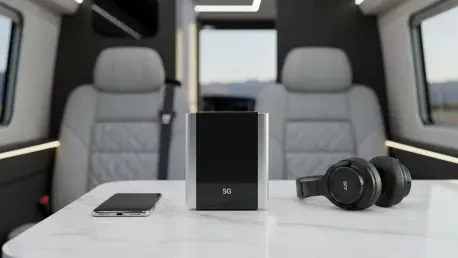
The architectural integrity of a mobile hotspot is often tested by the unpredictable environments of travel, where vibration, temperature fluctuations, and physical impacts are constant factors. Weighing a mere 165 grams, the JourneyGo 5G manages to pack a significant amount of technical infrastructure into a frame that remains light enough for effortless transport in a standard daypack or jacket pocket. The exterior construction avoids the thin, resonant plastics often found in budget-tier electronics, instead opting for a ruggedized housing that feels dense and purposeful. This design choice is critical for users who find themselves moving frequently between vehicles, rental properties, and outdoor workspaces. There are no protruding components or delicate external antennas that could catch on fabric or snap under pressure, which reinforces the device’s identity as a tool meant for “real-world” use rather than a fragile piece of office equipment. The inclusion of a 2.4-inch TFT LCD touchscreen provides a tactile and visual interface that allows for immediate status checks without the need to fumble with a secondary smartphone application, making it easier to manage settings in high-glare outdoor environments.
A primary driver of the device’s physical footprint is the integration of a substantial 5000mAh battery, a component that fundamentally changes the operational window for a mobile traveler. In practical scenarios, this high-capacity power cell facilitates up to 24 hours of continuous operation, effectively decoupling the user from the constant search for a power outlet. When compared to a smartphone acting as a hotspot—which often loses fifty percent of its charge within two hours of heavy data usage—the JourneyGo 5G offers a level of endurance that aligns with the needs of a full workday. This longevity is particularly beneficial for documentary filmmakers or field researchers who may be stationed away from their base of operations for extended periods. The thermal management system within the device is specifically tuned to handle the heat generated by 5G NR modem activity, ensuring that the unit does not experience the performance throttling that occurs when a smartphone overheats. This focus on sustained performance under load makes the physical design not just a matter of aesthetics, but a crucial element of the device’s overall reliability and long-term utility.
Intelligent Connectivity: The Carrier-Agnostic Advantage
The most significant technical hurdle for travelers moving across state lines or through varied topography is the fragmented nature of cellular coverage, where one provider may offer 5G speeds while another has no signal at all. The JourneyGo 5G addresses this through a “carrier-agnostic” logic that utilizes seven internal antennas to scan the local environment for the strongest available signal across multiple providers. This sophisticated approach removes the burden from the user of having to manually swap SIM cards or maintain multiple expensive data contracts for different networks. Instead, the device acts as an intelligent router that automatically selects the path of least resistance and highest throughput, whether that be through AT&T, Verizon, or T-Mobile infrastructure. For the digital nomad traversing the American West, this means a seamless transition from a T-Mobile-dominated urban center to a rural valley where only Verizon towers are present. The technology operates silently in the background, maintaining a persistent connection that minimizes the disruptions typically associated with mobile handoffs and geographic coverage gaps.
This multi-antenna array is not merely about finding a signal; it is about maximizing the quality of that signal through advanced 5G NR and 4G LTE integration. By utilizing multiple internal pathways, the device can better manage signal interference and multipath propagation, which are common issues in built-up environments or areas with heavy foliage. This leads to a more stable “ping” and lower latency, which are critical for applications that require a steady handshake with a remote server, such as secure cloud storage or virtual private networks. The intelligence of the TravlFi system allows it to prioritize the most efficient network based on current congestion and tower proximity, ensuring that the user isn’t just “connected,” but connected to the best possible pipe. This level of autonomy is a transformative feature for RVers who may stay in one location for a week and then move five hundred miles the next day. The peace of mind that comes from knowing the device will adapt to the new cellular landscape without manual intervention cannot be overstated, as it converts the unpredictable nature of mobile internet into a utility that feels as consistent as home broadband.
Professional Performance: High-Speed Data Management
For the creative professional, the metric of a hotspot’s success is defined by its ability to move large volumes of data without compromise. The JourneyGo 5G is engineered to reach peak speeds of 180 Mbps under optimal conditions, with a very respectable and consistent operating range between 25 Mbps and 150 Mbps in most 5G-enabled areas. This throughput is sufficient for the high-bandwidth demands of 4K video uploads, high-resolution photo syncing, and simultaneous multi-user streaming. In environments like professional racetracks or outdoor event venues, where local Wi-Fi networks are often saturated by thousands of users, having a dedicated 5G lane provides a competitive advantage. Photographers can transmit images to editors in real-time, and social media managers can go live with high-bitrate video without the fear of dropped frames. The dedicated nature of the hardware ensures that the data stream is not interrupted by incoming phone calls or background app updates that often plague smartphone-based hotspots, providing a “clean” connection dedicated entirely to the user’s workflow.
Beyond sheer speed, the JourneyGo 5G offers a level of stability that is often missing from portable connectivity solutions. Modern 5G NR technology provides a wider spectrum of bands, which the device’s internal modem utilizes to maintain a lock on the signal even in fringe areas where older 4G devices might struggle. This resilience is paired with a hardware architecture that prevents the “stuttering” often seen when a device reaches its thermal limit. Because the JourneyGo 5G is built solely to route data, its internal processors are optimized for this specific task, leading to a more efficient processing of packets and lower jitter. This makes the device an excellent choice for professionals who rely on Voice over IP (VoIP) services or cloud-based collaborative tools like Figma or Adobe Creative Cloud. The ability to maintain a professional standard of connectivity while parked in a national forest or working from a roadside diner is what distinguishes this device as a piece of “technical infrastructure” rather than a mere gadget, allowing for a level of geographic freedom that was previously unattainable for high-stakes digital work.
Collective Utility: Managing Group Environments
The utility of a high-performance hotspot extends beyond the individual professional to encompass the needs of families and traveling groups who require a centralized internet hub. The JourneyGo 5G is capable of supporting up to 16 simultaneous device pairings, making it a robust solution for a family vehicle or a shared rental space. In a road trip scenario, this allows multiple passengers to engage in data-intensive activities—such as streaming movies, playing online games, or attending virtual classes—without the need for individual cellular plans for every tablet and laptop. This consolidation of connectivity into a single gateway simplifies the digital footprint of the group and can lead to significant cost efficiencies. The localized Wi-Fi signal generated by the device creates a “streaming ecosystem” within the vehicle, ensuring that everyone has access to a secure and high-speed connection that is consistently managed by a single, intelligent source rather than competing for a weak public signal or draining individual phone batteries.
Managing this group environment is made accessible through the 2.4-inch touchscreen, which serves as a central dashboard for the network administrator. From this interface, a user can monitor real-time data consumption, change the network password, and check the status of connected devices. This “set it and forget it” design philosophy is a major benefit for those who may not be technically inclined but require a reliable network for their family’s needs. Instead of navigating the cumbersome menus of a smartphone’s settings or logging into a complex web portal, the physical screen on the JourneyGo 5G provides immediate clarity. For travelers staying in vacation rentals with subpar or insecure Wi-Fi, the JourneyGo 5G acts as a trustworthy alternative, providing a private, encrypted network that follows the family wherever they go. This versatility ensures that the modern “connected life” remains uninterrupted, whether the group is moving down a highway or settled into a remote cabin, effectively turning any location into a fully functional digital hub for both work and entertainment.
Strategic Design: Efficiency and Trade-offs
Every piece of high-performance hardware involves a series of strategic design choices, and the JourneyGo 5G is no exception, prioritizing operational efficiency over superficial aesthetics. The 2.4-inch TFT LCD touchscreen, while functional and clear, features a lower resolution of 240 x 320, which may appear “dated” to users accustomed to the ultra-sharp OLED displays of 2026. However, this is a deliberate trade-off designed to maximize battery life; a high-resolution display would consume unnecessary power on a device that is meant to function primarily in a bag or pocket. The screen’s purpose is purely utilitarian—providing network status, data usage, and basic configuration—rather than being a primary interface for content consumption. This focus on battery preservation is what allows the device to achieve its 24-hour runtime, a feature that is far more valuable to a traveler than a high-pixel-density screen on a router. By focusing the device’s power budget on signal acquisition and data routing, the engineers have created a tool that excels at its primary mission.
The pricing of the JourneyGo 5G, sitting at approximately $300, positions it as a “prosumer” investment that targets users who view connectivity as a critical utility rather than an optional luxury. While this entry point is higher than basic 4G models, the performance gains provided by 5G NR and the multi-carrier switching logic provide a significant return on investment through saved time and reduced stress. The device represents a move toward specialized hardware that can survive the rigors of frequent travel, with a build quality that suggests a long service life. For families who would otherwise pay for multiple cellular data plans or for professionals who lose money when they cannot connect to a client, the hardware cost is quickly offset by its practical utility. This strategic balance between ruggedness, battery life, and intelligent connectivity makes the JourneyGo 5G a benchmark for modern mobile hotspots, providing a level of reliability that matches the demands of a world that is increasingly defined by mobility and remote access to information.
Strategic Implementation for Modern Mobility
The adoption of the JourneyGo 5G was a logical progression for those who sought to eliminate the unpredictable variables of mobile internet during their travels. By moving away from the thermal and battery constraints of smartphone tethering, users were able to establish a more stable and professional digital presence regardless of their geographic location. The device successfully bridged the gap between different cellular infrastructures, allowing for a consistent workflow that thrived on the strongest available signal. This transition was particularly beneficial for individuals who operated in high-stakes environments where a loss of connection could result in missed deadlines or compromised safety. The rugged build and long-lasting battery proved to be essential features that supported extended periods of off-grid work, ensuring that the digital “office” was as mobile as the person running it. This piece of hardware functioned as a silent partner, managing the complexities of network handoffs and signal optimization without requiring constant oversight from the user.
Moving forward, travelers should consider the integration of dedicated hotspots like the JourneyGo 5G as a foundational element of their technical infrastructure. As cellular networks continue to evolve, the ability to access multiple carriers through a single, intelligent gateway will remain a primary advantage for those navigating rural or underserved areas. To maximize the utility of this technology, users were encouraged to monitor their data patterns and utilize the onboard touchscreen for quick adjustments to network security and device management. The shift toward specialized hardware reflected a broader trend in the industry where reliability and sustained performance were prioritized over the convenience of multi-purpose gadgets. By investing in a dedicated solution, the modern traveler ensured that their connection to the world was not a point of failure, but a reliable bridge that supported their lifestyle and professional ambitions. The JourneyGo 5G set a high standard for portable connectivity, proving that with the right engineering, the challenges of the road did not have to mean a disconnect from the digital age.